Our $217.82 Costco Executive Reward: Is $10,891 a Year Frugal for a Family of Three?
Our Costco Executive reward certificate arrived this week: $217.82. It is the second year in a row our family of three has spent five figures at Costco.
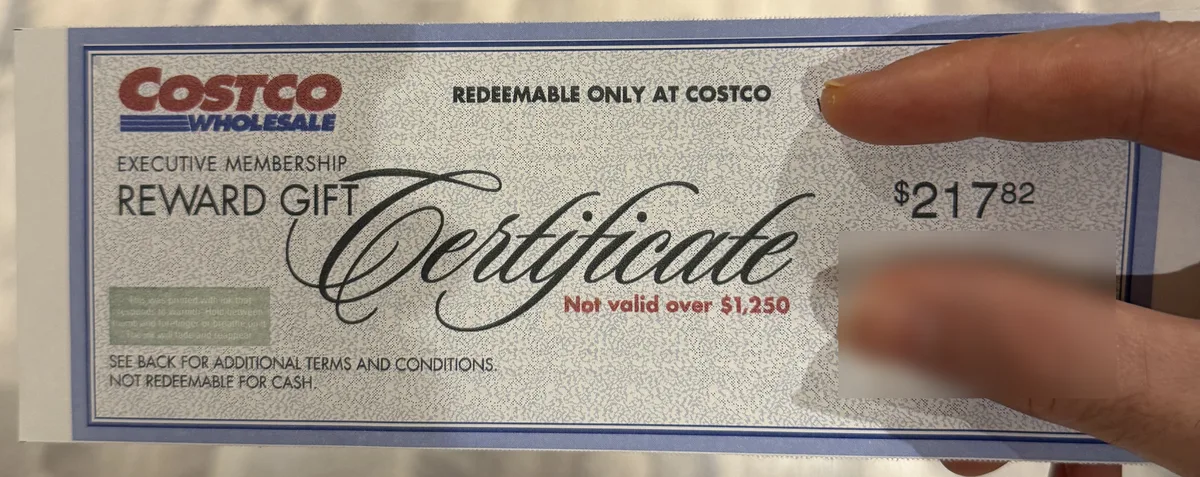
That can look like a lot of money for one store. We live in Seattle, where restaurant meals are expensive, and we keep the kitchen stocked with fruit, vegetables and protein for a toddler. This post backs out what we spent, checks whether the Executive upgrade paid for itself, and compares what that money buys with what the same food costs at a restaurant.
Run your own numbers in the Costco rewards calculator →
Backing Out What We Spent
The Executive reward is 2% of qualifying purchases, so the certificate works as a receipt in reverse:
$217.82 ÷ 0.02 = $10,891 in qualifying purchases.
That is about $908 a month, or $209 a week, for a household of three. We shop about every two weeks, so it comes to roughly $420 a trip, close to what our recent receipts show.
Our actual Costco spending is higher. Under Costco's reward terms, gas, food court orders, tobacco, Shop Cards, postage, cellphones, membership fees and sales tax earn nothing, and we sometimes fill up at Costco gas stations. Costco also issues the certificate about three months before renewal, so the window it covers doesn't line up with a calendar year.
For local context, the Bureau of Labor Statistics puts the average Seattle-area household's spending on all food at home at $7,607 a year (2023–24 average). We spend more than that at one store. Our Costco total also covers diapers, paper towels, toilet paper and other household supplies, so the two numbers aren't a clean comparison, but we are above the local average either way.
Did the Executive Upgrade Pay for Itself?
We would hold a $65 Gold Star membership regardless, so the cost to measure against is the $65 upgrade, not the full $130 Executive fee.
| Amount | |
|---|---|
| Executive reward | $217.82 |
| Upgrade cost over Gold Star | −$65.00 |
| Net gain from upgrading | $152.82 |
The breakeven point is $3,250 a year ($65 ÷ 2%), and we cleared it by a factor of 3.35. Spread over $10,891, the net gain is an effective 1.40% back. That matches our Executive breakeven analysis: the fixed fee keeps the effective rate below 2% at every spending level.
Two terms are worth knowing. The reward is capped at $1,250 a year (it's printed in red on the certificate), which would take $62,500 in qualifying purchases to reach. And Costco no longer promises the reward will cover the upgrade fee. If you downgrade, Costco refunds the $65 minus any reward already earned, so a light year costs you no more than Gold Star would have, provided you downgrade.
The math above leaves out the other Executive perks: early shopping hours and a $10 monthly credit on Same-Day delivery orders of $150 or more.
What the Card at the Register Added
The certificate is separate from what the card at the register earns. Costco warehouses take Visa credit cards plus debit cards, which narrows the field.
This year our main Costco card has been the PayPal Debit Card. You pick one 5% category each month, and PayPal's groceries pick includes wholesale clubs. Stacked with the certificate, that is 7% back on up to $1,000 of purchases a month. Our average month, about $908, fits under that cap. A month with an extra trip or a big purchase goes over it, and spending past $1,000 earns nothing extra.
It is a debit card, which carries costs a credit card doesn't. The money leaves your account at the register, a fraudulent charge ties up your own cash until it's resolved, and the 5% applies only if you choose the category in the app every month. Our PayPal Debit strategy covers the details, and does Costco take PayPal? explains why the card works when PayPal itself doesn't.
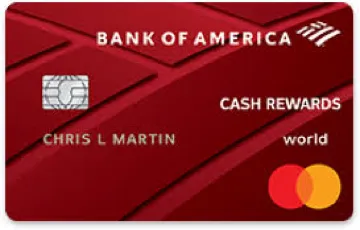
Until the switch, we paid with the Bank of America Customized Cash Rewards card. It earns 2% at wholesale clubs, and our old Preferred Rewards Platinum Honors tier added a 75% bonus, for 3.5%. Since Bank of America restructured its relationship program in May 2026, the same balances earn 3% at the Preferred Honors tier.
Its catch was a $2,500 quarterly cap shared by the card's 2% and 3% categories. $10,891 a year averages $2,723 a quarter, which is past one card's limit, so my spouse and I each carried the card and switched when one filled up, as described in our Costco and Bank of America strategy.
We don't track how the year split between the two cards, so the card side is a range: roughly $380 if everything had earned BofA's 3.5%, and $545 if everything had earned PayPal's 5%. With the certificate, that is about 5.5% to 7% back before the upgrade fee.
Grocery cards usually don't help at Costco. Costco purchases code as a wholesale club (merchant category 5300), and many grocery bonuses exclude wholesale clubs by name (Chase Sapphire Preferred's grocery category does). Our best Costco credit cards guide compares the Visa cards that do pay well there, and which cards Costco accepts covers the payment rules.
What $10,891 Buys
Our regular cart is mostly produce and protein. The fruit is strawberries, blueberries, oranges, grapefruit, avocados and lychee. Fresh protein means salmon, chicken breasts, rotisserie chickens, steak and thinly sliced beef. From the freezer and prepared aisles we buy frozen vegetables, cod, chicken tikka, BBQ beef brisket, stuffed peppers and pasta.
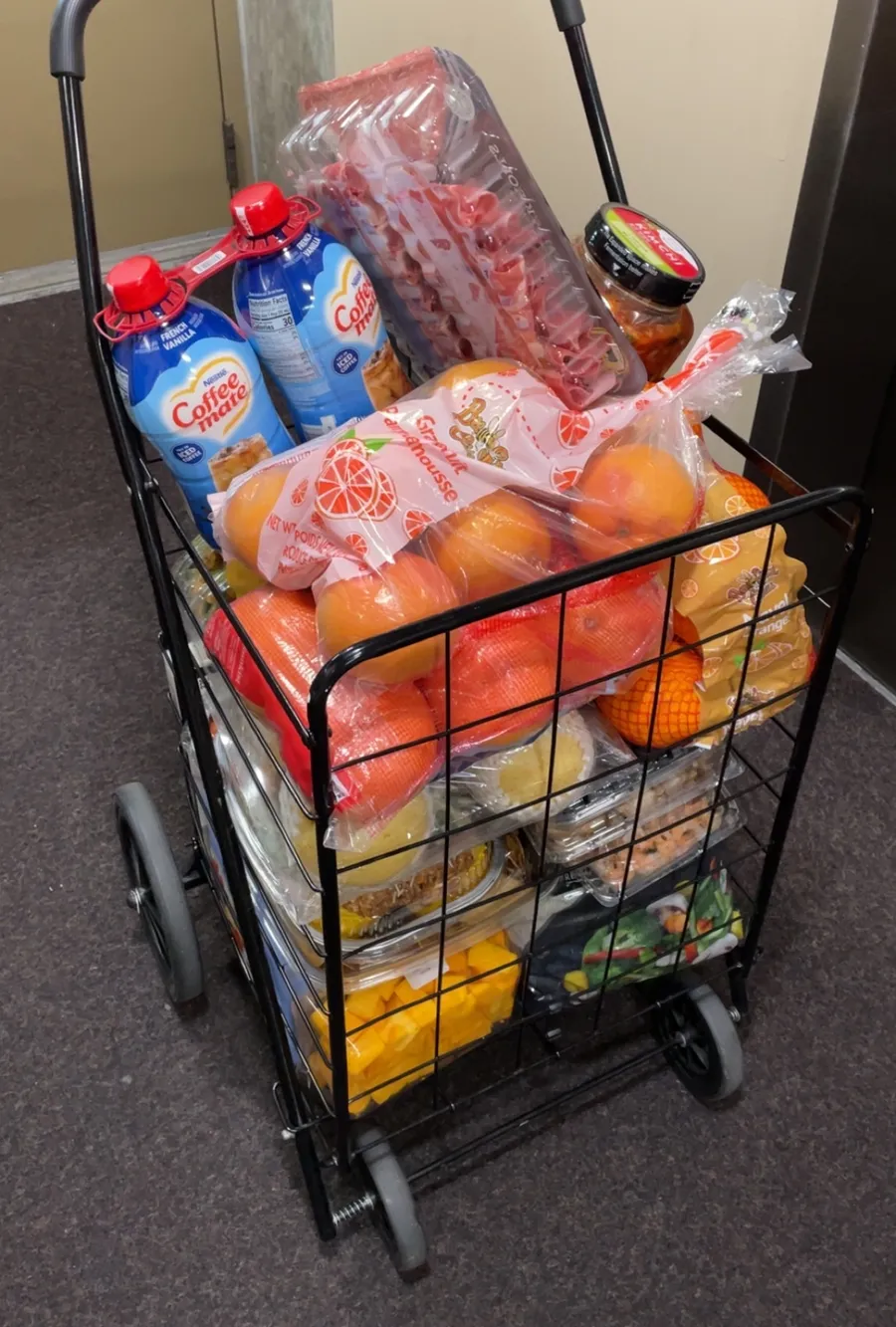
The rest is household basics that a family with a toddler goes through quickly: diapers, paper towels, toilet paper and the like. A box of Huggies size 6 was $49.99 less a $10 coupon on one recent receipt, and a pack of Kirkland paper towels was $20.99. Those aren't food, but they're part of the $10,891, and buying them in bulk means fewer trips to the store.
Having fruit and protein within easy reach for a toddler matters more to us than getting the grocery bill as low as possible. Fruit is where a lot of the money goes: on recent receipts, a bag of grapefruit was $6.99 to $7.99, five avocados $7.99, blueberries $8.99 and oranges $8.99 to $9.99.
Here is what a few of our staples cost per serving, next to the same dish ordered at a Seattle restaurant.
| Dish | Home, per serving | Seattle restaurant | With tax and tip |
|---|---|---|---|
| Rotisserie chicken (half a bird) | $2.76 | $23.50 half-chicken plate | $30.68 |
| Chicken tikka (a quarter of the tray) | $4.25 | $16 tikka masala with rice | $20.89 |
| Salmon or steelhead (6 oz) | $4.12–$4.87 | $42 coho salmon, with sides | $54.83 |
Our prices: the rotisserie chicken is $4.99, and because it's sold hot it's taxed, so half a bird is $2.76. The chicken tikka is a $16.99 deli tray split four ways. The fresh wild sockeye, steelhead or Atlantic fillets we buy usually run $10.99 to $12.99 a pound, and we often freeze some at home so they keep.
Restaurant prices come from current menus at Jack's BBQ (the half-chicken plate comes with two sides), Kanak in Belltown and Ivar's Acres of Clams. The last column adds Seattle's 10.55% sales tax and a 20% tip on the menu price.
The restaurant plates include sides and our per-serving costs don't. At home, a serving of frozen vegetables plus some rice or pasta adds well under a dollar. Even after that, the restaurant version costs roughly 4 to 12 times as much per plate. The smallest gap, on the tikka masala, is still about $15 a plate.
The gap holds at the top end too. We splurged once on A5 Wagyu steak at about $60 a pound, which is $15 for a 4-ounce portion. El Gaucho in Seattle lists a 4-ounce A5 Miyazaki striploin at about $92, or roughly $120 with tax and tip. That's about $480 a pound, so the most indulgent thing we've bought at Costco cost about an eighth of the restaurant price.
Bulk only saves money if the food gets eaten. A two-pound box of strawberries that spoils in the back of the fridge costs more per serving than a small container from the supermarket. The freezer items on our list make the math safer, because they keep until we get to them.
We Still Eat Out
Costco hasn't replaced restaurants for us. We still eat out and order takeout sometimes.
What Costco changes is the default on a tired weeknight. A rotisserie chicken, frozen vegetables and a bowl of berries make dinner for three for under $10 in groceries. Two half-chicken plates from that same barbecue menu come to about $61 with tax and tip, before anything for the toddler. With the cheap option already in the fridge, the restaurant meals we do have are ones we chose.
Our cheapest dinner out happens at Costco itself. About every other week, the shopping trip is our weeknight outing, and our son enjoys it. We eat at the food court: a $1.50 hot dog and soda for me, a $1.99 pizza slice for him, and pizza or a $6.99 turkey sandwich for my spouse. Some nights we split a $2.99 sundae.
That dinner for three runs about $5.50 to $13.50, against roughly $61 for the barbecue takeout above. Food court orders don't count toward the Executive reward, so none of it is in the $10,891.
Coffee follows the same pattern. My spouse buys two-pound bags of Morning Sun espresso from Olympia Coffee Roasters, a Washington roaster, at Costco. At about $25 a bag, an 18-gram double shot costs roughly 50 cents in beans. The average latte cost $5.54 nationally in 2026 (sourced in our coffee card guide), so one drink a day comes to about $180 a year in beans against roughly $2,000 at a café, not counting milk at home or tax and tip at the café. I'm too much of a coffee snob for a warehouse bag, which is part of why we built BeanBench, a journal for logging brews and tracking the beans behind them.
Our sister site Summitward has a guide on what the research says about money and happiness. Two of its points apply here. It counts food quality as part of the "vitality" people tend to trade away too easily. It also cites research finding that paying to buy back time, meal delivery included, is linked to higher life satisfaction. So a takeout night isn't automatically a mistake. We want the weeknight default to be good food at a low price, with eating out as a choice.
When This Would Not Be Frugal
The same $10,891 could be wasteful in another household. It probably is if:
- Perishables regularly go in the trash before anyone finishes them.
- A large share of the cart is unplanned electronics, furniture or seasonal items.
- You live alone or have little fridge and freezer space.
- You spend less than $3,250 a year at Costco, in which case the Executive upgrade loses money and Gold Star is the better tier.
Quick Decision Guide
If you spend more than $3,250 a year at Costco: the Executive upgrade pays for itself. The Costco calculator shows your net.
If you spend less: stay on Gold Star. If you already upgraded, downgrading gets back the $65 minus any reward earned.
If you have $100,000 or more in Bank of America and Merrill balances: Customized Cash at 3% at wholesale clubs is hard to beat among credit cards at Costco, as long as you track the $2,500 quarterly cap.
If you don't: start with our best Costco credit cards guide. Most grocery cards pay only their base rate at warehouse clubs.
If you're comfortable paying with debit: PayPal Debit's groceries pick pays 5% at Costco on up to $1,000 a month, as long as you remember to choose it each month.
If perishables keep going bad: buy produce in smaller amounts at a supermarket and keep Costco for freezer and pantry staples.
Bottom Line
The $217.82 is the smallest number here. The upgrade netted $152.82 and the card added a few hundred dollars more, which is worth collecting. But rewards are the smallest lever in a household budget. The bigger number is the gap between what a dinner costs from our own kitchen and what the same dinner costs from a restaurant, multiplied by every weeknight we cook.
Frequently Asked Questions
How much do you have to spend at Costco for the Executive membership to be worth it?
About $3,250 a year in qualifying purchases. The Executive upgrade costs $65 more than Gold Star, and 2% of $3,250 is $65. Above that, every qualifying dollar nets 2 cents. Our $10,891 in qualifying purchases earned a $217.82 reward, a net gain of $152.82 after the upgrade fee.
How do I work out my Costco spending from my Executive reward?
Divide the reward by 0.02, which is the same as multiplying by 50. A $217.82 certificate means $10,891 in qualifying purchases. Your total Costco spending is higher, because gas, food court, tobacco, Shop Cards, postage, cellphones, membership fees and sales tax earn no reward.
Does Costco count as a grocery store for credit card rewards?
Usually not. Costco purchases code as a wholesale club, and many grocery bonuses exclude wholesale clubs by name, including Chase Sapphire Preferred and American Express. A few cards include wholesale clubs on purpose. Bank of America Customized Cash Rewards pays 2% there (3% or more with BofA Rewards), and the PayPal Debit Card's monthly groceries pick, which pays 5% on up to $1,000 a month, includes wholesale clubs. Costco warehouses take Visa credit cards and debit cards.
Does the Costco Executive reward expire?
No. Costco says the annual 2% reward never expires, and the certificate lists an issue date but no expiration date. It arrives about three months before your renewal date, is capped at $1,250 a year, and can be spent on merchandise but not redeemed for cash.
Prices and terms checked November 6, 2026. Store prices vary by warehouse and change often. CardSavvy is not compensated by Costco or Bank of America.
Related on Learn
Hand-picked based on topic and reader interest
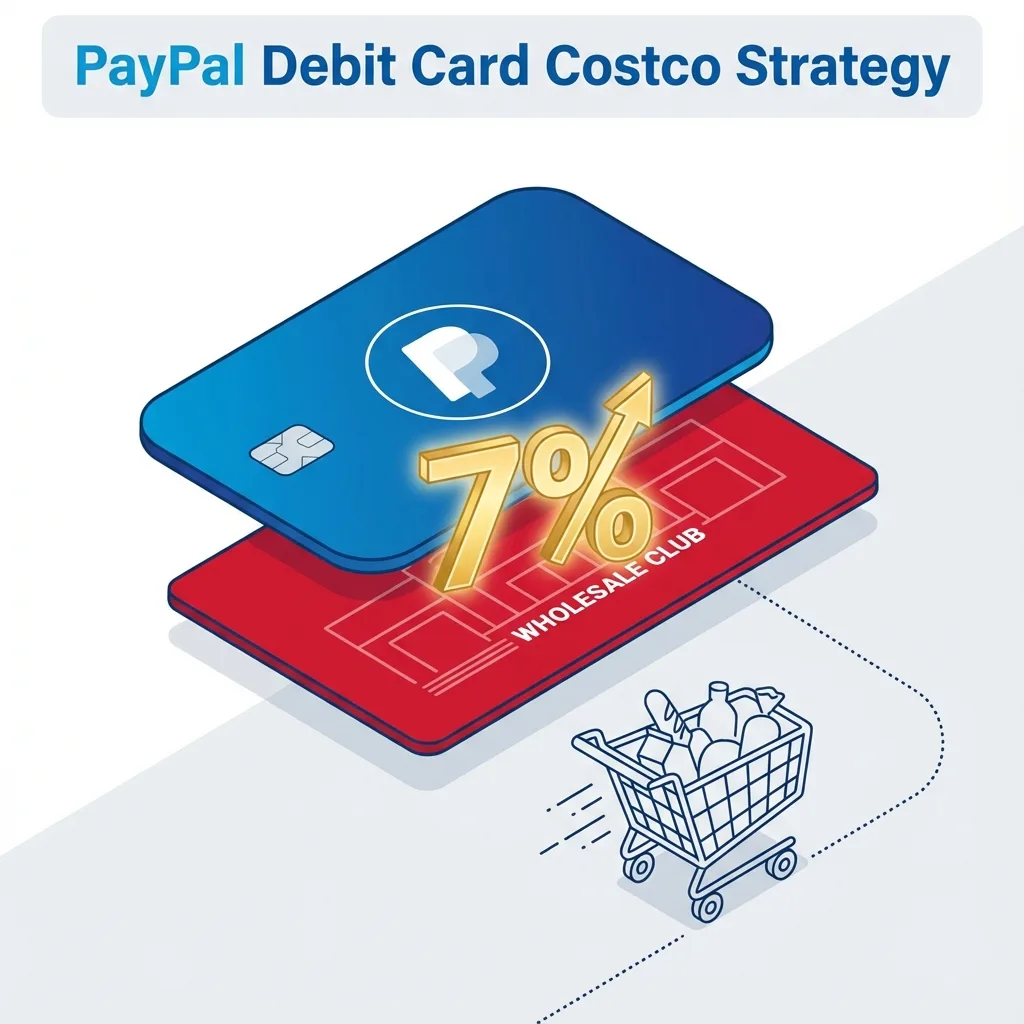
Costco PayPal Debit Card Strategy: How to Get 7% Cash Back (2026)
Costco does not accept PayPal directly, but the PayPal Debit Card earns 5% back and stacks with Executive membership for 7% total. Here's the complete strategy.
How My Family Earns 5% Cash Back at Costco (And Effectively Doubles Our Rewards Cap)
Learn how we stack the Costco Executive Membership with a Bank of America relationship tier to earn 5% back on wholesale club purchases, and how we navigated the spending limits.
Best Credit Card for Costco 2026: Costco Visa vs the Cards That Earn More
Is the Costco Anywhere Visa the best option? We compare it against the cards that earn up to 3.5% at Costco, and how they stack with Executive membership.

How My Family Earns 4.5% Cash Back on Online Shopping (And Doubles Our Rewards Cap)
We stack a Bank of America relationship tier with a strategic category selection to earn 4.5% on almost everything we buy online. Here is the exact setup, and what the 2026 program change cost us.
Get smarter with your cards
Math-first card strategy posts, sent when we publish — not on a schedule. No spam. Unsubscribe anytime.
We respect your inbox.
Ready to optimize your wallet?
Get personalized card recommendations and spending strategies in under 2 minutes.
Free to use. No signup required.
Get My Strategy →Just need an answer for one purchase? Best Card →