Best Credit Card for Groceries 2026: Cash Back vs Points Compared
Grocery bills remain one of the biggest line items in most monthly budgets, yet many people are still swiping a card that earns them a measly 1% back. If you’re looking to offset inflation in 2026, upgrading your card strategy (based on your actual spending profile) is one of the easiest wins available.
However, the "best" card isn't a single universal pick - it depends entirely on where you shop and whether you prefer simple cash back or travel points.
Here is how to navigate the landscape and find the right fit for your wallet.
Plug in your grocery spend to see which card wins →
The "Superstore" Trap: Read This First
Before you apply for a dedicated grocery card, you need to know how your favorite store is coded. This is the most common mistake people make.
Most premium grocery cards - especially from American Express and Capital One - restrict their bonus categories to U.S. Supermarkets. This definition generally excludes superstores like Walmart and Target, as well as warehouse clubs like Costco and Sam’s Club. If you buy your produce at a superstore, a specialized "grocery" card will likely only earn you 1%. (Skip down to the Costco & Superstores section below for better alternatives).
If you shop at traditional supermarkets like Kroger, Publix, Whole Foods, or Trader Joe's, you are in the clear to maximize your rewards.
Not sure how your store codes? Add the cards you already carry, type the store name, and see which card actually wins for your next grocery run:
For the Cash Back Maximizer
If you want money back in your pocket, three cards currently dominate the field, each serving a different type of spender.
The Heavy Hitter: Amex Blue Cash Preferred For families with significant grocery expenses, the Blue Cash Preferred Card from American Express remains the gold standard. It earns a massive 6% cash back at U.S. supermarkets on up to $6,000 in spending per year. While the annual cap means your earn rate drops to 1% after you spend $6,000, that first chunk of spending is lucrative enough to justify the card for many households.
The No-Fee Alternative: Amex Blue Cash Everyday If you don't want to pay $95 for the Preferred, the Blue Cash Everyday earns 3% at U.S. supermarkets on up to $6,000 per year, then 1%, with no annual fee. Same cap as the Preferred, half the rate, none of the fee. It breaks even against the Preferred at roughly $3,200 of annual grocery spend once you account for the fee.
The Citi Custom Cash used to be the pick here, earning 5% automatically on your top eligible category. Citi closed it to new applicants on May 28, 2026. If you already hold one, it is still the best no-fee grocery card available to you.
The "Set It and Forget It" Pick: Capital One Savor For those who hate tracking spending caps, the Capital One Savor is the stress-free winner. It offers an unlimited 3% cash back at grocery stores. There are no annual limits and no annual fees. It’s the perfect choice if you want consistent rewards without having to do mental math at the checkout register.
For the Travel Hacker
If you know how to redeem credit card points for high-value flights or hotels, cash back might feel like a low return.
The American Express Gold Card is the undisputed champion for travel rewards in this category. It earns 4X Membership Rewards points at U.S. supermarkets on up to $25,000 in purchases per year. If you value Amex points at around 1.6 cents each (a common benchmark for travel transfers), that's effectively a 6.4% return on your spending. This crushes most cash back cards, provided you actually use the points for travel rather than statement credits.
The Hidden Gem: Bank of America
If you bank with Bank of America or invest with Merrill, you might already have the most powerful grocery card available without realizing it.
The Bank of America Customized Cash Rewards card offers a base of 2% cash back at grocery stores and wholesale clubs. That sounds average until you factor in the relationship bonus.
Bank of America retired Preferred Rewards on May 27, 2026 and replaced it with BofA Rewards. The tier names changed and the top threshold moved a long way up:
| Tier | Balance Required | Bonus | Grocery rate on 2% |
|---|---|---|---|
| Member | No minimum | 10% | 2.20% |
| Preferred Plus | $30k+ | 25% | 2.50% |
| Preferred Honors | $100k+ | 50% | 3.00% |
| Premier | $1M+ | 75% | 3.50% |
The 3.5% that used to arrive at Platinum Honors now requires $1M at Premier. At $100k it is 3.00%. Crucially, this card still counts wholesale clubs in the category, so 3% at Costco or Sam's Club remains one of the better rates available to warehouse shoppers, and the new Member tier gives a small boost with no minimum balance at all.
Solving the Costco, Walmart, and Target Problem
As mentioned earlier, if you are loyal to superstores or warehouse clubs, standard grocery cards won't help you.
For these shoppers, the Bank of America Customized Cash Rewards mentioned above is a top contender because it explicitly includes wholesale clubs. Alternatively, a flat-rate "everything" card is often your best defense. Cards like the U.S. Bank Smartly Visa or the Citi Double Cash can earn you a consistent 2% (or more with relationship bonuses) regardless of whether the merchant codes as a "supermarket" or a "discount store."
Summary: Which Lane Are You In?
- The Family Shopper: Grab the Amex Blue Cash Preferred for 6% back on your first $6k.
- The Solo Shopper: Use the Amex Blue Cash Everyday for 3% back on up to $6,000 a year, with no fee.
- The Simplicity Seeker: Stick with Capital One Savor for unlimited 3%.
- The Traveler: Use the Amex Gold to turn groceries into flights.
- The BofA Client: Check your BofA Rewards tier. Preferred Honors ($100k) gets 3% at supermarkets and wholesale clubs; 3.5% now needs $1M.
Not sure which lane you're in? Check your Wallet Health for free to see where your current strategy is leaking money.
Frequently Asked Questions
Does Walmart or Target count as a grocery store for credit card rewards?
Usually no. Most premium grocery cards (Amex, Capital One) code Walmart and Target as "superstores," not supermarkets—so you'll earn 1% instead of the bonus rate. Use a flat-rate card or Bank of America Customized Cash (which includes wholesale clubs) instead.
What credit card gives 6% cash back on groceries?
The Amex Blue Cash Preferred earns 6% at U.S. supermarkets on up to $6,000 per year in spending. After you hit the cap, the rate drops to 1%.
Is the Amex Gold card worth it for groceries?
For travel hackers, yes. It earns 4x Membership Rewards points at U.S. supermarkets (up to $25,000/year). If you value points at 1.6 cents each—a common benchmark for travel transfers—that's effectively 6.4% back, beating most cash back cards.
What's the best grocery card with no annual fee?
The Capital One Savor offers unlimited 3% at grocery stores with no annual fee. The Amex Blue Cash Everyday offers 3% at U.S. supermarkets on up to $6,000 a year, also with no fee.
Cards Mentioned in This Article
Click any card above to see if it's worth adding to your wallet — personalized verdict in 30 seconds.
Related on Learn
Hand-picked based on topic and reader interest
Best Credit Cards for Gas and EV Charging 2026: Up to 5% Back
What's the best credit card for gas in 2026? We compare cards earning up to 5% at gas stations and EV charging, including which cards actually code EV correctly.
Best Credit Cards for Dining 2026: Cash Back vs Points Compared
What's the best credit card for restaurants in 2026? We compare 4x points cards vs 5% cash back options, plus which cards count takeout and delivery as dining.
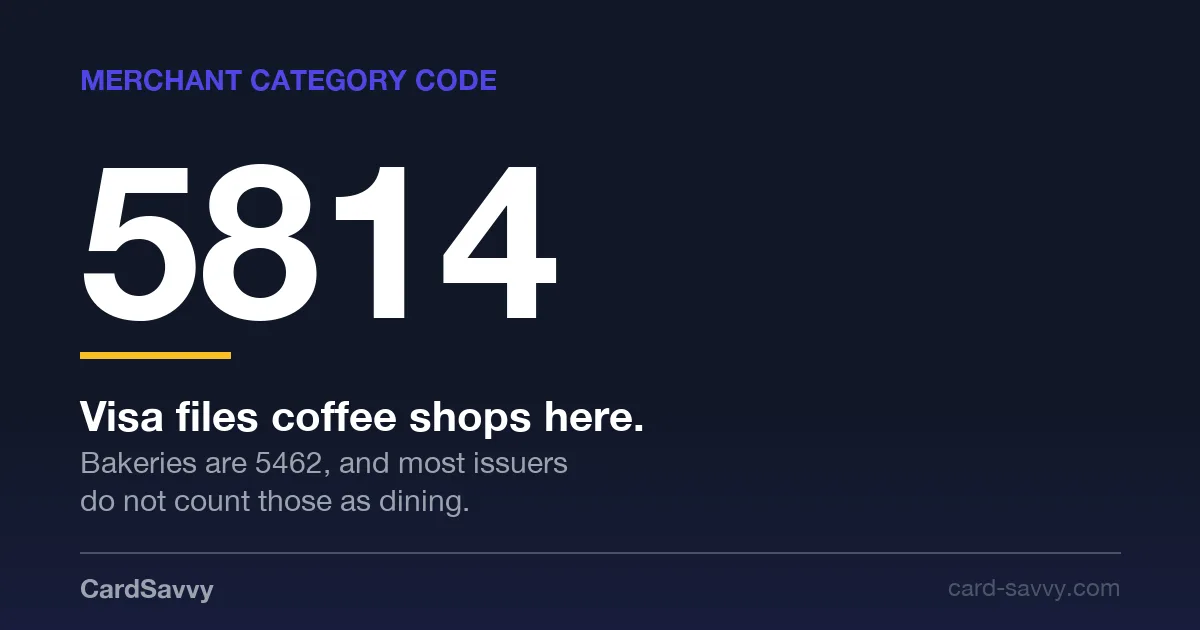
Best Credit Cards for Coffee Shops and Cafés in 2026: The MCC Decides
Which card earns the most at coffee shops in 2026, why bakery cafés and hotel lobby counters quietly lose your dining bonus, and how much optimizing a $5.54 latte is actually worth.
Best Credit Cards for Paying Insurance Premiums 2026
Can you pay insurance with a credit card? Yes, but fees can eat your rewards. Learn which cards maximize value, which insurers accept cards, and when it's worth paying by credit card.
Get smarter with your cards
Math-first card strategy posts, sent when we publish — not on a schedule. No spam. Unsubscribe anytime.
We respect your inbox.
Ready to optimize your wallet?
Get personalized card recommendations and spending strategies in under 2 minutes.
Free to use. No signup required.
Get My Strategy →Just need an answer for one purchase? Best Card →