Best Travel Credit Cards of 2026: Picks by Use Case, Not by Commission

Every "best travel credit cards" list you have read was probably ordered by affiliate payout. This one is ordered by math. CardSavvy earns nothing from any issuer, so the rankings below come from break-even arithmetic: what the card costs, what it reliably returns, and who comes out ahead.
The short version: most travelers are best served by one of five cards, and which one depends on how much work you are willing to do, not on how much you spend.
Run the math on your own spending →
Quick Decision Guide
You want one card and zero homework: Capital One Venture X. The credits pay the fee; 2x on everything does the rest.
You are getting your first travel card: Chase Sapphire Preferred. $95 for access to the best transfer partners in the business.
You will optimize aggressively: Chase Sapphire Reserve. Highest ceiling, highest fee, most work.
You refuse to pay an annual fee: Wells Fargo Autograph. 3x on travel, dining, and gas for $0.
Your biggest budget lines are dining and groceries: Amex Gold. 4x on both beats any travel card's everyday earning.
How These Cards Compare
| Card | Annual fee | Standout earning | Best for |
|---|---|---|---|
| Capital One Venture X | $395 | 2x everything | Simplicity |
| Chase Sapphire Preferred | $95 | 3x dining, 2x travel | First travel card |
| Chase Sapphire Reserve | $795 | Up to 8x Chase Travel | Power users |
| Wells Fargo Autograph | $0 | 3x travel, dining, gas | No-fee holdouts |
| Amex Gold | $325 | 4x dining and groceries | Food-heavy budgets |
Two strong cards just missed the table. The Citi Strata Premier ($95) earns 3x across flights, hotels, dining, groceries, and gas, and is the best single-card answer if your spending is spread evenly. The Bilt Obsidian ($95) is the only card here that earns points on rent, which makes it the default for renters; the math is different enough that it gets its own calculator.
1. Capital One Venture X: Best for Most Travelers

The Venture X case is the cleanest in the industry. You pay $395. Capital One returns a $300 credit for bookings through its travel portal and 10,000 anniversary miles worth about $100. If you book one trip a year through the portal, the card pays you roughly $5 to hold it, and everything it earns beyond that is profit.
Earning is flat 2x miles on every purchase, with 5x on flights and 10x on hotels and rental cars booked through the portal. Miles erase travel purchases at 1.0 cents or transfer to airline and hotel partners, where good redemptions run higher. There are no category caps and nothing to track.
The weakness is the credit's restriction: it only works inside Capital One Travel, where prices occasionally run above booking direct. Compare before you book. For the full fee math, use the Venture X calculator.
Break-even: one portal booking of $300+ per year. Almost everyone clears it.
2. Chase Sapphire Preferred: Best First Travel Card

The Sapphire Preferred is the cheapest ticket into the strongest transfer ecosystem in the business. For $95 a year you get 3x on dining and 2x on travel, and your points join Chase Ultimate Rewards, which transfers 1:1 to 14 partners including World of Hyatt, the single most valuable transfer target of any bank program.
At the 1.0 cent cash floor, a $95 fee needs about $9,500 of bonus-category spending to break even against a no-fee card. But transfers change the arithmetic: at a good 1.75-cent redemption, 3x dining returns over 5% back, and the break-even drops to a few thousand dollars of dining a year. Our Chase transfer partners guide covers where the value is.
Break-even: roughly $3,000 a year of dining if you transfer points well; $9,500 if you only ever take cash. The CSP calculator runs your numbers.
3. Chase Sapphire Reserve: Best Ceiling, Most Work

The Reserve's fee jumped to $795, and the honest answer is that it is now a card for optimizers only. The $300 travel credit applies automatically, which leaves a $495 hole. Chase fills it with lifestyle credits ($500 toward "The Edit" hotel collection, dining credits, DoorDash, Lyft, StubHub) that are worth face value only if you already spend in those categories.
Earning is the strongest of any Chase card: up to 8x on Chase Travel bookings, 4x on flights and hotels booked direct, 3x on dining. Pair that with Hyatt transfers and the ceiling is the highest on this list. Pair it with cash-floor redemptions and you overpaid by $700.
We compared it head-to-head with the Venture X in Venture X vs. Sapphire Reserve; the Reserve wins for power users and loses for everyone else. If you hold it and the credits feel like chores, read cancel vs. downgrade before renewal.
Break-even: the $300 travel credit plus at least $400 of credits you would have bought anyway. The CSR calculator scores your specific spending.
4. Wells Fargo Autograph: Best No-Fee Travel Card
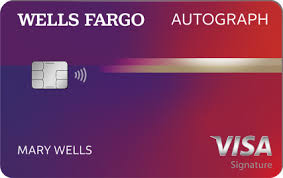
The Autograph earns 3x on travel, dining, gas, transit, and streaming for a $0 annual fee. There is no break-even to compute because there is nothing to recoup, which makes it the right answer for anyone who is skeptical of annual fees or who wants a keep-forever card that pads their credit history.
The trade-off is redemption value: Wells Fargo points are worth about 1.0 cents with a limited transfer program, so the Autograph earns a steady ~3% on its categories rather than the higher transfer-fueled ceilings of Chase or Amex points. That is still better than most no-fee cards manage, and you never owe the bank anything in April.
Break-even: immediate. The only cost is the upside you leave on the table by not transferring.
5. Amex Gold: Best Everyday Earner That Feeds Travel

The Gold is a travel card disguised as a dining card. It earns 4x Membership Rewards points at restaurants and U.S. supermarkets, which is the strongest everyday earn rate of any card on this list, and those points transfer to Amex's airline partners where good redemptions run 1.5 to 2.5 cents.
The catch is the $325 fee and the credit structure: dining and Uber credits arrive in monthly slices that you forfeit if you skip a month. Value them at what you would have spent anyway, not face value. And never redeem MR points for statement credits, which pay a dismal 0.6 cents; the points value calculator shows how wide that gap is.
Break-even: about $540 a month of dining plus groceries at a 1.5-cent redemption, less if you use the credits naturally. The Amex Gold calculator has the sliders.
See which of these five fits your actual spending →
What About the Amex Platinum?
The Platinum ($895) is a lounge-and-credits membership, not an earning card: outside 5x on flights, it earns 1x on nearly everything. If you fly enough that Centurion Lounge access and hotel elite status matter, run the numbers in our Amex Platinum calculator and the airport lounge access guide. If you mostly want points, the Gold earns more on real-world spending at a third of the fee.
What About Airline and Hotel Cards?
Co-branded cards answer a narrower question. A hotel card like the World of Hyatt card can be excellent (we rank those in best hotel credit cards), and airline cards can pay for themselves on checked bags alone (math in the bag fee calculator). But flexible bank points beat locked-in miles until one airline or chain dominates your travel, because they let you chase whichever redemption is valuable this year.
If you are choosing between specific cards for your home airport, we have city-level guides for Seattle, Denver, Austin, San Diego, and Nashville.
The Two-Card Answer
Most travelers do not need a single perfect card; they need a pair that feeds one points balance. Venture X plus a no-fee everyday card, or Sapphire Preferred plus a Freedom-family card, covers nearly every category at 2x or better with one currency to redeem. We made the full argument in why a two-card wallet beats trifectas.
Whatever you pick, value the points honestly. A 3x card at a 1.0-cent redemption is a 3% card, no matter what the marketing says. Our guide to how to value credit card points sets the benchmarks we use everywhere on this site.
Frequently Asked Questions
What is the best travel credit card in 2026?
For most people, the Capital One Venture X: the credits offset the fee for anyone who travels once a year, and 2x on everything requires no tracking. The Sapphire Reserve has a higher ceiling for people willing to work the credits and transfer partners.
Are premium travel cards worth the annual fee?
Only if your existing spending matches the credit categories. Credits you would not have bought anyway are not savings, they are a discount on things you did not want.
What is the best no-annual-fee travel card?
The Wells Fargo Autograph: 3x on travel, dining, gas, transit, and streaming for $0.
Should I get an airline or hotel card instead?
Start flexible. Transferable bank points keep their value when plans change; co-branded cards win only when one airline or chain dominates your travel.
How many travel cards do I need?
Usually two, feeding the same points currency. A third card rarely beats concentrating spend on the first two.
Cards Mentioned in This Article
Click any card above to see if it's worth adding to your wallet — personalized verdict in 30 seconds.
Related on Learn
Hand-picked based on topic and reader interest

Best Credit Cards for AI, SaaS, Cloud, and Software Subscriptions (2026)
ChatGPT, Claude, AWS, Adobe, and the rest do not all earn rewards the same way. Here is the best card by spend type, with the caps, credits, and merchant-coding traps that decide your real return.

Credit Cards for ChatGPT and Claude Spending: The $300 Amex Credit (2026)
Amex Business Gold and Business Platinum just added a $300/year ChatGPT Business credit. Here's the math, what Claude users actually get, and whether your AI subscription belongs on a personal or business card.

Best Business Credit Cards for Pre-Revenue Startups (2026)
You have an LLC, a domain, and a pile of SaaS bills, but no revenue yet. Here is how to handle the Amex $1,000 minimum revenue field honestly and which card to actually start with.

Best Business Credit Card for Cloud Computing and SaaS Costs (2026)
Running GCP, AWS, or Azure? Chase Ink Cash's 5% internet category doesn't cover cloud hosting. Here's the math on which business card actually wins for solo entrepreneurs with cloud and SaaS spending.
Get smarter with your cards
Math-first card strategy posts, sent when we publish — not on a schedule. No spam. Unsubscribe anytime.
We respect your inbox.
Ready to optimize your wallet?
Get personalized card recommendations and spending strategies in under 2 minutes.
Free to use. No signup required.
Get My Strategy →Just need an answer for one purchase? Best Card →