Credit Cards for ChatGPT and Claude Spending: The $300 Amex Credit (2026)
ChatGPT and Claude bills have become a real monthly expense. Plus and Pro tiers are $20-$200 a month, Claude Max runs $100 or $200, and the API charges add up fast. For a developer or consultant running through Claude Code or ChatGPT Pro all day, AI tools are a four-figure annual line item.
Until this week, almost no credit card treated that spend as anything special. As of May 12, 2026, that changed for one product: American Express added a $300 per calendar year statement credit for ChatGPT Business purchases on the Business Platinum and Business Gold cards. It is the first named AI benefit on a major U.S. rewards card. Per the American Express announcement and OpenAI's partnership page, enrollment is required and OpenAI must be the merchant of record.
Everything else (Claude, ChatGPT Plus, Pro, Enterprise, API spend) still falls back to generic software or flat-rate rewards. This guide covers when the Amex credit actually pays off, what the best options are for Claude users, and the harder question for LLC owners: should AI bills go on a personal card for higher rewards, or a business card for cleaner separation?
See which card wins for your spend mix →
This is a focused deep dive on ChatGPT and Claude. For the full picture across AI, SaaS, cloud, and software subscriptions, start with our best cards for software subscriptions guide.
The Short Answer
You pay $20/month for ChatGPT Plus or Claude Pro personally: Use a flat 2% card like Citi Double Cash or Wells Fargo Active Cash. At $240/year of spend, the difference between a 2% card and a 5% category card is about $7. Do not chase it.
You run a small team and use ChatGPT Business: Amex Business Gold is the clearest fit. The $300 ChatGPT credit covers half of the $375 annual fee, and the card also earns 4X Membership Rewards on its top-two categories, which can include software and cloud.
You spend $100-$200/month on Claude Max, Claude Code, or API credits: No named credit exists. The best bet is a flat 2X business card like the Amex Blue Business Cash (2% on the first $50K), a Brex card if you qualify (2X on software), or BofA Business Advantage Cash Rewards with the computer services category.
The $300 Amex ChatGPT Business Credit
This is the first piece of news worth understanding because it is, for now, the only AI-specific reward on a U.S. card. The details, per OpenAI and American Express:
- Cards eligible: The Business Platinum Card from American Express and the American Express Business Gold Card. Personal Amex Gold and Personal Amex Platinum are not included.
- Amount: Up to $300 in statement credits per calendar year.
- Eligible spend: U.S. purchases of ChatGPT Business, made directly with OpenAI as the merchant of record. Not ChatGPT Plus, Pro, Enterprise, or API.
- Enrollment: Required. Cardholders enroll once, after which the benefit auto-renews each calendar year.
- Posting time: Up to 8 weeks after the charge.
- Exclusions: App Store purchases, reseller transactions, gift cards, and anything where OpenAI is not the direct merchant of record.
The mechanics matter. If a team currently pays for ChatGPT Business through a third-party reseller or through Apple's App Store, the credit will not post. This is the same category-coding issue that already affects Amex's 4X software and cloud category: aggregator platforms are explicitly excluded.
The ChatGPT Business Pricing Math
Standard ChatGPT Business seats are $20 per user per month on annual billing, or $25 per user per month on monthly billing (after a $5/month reduction OpenAI rolled out in April 2026). A subscription requires a minimum of 2 seats, per the OpenAI billing help center.
That sets the floor at:
| Billing | 2-seat minimum cost | After $300 Amex credit |
|---|---|---|
| Monthly ($25/seat) | $600/year | $300/year |
| Annual ($20/seat) | $480/year | $180/year |
For a solo founder evaluating whether to upgrade from ChatGPT Pro ($200/month) to ChatGPT Business, the credit closes the gap meaningfully. A two-seat Business plan on annual billing comes out to $180/year after the credit, versus $2,400/year for Pro. The catch is that Business and Pro are not the same product. Pro has higher usage limits, full Codex access, and Deep Research priority. Business is built around team features, admin controls, and data privacy guarantees. Read the ChatGPT Pro tiers page before assuming Business is a drop-in replacement.
Is the Annual Fee Worth It for the Credit Alone?

Amex Business Gold ($375/year): The ChatGPT credit alone does not justify the fee. But the card also pays up to $240/year in FedEx, Grubhub, and Office Supply credits, plus a Walmart+ credit, plus 4X Membership Rewards on the top two categories each billing cycle (software and cloud is one eligible category). For a business spending real money on AI tools and cloud infrastructure, the combination clears the fee comfortably. The cloud and SaaS business card guide has the full break-even math.
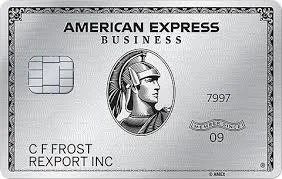
Amex Business Platinum ($895/year): The ChatGPT credit alone is nowhere near the fee. The Business Platinum recently raised its annual fee from $695 to $895 (effective at first renewal on or after December 2, 2025), and the card now carries roughly a dozen statement credits, including up to $1,000 in annual Dell credits, $250 at Adobe (on $600 spend), $600 in Fine Hotels & Resorts credits, $200 at Hilton, and $209 for CLEAR+. The ChatGPT credit is incremental. The card makes sense only if a buyer already uses Dell, Indeed, Adobe, FHR hotels, CLEAR, or the Centurion Lounge network. If those credits do not match the spending pattern, the Business Platinum is not a ChatGPT play.
Compare Business Gold against your current cards →
What Claude Users Actually Get
As of August 3, 2026, no U.S. consumer or business credit card carries a named Claude credit. If you searched for an "Amex Claude credit," that is the answer: it does not exist. The $300 AI credit is ChatGPT Business only, with OpenAI as the merchant of record.
What Amex and Anthropic did ship
Two integrations arrived between April and July 2026, and neither is a card benefit.
On April 27, 2026, Amex made U.S. Resy restaurants discoverable inside Claude. Members can ask Claude for restaurant recommendations and check whether a place is on Resy, then move to Resy to book. It is a discovery surface, not a booking or payment integration, and it pays nothing.
On July 27, 2026, Amex Global Business Travel launched an Egencia AI connector in Claude. Employees and enterprise agents can search, book, and manage in-policy air and hotel travel without leaving Claude. This one is a corporate travel product tied to an Egencia contract, so it is unrelated to what any individual cardholder holds in their wallet.
Both are worth knowing about because they are the reason "Amex Claude" turns up results. Neither changes what your Claude bill earns. For that, keep reading.
Claude spend (Pro at $20/month, Max at $100 or $200/month, Claude Code via the Max allocation, and direct Anthropic API spend) falls back to whatever category code the card issuer assigns to Anthropic. In practice, that is usually generic "software" or "online services," which is a 1X or 2X category at best on most cards.
The best fallback options:
| Card | Rate on Claude Spend | Annual Fee | Best For |
|---|---|---|---|
| Amex Blue Business Cash | 2% (first $50K/yr) | $0 | Solo founders, simple cash back |
| Amex Blue Business Plus | 2X Membership Rewards (first $50K/yr) | $0 | Founders building MR balance |
| Brex card | 2X on software | $0 | Venture-backed startups with cash on deposit |
| BofA Business Advantage Cash Rewards | 3% (computer services) up to 5.25% with Platinum Honors | $0 | BofA Preferred Rewards customers |
| Citi Double Cash | 2% on everything | $0 | Personal Claude Pro/Max users |
| Wells Fargo Active Cash | 2% on everything | $0 | Personal Claude Pro/Max users |
| BofA Customized Cash | 3% (online shopping), 4.5% at Preferred Honors | $0 | Personal BofA customers, if it codes |
A few practical notes. The BofA Business Advantage Cash Rewards 3% computer services category caps at $50,000 of combined choice-category and dining spend per calendar year, and bumps to 5.25% only at the Platinum Honors tier of Preferred Rewards for Business (which requires significant deposit balances). The personal BofA Customized Cash 3% category options include online shopping, which may or may not code for AI subscriptions; this should be verified with an actual transaction before counting on it. Note that the personal program was renamed BofA Rewards on May 27, 2026 and the 75% bonus moved to $1M+, so $100k now yields 4.5% rather than 5.25% (details).
The Rho Claude Code Builders promo
There is one Claude-specific offer worth knowing about, though it is conditional. Rho advertises $500 in Claude credits through its Claude Code Builders program. The requirements:
- Open a new Rho business checking account (existing customers and those who applied within the last 120 days do not qualify)
- Deposit at least $20,000 of proceeds from an app built with Claude Code, directly from the app's payment processor, within 30 days of opening
- Make at least $500 in Claude purchases on the Rho corporate card during the 30-day period
- Keep the account in good standing through the qualification window
This is a startup-banking acquisition offer, not a normal rewards-card benefit. It only makes sense for a builder who is already shipping a Claude Code app, already generating revenue, and willing to switch to Rho as their business bank. For most readers, it is an interesting data point about the AI-funding landscape rather than an actionable card recommendation.
Personal Card vs Business Card: The Decision Most Power Users Get Wrong
For LLC owners, this is the harder question. Most rewards optimization writing assumes you should always chase the highest-yield card. For AI subscriptions running through a business, that math is often wrong.
The rewards delta at $100-$200/month is genuinely small:
| Card strategy | Rate | Annual rewards at $100/mo | Annual rewards at $200/mo |
|---|---|---|---|
| Lower-yield business card | 1.5% | $18 | $36 |
| Flat 2% card | 2% | $24 | $48 |
| Strong business or BofA-boosted | 2.62% | $31 | $63 |
| 4X / 4% category card | 4% | $48 | $96 |
| Personal BofA Customized Cash at Preferred Honors | 4.5% | $54 | $108 |
| Amex Business Gold + ChatGPT credit (if applicable) | $300 direct | $300 | $300 |
The Amex ChatGPT credit is in a different league. Everything else is a 2-4% optimization on what amounts to $1,200-$2,400 of annual spend. The gap between a secured 1.5% business card and a 5.25% personal card is roughly $45-$90 per year.
That is the math. Now the other consideration.
The IRS small business records guidance requires that business expense records identify the payee, amount, proof of payment, date, and business purpose. Credit card statements are valid supporting documents, but the system must clearly show that the expense was the business's. The SBA recommends keeping business and personal banking separate as part of preserving limited liability protection.
For an LLC owner paying $200/month on a Claude Max subscription used entirely for the business, the cleanest setup is:
- A business card with strong rewards. For ChatGPT Business, that means Amex Business Gold (the $300 credit dominates). For Claude or general AI, the Amex Blue Business Plus, BofA Business Advantage Cash Rewards, or Brex are all reasonable.
- A lower-yield business card if approval is hard. A secured business card at 1.5% earns less than a personal optimizer, but it builds a clean LLC paper trail. For pre-revenue founders, see our pre-revenue business card guide and consider Mercury IO.
- A personal card with formal reimbursement accounting. Acceptable as a fallback. Submit the receipt to the LLC, have the LLC reimburse from its business checking account, book the expense properly. This is fine occasionally. It is not a long-term strategy.
One important point about business credit cards: they do not eliminate personal liability for the card debt. Most business cards include a personal guarantee, meaning the cardholder is on the hook if the business defaults. Chase explains this directly. The advantage of a business card for an LLC owner is corporate formality and clean accounting, not a liability shield on the credit line itself.
Watch the Category Coding
One detail that costs people money: the bonus rate only applies if the merchant code is right. Amex's terms for the software and cloud category on business cards explicitly exclude "application purchases via aggregator platforms." That means:
- Pay on the web at chatgpt.com or claude.ai, not through the iOS app's in-app purchase flow.
- Avoid reseller billing where a third party (not OpenAI or Anthropic) shows up on the statement.
- Annual billing on the issuer's site typically codes correctly. Verify on the first statement.
The $300 Amex ChatGPT credit specifically requires OpenAI as the merchant of record. If the charge runs through Apple, Stripe Express, or a reseller, the credit will not trigger.
Quick Decision Guide
Personal ChatGPT Plus or Claude Pro at $20/month: Use a flat 2% card. Optimization at this spend level rounds to zero.
Personal Claude Max or ChatGPT Pro at $100-$200/month: Still use a flat 2% card, or BofA Customized Cash if you have a BofA Rewards tier and the online-shopping category codes correctly. Verify on your first statement.
LLC paying $100-$200/month for Claude Max, Claude Code, or API credits: Business card. Amex Blue Business Plus for transferable points, BofA Business Advantage Cash Rewards (computer services) if you have BofA Preferred Rewards, or a flat 2% business card otherwise.
Business paying for ChatGPT Business: Amex Business Gold is the clearest answer. The $300 credit alone offsets most of the annual cost of a 2-seat Business plan, and the rest of the card's category structure works well for SaaS-heavy businesses.
Business already paying for Amex Platinum-style perks (Dell, FHR, CLEAR, lounges): Business Platinum makes sense for the broader credit stack. The ChatGPT credit is a small bonus, not the reason to get the card.
Pre-revenue founder with no approved business card: Read the pre-revenue startup card guide. Mercury IO at 1.5% or a plain business debit card beats commingling expenses on a personal card.
The Bottom Line
The Amex $300 ChatGPT Business credit is the first time a major U.S. card has paid a named, dollar-denominated benefit for AI spending. For a business that actually uses ChatGPT Business, the Business Gold is now an obvious choice. For everyone else, AI subscriptions still code as generic software, and the right card is whatever already wins for that spending category.
The bigger point: at $1,200-$2,400/year of AI spend, the difference between an optimal personal card and an adequate business card is roughly $45-$90 a year. For an LLC owner, that is almost never worth the bookkeeping mess of commingling business expenses on a personal account. Pick the business card, take the smaller rewards, and keep the LLC clean.
Rewards cards will catch up to Claude and the rest of the AI stack eventually. Until then, the only meaningful named credit lives on Amex Business Gold, and it only applies to ChatGPT Business.
Run your optimization → to see which card actually fits your AI and SaaS spending.
Related on Learn
Hand-picked based on topic and reader interest

Best Credit Cards for AI, SaaS, Cloud, and Software Subscriptions (2026)
ChatGPT, Claude, AWS, Adobe, and the rest do not all earn rewards the same way. Here is the best card by spend type, with the caps, credits, and merchant-coding traps that decide your real return.

Best Business Credit Cards for Pre-Revenue Startups (2026)
You have an LLC, a domain, and a pile of SaaS bills, but no revenue yet. Here is how to handle the Amex $1,000 minimum revenue field honestly and which card to actually start with.

Best Business Credit Card for Cloud Computing and SaaS Costs (2026)
Running GCP, AWS, or Azure? Chase Ink Cash's 5% internet category doesn't cover cloud hosting. Here's the math on which business card actually wins for solo entrepreneurs with cloud and SaaS spending.

Best Business Credit Cards 2026: Cash Back and Rewards for Small Businesses
Complete guide to the best business credit cards in 2026. Compare cash back cards, rewards programs, intro APR offers, and find the right card for your SMB spending profile.
Get smarter with your cards
Math-first card strategy posts, sent when we publish — not on a schedule. No spam. Unsubscribe anytime.
We respect your inbox.
Ready to optimize your wallet?
Get personalized card recommendations and spending strategies in under 2 minutes.
Free to use. No signup required.
Get My Strategy →Just need an answer for one purchase? Best Card →