The Best Credit Card Trifecta in 2026: The Math After Fees
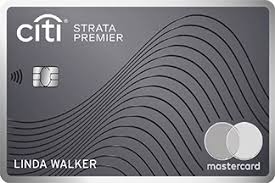
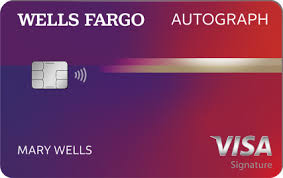
The best credit card trifecta in 2026 has two cards. On a $60,000 annual budget with every point valued at one cent, the Citi Strata Premier plus Double Cash nets $1,375 a year after fees, and the no-fee Wells Fargo Autograph plus Active Cash nets $1,350. The Chase Sapphire Preferred trifecta nets $970, which is $230 less than one free 2% card.
That ordering flips only when your points are worth more than about 1.2 cents each, which takes transfer partners. Below are the numbers for each setup, the 2026 changes that closed two classic trifectas to new applicants, and the point value each one needs to break even.
See which combination wins on your own spending →
What a trifecta is, and why pooling is the point
A credit card trifecta is three cards from one bank whose rewards land in one account. The usual shape is one annual-fee card that gives access to airline and hotel transfers, plus one or two no-fee cards with bonus categories.
The pooling is what makes the no-fee cards worth more than cash back. A Chase Freedom Unlimited earns cash back on its own, but paired with a Sapphire Preferred the same rewards become Ultimate Rewards points you can transfer to Hyatt or United. The Citi Double Cash does the same with ThankYou points once you hold a Strata Premier. The Wells Fargo Active Cash can be combined into an Autograph account, and Capital One Savor cash back converts to miles next to a Venture X.
That makes the useful measure the whole wallet: what it earns at the value you will redeem for, minus every fee you pay.
What changed in 2026
Most trifecta guides on the first page of search predate at least one of these changes.
| Date | Change | Effect |
|---|---|---|
| Feb 1 | Venture X: free lounge guests only after $75,000 spend | Guests cost $45 at Capital One Lounges; Priority Pass guests $35 |
| Apr 30 | Amex Gold refresh | Adds 5x on prepaid hotels via Amex Travel; fee stays $325 |
| May 17 | Citi ends ThankYou point sharing | You can still combine points across your own cards |
| May 28 | Citi Custom Cash closes to new applicants | The classic Citi trio is existing-cardholder only |
| Jun 15 | Chase Sapphire Preferred refresh | 3x gas and EV charging, 3x vacation rentals, $100 hotel credit; anniversary bonus ends; Hyatt transfers drop to 4:3 |
| ~Jun 15 | Wells Fargo Attune closes to new applicants | The older Wells Fargo trio loses its third card |
| Sept | Freedom Flex drops foreign transaction fees | Cell phone protection also ends |
The Chase change that matters most for this comparison is older. Since June 2025, Chase Travel redemptions start at 1 cent per point under Points Boost, up to 1.5 cents on select hotels and flights for the Sapphire Preferred (1.75 cents on select premium-cabin flights). The old guaranteed 1.25 cents survives only on points earned before October 26, 2025, on cards opened before June 23, 2025, and it ends in October 2027. Our guide to what Chase points are worth has the details.
The setups we compared
| Setup | Annual fees | Everyday rate | Cash-out floor |
|---|---|---|---|
| Chase: Sapphire Preferred + Freedom Unlimited + Freedom Flex | $95 | 1.5x | 1 cent |
| Citi: Strata Premier + Double Cash | $95 | 2x | 1 cent with Double Cash |
| Capital One: Venture X + Savor | $395 | 2x | 0.5 cent (1 cent on travel) |
| Wells Fargo: Autograph + Active Cash | $0 | 2% | 1 cent |
| Amex: Platinum + Gold + Blue Business Plus | $1,220 | 2x (business only) | about 0.6 cent |
The everyday rate is what you earn on the purchases that fit no bonus category. For most households that is the largest single bucket, so a 1.5x catch-all costs more than it looks. The cash-out floor is what a point is worth if you skip travel entirely.
The $60,000 household
Here is the spending profile we used. Every figure below comes from this budget, not from any real household's statements.
| Category | Annual spend |
|---|---|
| Groceries (supermarkets) | $12,000 |
| Dining | $6,000 |
| Gas and EV charging | $3,000 |
| Flights and hotels booked direct | $6,000 |
| Everything else | $33,000 |
We assumed every point is worth exactly 1 cent, the balance is paid in full, and there are no welcome bonuses. Statement credits are excluded unless a row says otherwise. Each purchase goes to the best card in the setup for its category.
| Setup | Fees | Net per year | vs. 2% card |
|---|---|---|---|
| Robinhood Gold Card (3% flat) | $50 | $1,750 | +$550 |
| Citi trio with Custom Cash (legacy) | $95 | $1,495 | +$295 |
| Citi Strata Premier + Double Cash | $95 | $1,375 | +$175 |
| Wells Fargo Autograph + Active Cash | $0 | $1,350 | +$150 |
| Amex Gold + a 2% card | $325 | $1,265 | +$65 |
| Any free 2% card | $0 | $1,200 | |
| Chase trio, with $6,000 in 5% quarters | $95 | $1,180 | -$20 |
| Capital One Venture X + Savor | $395 | $985 | -$215 |
| Chase trio, base | $95 | $970 | -$230 |
| Amex Platinum + Gold + Blue Business Plus | $1,220 | $430 | -$770 |
Three of the five issuer trifectas finish below a free 2% card. The Chase trio loses because $45,000 of this budget (groceries plus everything else) earns 1.5x on the Freedom Unlimited. The Capital One and Amex setups lose to their fees before any credits are counted.
The Citi pair beats the Wells Fargo pair by $25. Both earn 3x on dining, gas and travel and 2% on everything else, so the gap is groceries: 3x on the Strata Premier against 2% on the Active Cash, which is $120 on $12,000 of supermarket spend, less the $95 fee. A household spending on phone plans, streaming or transit would see the Autograph's 3x there close that gap or reverse it.
Robinhood's single card beats everything at cash value, with two conditions. It is still waitlist-only, and accounts opened on or after July 1, 2026 pay a 3% foreign transaction fee. We cover where it falls short in should you put everything on the Robinhood Gold Card.
When points are worth more than a cent
Every travel-points setup looks better if you redeem for more than a cent. The table below holds the earning fixed and changes only the point value, applying the same value to every program so the comparison isolates that one variable.
| Setup | 1.0 cent | 1.5 cents | 2.0 cents |
|---|---|---|---|
| Citi Strata Premier + Double Cash | $1,375 | $2,110 | $2,845 |
| Wells Fargo Autograph + Active Cash | $1,350 | $2,025 | $2,700 |
| Capital One Venture X + Savor | $985 | $1,675 | $2,365 |
| Chase trio, base | $970 | $1,503 | $2,035 |
| Amex Platinum + Gold + Blue Business Plus | $430 | $1,255 | $2,080 |
The Robinhood card stays at $1,750 and a 2% card stays at $1,200, because their points are fixed at a cent. Going from 1 to 1.5 cents adds $735 to the Citi pair without earning a single extra point. That is more than four times the pair's lead over a 2% card at cash value, so the point value you assume can matter more than which cards you pick.
The more useful number is the point value each setup needs to break even.
| Setup | To match a 2% card | To match Robinhood Gold |
|---|---|---|
| Citi Strata Premier + Double Cash | 0.88 cent | 1.26 cents |
| Wells Fargo Autograph + Active Cash | 0.89 cent | 1.30 cents |
| Capital One Venture X + Savor | 1.16 cents | 1.55 cents |
| Chase trio, base | 1.22 cents | 1.73 cents |
| Amex Platinum + Gold + Blue Business Plus | 1.47 cents | 1.80 cents |
Ask yourself which of those thresholds you have cleared in the past year. A cent and a half is realistic for someone booking Hyatt nights or partner business class a few times a year. It is not realistic for someone whose points sit unredeemed, or who redeems them for statement credits. Wells Fargo's partner list is also thinner (11 programs, with JetBlue the only U.S. airline), so 1.5 cents is harder to reach there than with Chase or Citi.
The break-even rule for any card
A card is worth the difference between what your wallet earns with it and without it. For a card that improves your rate on one slice of spending:
Here is the spending you move to the new card, is the cash-equivalent rate, and is the card's annual fee. Setting to zero gives the spending you need:
A $95 card earning 3% where you already earn 2% needs $9,500 a year in its bonus categories to pay for itself. The common mistake is to compare 3% against zero, which gives $3,167. That understates the bar by two-thirds, because a free 2% card is always available.
Applied to Citi versus Wells Fargo: on this budget, the Strata Premier's only edge over the Wells Fargo pair is groceries. If you spend more than $9,500 a year at supermarkets, Citi wins at cash value. Below that, the free pair wins.
Issuer by issuer
Chase: for people who transfer to Hyatt or United

Chase's case rests on its transfer partners. The earning rates alone don't carry it. The Sapphire Preferred now earns 3x on dining, gas and EV charging, vacation rentals, streaming and online groceries, and the Freedom Flex adds 5% rotating quarters on up to $1,500 a quarter. The weak spot is the Freedom Unlimited's 1.5x on everything else and in-store groceries.
The rotating quarters help if you activate them and spend in them. Moving $6,000 a year of 1.5x purchases into 5% quarters adds $210, which lifts the base trio from $970 to $1,180, still $20 short of a 2% card at cash value. The fourth quarter of 2026 happens to cover dining and grocery stores (excluding Walmart and Target).
Chase is the right choice if you redeem through World of Hyatt or United at well above a cent per point, because the trio clears a 2% card at 1.22 cents. Note that Hyatt transfers from the Sapphire Preferred are now 4:3, while the Sapphire Reserve stays 1:1. If you redeem for cash or Chase Travel at 1 cent, this setup earns less than a single free card.
Citi: the best $95 pair, and a trio you may no longer be able to get
The Strata Premier earns 3x on supermarkets, dining, gas and EV charging, air travel and hotels, which is the broadest 3x list of any $95 card. The Double Cash covers everything else at 2% and gives the Strata Premier's points a 1-cent cash-out floor (the Strata Premier alone cashes out at 0.75 cents, per our Strata Premier review). Transfers include American Airlines AAdvantage, which none of the other four banks here offers.
If you already hold a Custom Cash, keep it. Its 5% on your top category for the first $500 each billing cycle adds $120 a year on this budget ($6,000 of groceries at 5% instead of 3%). New applicants can't get it. The no-fee Citi Strata is the closest substitute, with 3x on supermarkets, gas and transit plus one self-selected category, though it doesn't match a 5% card.
Two smaller 2026 changes: you can no longer share ThankYou points with another person, and transfers to Choice and I Prefer were cut in April.
Wells Fargo: the free pair worth checking first
The Autograph earns 3x on restaurants, travel, gas and EV charging, transit, popular streaming services and phone plans, with no annual fee. It earns 1x on groceries, so the Active Cash takes those at 2% along with everything else. Active Cash rewards can be combined into the Autograph account, which is the only way they reach Wells Fargo's transfer partners.
At $0 in fees, this pair has no break-even to clear. It is within $25 of the Citi pair on our budget and ahead of it for anyone spending under $9,500 a year on groceries. The trade-off is the transfer list, which leans toward Flying Blue, British Airways, Virgin and Avianca, with JetBlue as its only U.S. airline. Our Autograph transition guide covers the pairing in more detail.
Capital One: a premium pair that depends on credits

The Venture X earns 2x on everything, and the Savor adds 3% on dining, entertainment, streaming and grocery stores (excluding superstores like Walmart and Target), convertible to miles at one mile per cent. That is clean coverage for two cards. Before credits it nets $985, because the $395 fee absorbs most of the bonus earning.
The card is usually pitched with a $300 Capital One Travel credit and 10,000 anniversary miles. Counted at full face value, those lift the pair to $1,385. That is only correct if you would have booked $300 of travel through Capital One's portal anyway at the portal's price, and if you redeem the miles at a cent or more. Families should also know that lounge guests are no longer free unless you spend $75,000 a year, and Priority Pass guests cost $35 regardless.
Amex: a benefits portfolio more than a rewards strategy

The classic Amex trifecta is the Platinum ($895), the Gold ($325) and the Blue Business Plus ($0). The Gold earns 4x at restaurants (on up to $50,000 a year) and U.S. supermarkets (on up to $25,000), and the Platinum earns 5x on flights booked direct. The Blue Business Plus earns 2x on the first $50,000, but it is a business card, and modeling household purchases on it overstates what most people can do.
At $1,220 in fees the trio needs 1.47 cents per point to match a 2% card, before counting the Platinum's credits and lounges. Whether those are worth $895 to you is a separate calculation, which we run in Amex Gold vs. Platinum. And because Amex points cash out at roughly 0.6 cents, a 1-cent assumption already flatters this setup.
Most people do better with the Gold alone next to a 2% card from another bank. No business card needed. That pair nets $1,265 at a cent per point and $1,670 at 1.5 cents.
Cross-issuer setups
Nothing requires the cards to come from one bank. If you redeem for cash, the setup to beat is a single 3% card. The Robinhood Gold Card earns 3% on eligible purchases for a $50-a-year Gold membership, and the U.S. Bank Smartly reaches 4% on the first $10,000 per billing cycle if you keep $100,000 or more in U.S. Bank checking. If you pay rent or a mortgage, Bilt's 2026 cards (issued by Column N.A. since February) belong in the comparison too. Our guide to beating 2% on everything compares the flat-rate options.
What the third card is worth
On this budget, the third card adds less than the second in every case where we could measure it. The Custom Cash adds $120 to the Citi pair. The Freedom Flex adds $210 to the Chase pair if you activate every quarter and route $6,000 through it, and nothing if you don't.
We ran the general version of this test in How Many Rewards Credit Cards Do You Need?, adding one card at a time to an average U.S. budget. The second card was worth $640 and the third $48. Whether a third card is worth carrying depends on whether $50 to $200 a year covers the effort of tracking another set of categories and caps.
Who should skip a trifecta
If you carry a balance, skip all of it. At a 22% APR, a $3,000 balance carried for a year costs about $660 in interest, more than any gap in the tables above. Pay that down before optimizing rewards, as our rewards readiness guide explains.
There is evidence that the cost of rewards falls on the people least likely to optimize them. A 2023 Federal Reserve working paper by Agarwal, Presbitero, Silva and Wix found that "sophisticated individuals profit from reward credit cards at the expense of naïve consumers," and estimated $15 billion a year in redistribution between groups. The CFPB's 2024 report on rewards programs logged more than 1,200 complaints in 2023 about devaluations, hidden conditions and revoked points.
Skip the trifecta too if you won't redeem points for travel. Below 1.22 cents per point, the Chase trio earns less than a 2% card. And if you know you'll forget a quarterly activation, count the Freedom Flex at its base rate. The gap between theoretical and actual rewards is mostly made of habits like that.
Quick Decision Guide
You redeem for cash and want no fees: Wells Fargo Autograph + Active Cash, or a single 2% card if you won't carry two.
You spend more than $9,500 a year on groceries: Citi Strata Premier + Double Cash.
You already hold a Citi Custom Cash: keep it as the third card in the Citi trio.
You book Hyatt or United awards at 1.5 cents or more: the Chase trio, with the Freedom Flex only if you'll activate it every quarter.
You travel often and will use a $300 portal credit: Capital One Venture X + Savor.
You can get the Robinhood Gold Card and rarely travel abroad: that one card beats every trifecta here at cash value.
You carry a balance: none of the above until it is paid off.
Bottom line
The trifecta format fixes two things in advance: three cards, one bank. Neither is required. On a $60,000 budget at cash value, the best wallet you can apply for today has two cards and costs $95 or nothing. The Chase, Capital One and Amex setups win only if your redemptions clear 1.16 to 1.47 cents a point or you count their credits as cash.
The right number of cards is the smallest set that clears its fees on the spending you already have.
Run your own numbers in the optimizer →
Methodology
Earning rates and fees were checked against issuer pages and reporting from Doctor of Credit, The Points Guy and One Mile at a Time on October 18, 2026. Recheck any card's terms before you apply.
All figures use the $60,000 profile above, routed to the best card in each setup by category. The grocery figures assume a traditional supermarket: Walmart, Target, Costco and other superstores or warehouse clubs don't earn the grocery rate on most of these cards. Travel is assumed to be booked directly with airlines and hotels, not through a bank portal. For the Amex setups we split the $6,000 evenly between flights and hotels, since the Gold and Platinum earn different rates on each.
We excluded welcome bonuses, statement credits (except the one labeled Capital One row), and the value of lounge access and insurance. Point values are applied evenly across programs, which simplifies real transfer values. Figures are rounded to the nearest dollar.
Cards Mentioned in This Article
Click any card above to see if it's worth adding to your wallet — personalized verdict in 30 seconds.
Related on Learn
Hand-picked based on topic and reader interest

How Many Rewards Credit Cards Do You Actually Need?
How many credit cards should you have for rewards? We added cards one at a time to an average US household budget and measured what each one earned. The second card was worth 13 times the third.

Three Ways a Rewards Optimizer Gives You the Wrong Answer (Ours Included)
Credit card rewards calculators disagree wildly. Here are the three assumptions that move the answer most, run on one wallet, plus a list of what CardSavvy's own model gets wrong and why.

How to Optimize Your Credit Card Rewards: A Real $34,800 Walkthrough
How much does optimizing your credit cards actually earn? We ran an average US household's $34,800 of spending through CardSavvy Optimize. Three cards, $1,384/yr net, and every number reproducible in the tool.

How to Value Credit Card Points (Without Lying to Yourself)
Most point valuations are fantasy math. Here's a realistic framework for calculating what your Chase, Amex, Capital One, and Citi points are actually worth—floor values, expected values, and the lies you need to stop telling yourself.
Get smarter with your cards
Math-first card strategy posts, sent when we publish — not on a schedule. No spam. Unsubscribe anytime.
We respect your inbox.
Ready to optimize your wallet?
Get personalized card recommendations and spending strategies in under 2 minutes.
Free to use. No signup required.
Get My Strategy →Just need an answer for one purchase? Best Card →