Coinbase One Card Review: 4% Bitcoin Back Is Real, but Most People Won't Earn It
TL;DR: Up to 4% bitcoin back on everything sounds incredible. But "up to" is doing heavy lifting. You need a paid Coinbase One membership, assets parked on Coinbase, and the willingness to accept rewards in bitcoin only. For Coinbase power users, it is a genuinely strong play. For everyone else, a flat 3% cash-back card with no strings attached is probably smarter.
Jump to: Rewards tiers | Gotchas | Comparison | Verdict
Coinbase just entered the credit card game. The Coinbase One Card, issued by First Electronic Bank through Cardless on the American Express network, promises up to 4% bitcoin back on every eligible purchase. No rotating categories. No quarterly activation. Just a flat earn rate on everything you buy.
The catch is that the headline rate is gated not by your spending, but by how much money you keep on Coinbase. That makes this a fundamentally different kind of card than what most people are used to evaluating.
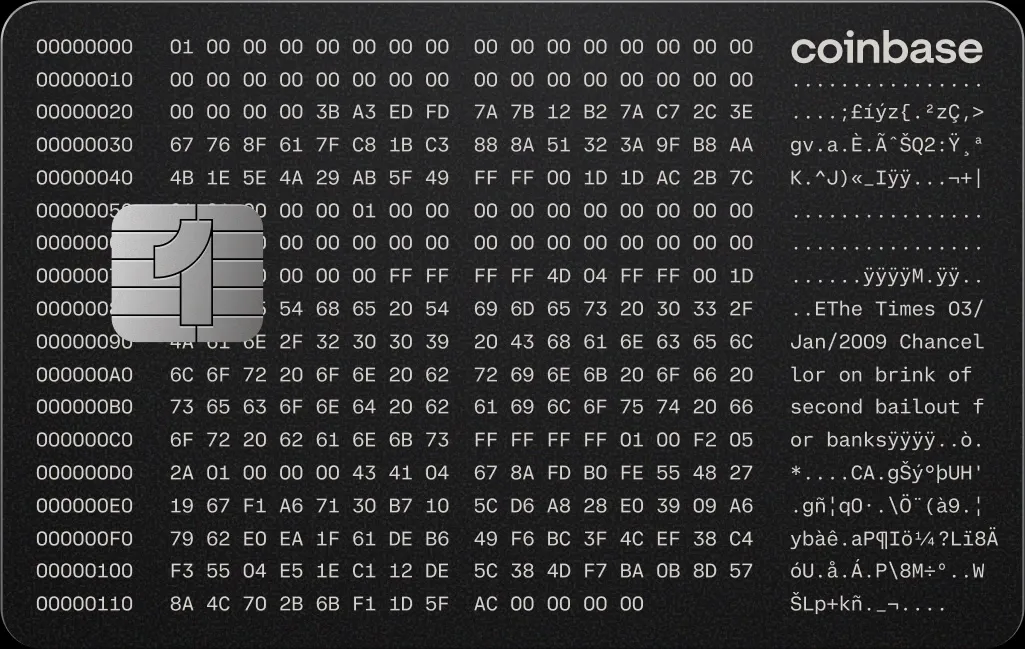
At CardSavvy, we believe in math over marketing. So let's break down who this card is actually designed for, and whether the math works for you.
See how a crypto-back card stacks up against your wallet →
At a Glance
| Detail | Value |
|---|---|
| Annual Fee | $0 (requires Coinbase One: $49.99+/yr) |
| Network | American Express |
| Issuer | First Electronic Bank (via Cardless) |
| Base Reward | 2% bitcoin back |
| Max Reward | 4% bitcoin back |
| Monthly Cap | $10,000 at boosted rate |
| Foreign Transaction Fee | None |
| Purchase APR | 19.49%–29.49% variable |
| Cash Advance APR | 32.24% variable |
| Availability | U.S. only (excluding territories) |
Coinbase says you can check approval and see your credit limit with no credit score impact. A hard inquiry is only reported if you accept the offer. The card is managed through the Coinbase mobile app, and you get a virtual card for digital wallets before the physical card ships.
The Rewards Tiers, Explained
The Coinbase One Card does not have a single earn rate. It has four tiers based on your total assets held on Coinbase:
| Assets on Coinbase | Earn Rate |
|---|---|
| Under $10,000 | 2.0% |
| $10,000–$49,999 | 2.5% |
| $50,000–$199,999 | 3.0% |
| $200,000+ | 4.0% |
A few important details here.
USD and USDC count. Your asset balance is not limited to crypto holdings. Cash and stablecoins sitting on Coinbase count toward your tier. That lowers the volatility risk of maintaining a balance, but it does not eliminate the platform custody question.
The tier calculation changes after 60 days. For the first 60 days, your reward tier is based on your real-time balance at the time of each purchase. After that, Coinbase uses the average of your daily end-of-day balance over the prior 30 days. That means you cannot briefly park $200k on the platform right before a big purchase and expect 4% forever. The system is designed to reward ongoing custody, not one-time deposits.
There is a monthly cap. The boosted rates (2.5%, 3%, 4%) only apply to the first $10,000 in eligible purchases per calendar month. Everything above $10,000 earns 2% regardless of your tier.
At the maximum tier, the math looks like this: 4% on $10,000/month equals $400/month, or $4,800/year in bitcoin rewards. That is genuinely impressive. But it requires $200,000+ sitting on Coinbase at all times.
Understanding how to honestly value rewards matters here too. Bitcoin rewards are not cash. Their value fluctuates between the time you earn them and the time you spend them.
The Five Gotchas You Need to Know
1. The Asset Hurdle Is the Real Gate
The 4% rate is not a signup bonus or a promotional period. It is an ongoing requirement tied to your custodied assets on Coinbase. $200,000 is a significant sum to keep on any single exchange, and it introduces platform risk that a traditional credit card does not carry.
Even the 2.5% tier requires $10,000 on-platform. If your Coinbase balance drops below your tier threshold (due to market movement, withdrawals, or anything else), your earn rate drops with it.
2. Not All Spend Earns Rewards
Coinbase excludes a long list of transaction types from rewards eligibility:
- Peer-to-peer payments
- Gift card and prepaid card purchases
- Money orders and traveler's checks
- Gambling transactions
- Financial services (stocks, bonds, options)
- Cash-like transactions (ATM withdrawals, wire funding)
- The Coinbase One membership fee itself
Coinbase also explicitly reserves the right to shut down rewards for manufactured spend, fraud, or abuse. If you are used to maximizing cards through creative spend strategies, this one has guardrails.
3. Crypto Purchases Are Cash Advances
This is the gotcha that will surprise the most people. The cardholder agreement classifies purchasing or exchanging cryptocurrency as a cash advance, not a regular purchase. Cash advances carry a 32.24% variable APR and a fee of $10 or 5% (whichever is greater).
Do not assume you can use the Coinbase card to buy bitcoin and earn 4% on it. That is not how this works.
4. Returns Can Cost You
If a purchase is refunded or reversed after you have already received bitcoin rewards, Coinbase can charge a "Rewards Adjustment Charge" equal to the fiat value of the bitcoin at the time it was credited, not the current market price. That charge gets added to your card account and is included in the minimum payment due for that billing cycle.
In a rising bitcoin market, this means you could owe more in fiat than the bitcoin reward is currently worth if you have already sold or transferred it.
5. Cancel the Membership, Lose the Card
If your Coinbase One membership becomes inactive or is canceled, the card account may be closed. And if the card closes, uncredited rewards can be forfeited. This ties the card's existence to an ongoing subscription in a way that most credit cards do not.
Break-Even Math
The Coinbase One Card is not free. It requires a Coinbase One membership, starting at $49.99/year for the Basic plan. Here is how the economics compare to a free 2% cash-back card (like the Fidelity Rewards Visa):
| Your Tier | Earn Rate | Extra vs. Free 2% Card | Annual Spend to Break Even on $50 Membership |
|---|---|---|---|
| Under $10k assets | 2.0% | 0% | Never (paying $50 for parity) |
| $10k–$50k assets | 2.5% | +0.5% | $10,000 |
| $50k–$200k assets | 3.0% | +1.0% | $5,000 |
| $200k+ assets | 4.0% | +2.0% | $2,500 |
The key takeaway: at the 2% tier, this card makes no economic sense over a free flat-rate card. You are paying $50/year for the privilege of earning the same rate you could get for free.
The card only starts to pull ahead when you cross the $10,000 asset threshold and earn 2.5%, and even then the incremental value is modest unless your spend is high. The real value unlock happens at $50k+ in assets, where the 3% rate provides meaningful uplift.
This is similar to the coupon-book economics we see with premium cards: the headline rate is real, but the conditions required to earn it are what determine whether you actually benefit.
Compare all three crypto-back cards against your current wallet →
Amex Network Perks
The Coinbase One Card runs on the American Express network and includes several Amex-linked benefits:
- Return Protection: Up to $300 per item and $1,000 annually if the merchant refuses a return within 90 days (internet purchases do not qualify)
- Extended Warranty: Doubles the manufacturer warranty by up to 12 months, with a $10,000 max benefit
- Trip Cancellation/Interruption: Up to $1,500 when the eligible fare is charged to the card
- Car Rental Insurance: Worldwide coverage for loss and damage
- Amex Offers and Experiences: Access to Amex merchant deals and event access
One important note: the card does not appear in your American Express online account, despite running on the Amex network. You manage it entirely through the Coinbase app.
These are decent secondary perks, but they are not the reason to get this card. The decision should rest on the rewards structure and whether you are already in the Coinbase ecosystem.
How It Compares
| Coinbase One Card | Robinhood Gold Card | Gemini Credit Card | |
|---|---|---|---|
| Annual Fee | $0 (+ $49.99+ membership) | $0 (+ $50/yr Gold) | $0 |
| Earn Rate | 2%–4% (asset-tiered) | 3% flat | 1%–4% (category-based) |
| Reward Currency | Bitcoin only | Cash back (USD) | 50+ cryptos |
| Monthly Cap | $10k at boosted rate | None published | None published |
| Asset Requirement | Yes ($10k–$200k+) | No | No |
| Network | Amex | Visa | Mastercard |
| Best For | Coinbase power users | Flat-rate simplicity | Category optimizers who want crypto |
Coinbase vs. Robinhood Gold: The Robinhood Gold Card offers a flat 3% cash back with a similar $50/year membership cost but no asset-balance requirement. You do not need $200k parked on Robinhood to earn the top rate. For someone who wants a simple, high flat-rate card without ecosystem lock-in, Robinhood Gold is the cleaner choice. The Coinbase card only wins if you are already keeping significant assets on the platform and want bitcoin specifically.
Coinbase vs. Gemini: The Gemini Credit Card has no annual fee and no membership requirement. It earns up to 4% on gas/EV/transit, 3% on dining, 2% on groceries, and 1% on everything else, with rewards available in bitcoin or 50+ other cryptocurrencies. Gemini's advantage is no asset hurdle and multi-crypto flexibility. Coinbase's advantage is a flat rate on all eligible purchases rather than category dependence. If you want crypto rewards without a subscription or custody commitment, Gemini is the lower-friction option.
For those considering the premium tier of fintech cards, the Robinhood Platinum Card ($695/year) offers 5% dining and 10% portal hotels in cash back, which is a fundamentally different value proposition aimed at high spenders rather than crypto accumulators.
Tax Treatment
According to Coinbase, bitcoin rewards earned through the card are treated as purchase rebates and are not taxable at the time they are received. Coinbase says the rewards will not appear on Coinbase-generated 1099 tax forms.
However, if the bitcoin you earn appreciates in value and you later sell, exchange, or otherwise dispose of it, capital gains taxes may apply at that point. The cost basis would be the fair market value of the bitcoin at the time of the reward credit.
This is Coinbase's stated position. We are not tax advisors. If you are earning meaningful crypto rewards, consult a tax professional about your specific situation.
The Verdict
Get it if:
- You already pay for Coinbase One (or the membership delivers clear value beyond the card)
- You keep $50,000+ on Coinbase anyway, whether in crypto, USD, or USDC
- You want to accumulate bitcoin passively on everyday purchases
- You are comfortable with Amex network acceptance, which is narrower than Visa or Mastercard in some areas
- You understand and accept the platform custody risk of keeping assets on an exchange
Skip it if:
- You do not already use Coinbase
- You want flexible cash back rather than bitcoin-only rewards
- You are not comfortable keeping $10k+ on a crypto exchange
- You would need to move assets onto Coinbase specifically to unlock the higher tiers
- You prefer a card with broader acceptance (Visa or Mastercard)
A flat 3% cash-back card with no asset requirement is a simpler and probably smarter choice for most people who are not already deep in the Coinbase ecosystem.
The CardSavvy take: The Coinbase One Card is a strong card for a narrow persona. If you are already inside the Coinbase ecosystem with meaningful assets on-platform, the math can genuinely work in your favor, especially at the 3% and 4% tiers. But if you are looking at this card because the "4% bitcoin back" headline caught your eye on social media, slow down. Check whether you are actually the person this card was designed for.
The best way to know for sure is to run your numbers through the CardSavvy Optimizer and see how a crypto-back card fits into your overall wallet strategy.
Frequently Asked Questions
Related on Learn
Hand-picked based on topic and reader interest
AAA Credit Cards Review (2026): The 5% Is Real, but Mind the Caps
AAA's Daily Advantage and Travel Advantage cards pay 5% on groceries or gas with no annual fee. We do the cap math most reviews skip and show who actually comes out ahead.

Robinhood Platinum Card (2026): 5% Dining, 10% Hotels, Worth $695?
Robinhood Platinum Card charges $695/year and claims $1,750+ in credits. We break down the 5% dining rate, portal-only travel multipliers, and realistic credit capture rates.
Citi Strata Premier Review 2026: The Underrated 3x Grocery + Gas Travel Card
Citi Strata Premier earns 3x on groceries, gas/EV, dining, and travel for $95/year—plus a $100 hotel benefit. Here is the 2026 math on points value, transfer partners, and the cash-out change you need to know about.
IHG Premier Select vs Premier (2026): Is the New $350 Card Worth It?
Chase launched the $350 IHG Premier Select on Oct. 1, 2026 and raised the Premier to $150. We compare the credits, free nights and status, and find the break-even: the extra $200 pays off only if you stay at IHG in two or more quarters a year.
Get smarter with your cards
Math-first card strategy posts, sent when we publish — not on a schedule. No spam. Unsubscribe anytime.
We respect your inbox.
Ready to optimize your wallet?
Get personalized card recommendations and spending strategies in under 2 minutes.
Free to use. No signup required.
Get My Strategy →Just need an answer for one purchase? Best Card →