Walmart OnePay CashRewards Card Review 2026: Is 5% Back Actually Worth It?
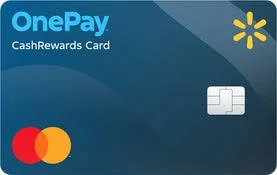
Walmart-branded credit cards have a credibility problem. Most of them are private-label cards that work only at Walmart and earn rewards a 2% catch-all card already beats. The OnePay CashRewards Card is different. It is a Mastercard with no annual fee that earns 5% back at Walmart for Walmart+ members, 3% at Walmart for everyone else, and 1.5% everywhere else.
That headline rate is real. The question is whether 5% at Walmart actually beats your current setup once you factor in the $98 Walmart+ membership and the 1.5% you give up on non-Walmart spend.
We ran the breakeven math against a 2% baseline card and against the card's own non-member rate. Here is what we found.
See whether this card actually beats your current wallet →
Quick verdict
Strong yes if you already pay for Walmart+ and shop at Walmart regularly. Maybe yes without Walmart+ if you spend $1,500 or more a year at Walmart. Skip it if you carry a balance, shop mostly at Target or Amazon or Costco, or you would put non-Walmart spend on a card earning only 1.5%.
The OnePay card is not an everyday card. Treat it as a Walmart-specific plug-in for an existing wallet, not a replacement for a 2% catch-all.
How the rewards stack up
The earning structure is short enough to summarize in a table.
| Where you spend | Earn rate |
|---|---|
| Walmart (in-store and Walmart.com), with Walmart+ | 5% cash back |
| Walmart (in-store and Walmart.com), without Walmart+ | 3% cash back |
| Everywhere else | 1.5% cash back |
Other terms worth knowing: no annual card fee, Mastercard network (usable anywhere Mastercard is accepted), issued by Synchrony, and a current welcome bonus of $35 after $75 of spend within the first 30 days of card opening. Rewards are redeemed as cash or statement credit through the OnePay app.
The current offer on OnePay's landing page reads: "Unlimited cash back. Zero annual fee. Plus, get your first year of Walmart+ on us when you pay with your OnePay Credit Card within 60 days of card opening. Apply by 5/26." If you qualify for that first-year promo, the math we run in the next section gets meaningfully better for year one only. Treat the promo as upside, not the base case.
One caveat on the application path. Not every applicant is approved for the CashRewards Card. The lower-tier alternative is the OnePay Walmart Spend Card, which works only at Walmart and does not earn the standard cash-back rewards. If your only approval is the Spend Card, the rest of this review does not apply.
The Walmart+ math nobody else runs
Most reviews stop at "5% at Walmart is good." The harder question is whether the 5% rate justifies the $98 Walmart+ membership if you would not pay for the membership otherwise.
There are two clean breakeven numbers to remember.
Breakeven vs. a 2% baseline card: $98 ÷ 3% ≈ $3,267 in annual Walmart spend. That is the spending level at which the extra 3 percentage points (5% with Walmart+ versus 2% on the baseline card) covers the membership fee.
Breakeven vs. the card's own non-member rate: $98 ÷ 2% = $4,900 in annual Walmart spend. That is the spending level at which upgrading from 3% (non-member rate) to 5% (member rate) covers the membership fee. This is the harder, more honest test, because the comparison holds the card constant and isolates the value of the membership.
Net value at each spend level looks like this, assuming a 2% baseline catch-all card and the full $98 Walmart+ fee charged to the card:
| Annual Walmart spend | Walmart+ member, net of $98 fee | Non-member, vs. 2% card |
|---|---|---|
| $1,000 | $1,000 × 3% − $98 = −$68 | $1,000 × 1% = $10 |
| $3,000 | $3,000 × 3% − $98 = −$8 | $3,000 × 1% = $30 |
| $5,000 | $5,000 × 3% − $98 = $52 | $5,000 × 1% = $50 |
| $10,000 | $10,000 × 3% − $98 = $202 | $10,000 × 1% = $100 |
The non-member column is uncomplicated. Every $1,000 at Walmart earns you $10 more than the 2% baseline would. No fee to recover.
The Walmart+ column is the part most reviews skip. Until you cross roughly $3,300 in annual Walmart spend, you are net-negative versus a 2% catch-all once the $98 membership is charged against the card. Above that, the math turns favorable quickly.
Two adjustments matter in real wallets. First, if you already pay for Walmart+ because you value the non-card benefits (free delivery from store with a $35 minimum, free shipping with no order minimum, fuel savings, streaming choice, returns from home, Mobile Scan & Go), the $98 is not a card cost. The breakeven collapses to the simple member-vs-baseline incremental, and every $1,000 of Walmart spend earns $30 over a 2% card. Second, if the first-year Walmart+ promo applies, year one is free of the membership cost entirely. Use the non-member column for the breakeven, treat year one as upside, and run the member math for year two onward.
The plain-English verdict: do not buy Walmart+ solely for the credit-card rewards unless you spend roughly $4,900 or more a year at Walmart, or the non-card benefits already pay for themselves on their own.
Plug your real Walmart spend into the optimizer →
Why 1.5% everywhere else is not enough
The 1.5% rate outside Walmart is the weakest part of the card. A 2% flat-rate card beats it on every non-Walmart purchase. The two clean comparison points: the Wells Fargo Active Cash earns unlimited 2% cash rewards on purchases with no annual fee, and the Citi Double Cash earns 2% (1% when you buy, 1% when you pay) on the same terms.
The optimization rule is simple. Use the OnePay card only at Walmart. Use a 2% catch-all everywhere else. Putting non-Walmart spend on the OnePay card forfeits 0.5 cents per dollar versus what you could be earning, and over a year of normal spending that adds up faster than the Walmart rewards make back.
If you have only one card and have to pick one, do not pick this one. It is built to be a second card, not a first card.
What to pair it with
The card slots into a wallet, not a vacuum. The pairings worth considering:
| Pairing card | What it does in the wallet |
|---|---|
| 2% catch-all (Active Cash or Citi Double Cash) | Everything outside Walmart. The non-negotiable pair if you have OnePay. |
| Chase Prime Visa | 5% back at Amazon.com, Amazon Fresh, and Whole Foods Market with an eligible Prime membership. Covers the online side of grocery and household spend that Walmart does not. |
| Target Circle Card | 5% off in-store and online at Target with no annual fee. If you split big-box spend between Walmart and Target, both cards earn at the same rate in their own ecosystem. |
| Premium travel or dining card | Higher earn rates on travel and restaurants, plus purchase protections OnePay does not include. Keeps OnePay as a single-purpose card. |
One competitor flag worth naming directly. The U.S. Bank Shopper Cash Rewards Visa earns 6% on the first $1,500 in combined quarterly purchases at two chosen retailers (Walmart is on the eligible list). For exactly $1,500 per quarter at Walmart that is $90 per quarter or $360 per year, ahead of OnePay's 5%. But the card carries a $95 annual fee after the first year and the 6% rate is capped at $1,500 per quarter combined. Heavy Walmart shoppers who blow through the cap quickly will earn more on OnePay over a full year. Light shoppers who stay under the cap and want 6% on Walmart plus a second retailer might prefer the U.S. Bank card.
Worth noting on supermarket categories: superstores like Walmart are not considered U.S. Supermarkets by American Express, and they do not code as supermarkets on Chase's category cards either. Even readers with a strong grocery card (Amex Gold, Amex Blue Cash Preferred, Chase Sapphire Reserve dining and grocery) earn the card's base rate on Walmart, not the bonus rate. That is the structural gap a Walmart-specific card actually fills.
The APR risk is the real catch
According to Synchrony's cardholder agreement, the OnePay CashRewards Card's variable purchase APRs were quoted at examples of 20.24% and 30.74% as of January 1, 2026, depending on creditworthiness. Interest is avoided on new purchases only when the statement balance is paid in full by the due date each month.
The math here is brutal and worth stating plainly. A single month of carried balance at 20% APR costs roughly 1.7% of the balance. At 30% APR it costs roughly 2.5%. Either number wipes out a full year of careful 5% rewards on the same balance. If there is any chance you will not pay in full every cycle, the rewards rate is irrelevant. The interest cost dominates.
This applies to every rewards card, but it matters more here than on a premium travel card because the OnePay card's whole pitch is rewards optimization. There is no annual fee to amortize, no statement credits to use, no transfer-partner upside if you fall behind. Carrying a balance turns the card into a regular Synchrony purchase loan with a small cashback rebate attached.
Who should get it
Walmart+ households who already shop at Walmart frequently. The 5% rate is the cleanest use case. If you already pay for Walmart+ for the delivery and shipping benefits, the membership cost is not the card's to bear. Every $1,000 of Walmart spend earns $30 over a 2% baseline. No breakeven to clear.
Families running pickup and delivery through Walmart. Groceries, household goods, diapers, baby supplies, pharmacy, pet supplies. A lot of normal household spend funnels through Walmart for these readers, and that spend is exactly what the card is built to reward.
Anyone whose grocery card excludes Walmart. Amex Gold and Blue Cash Preferred do not count superstores as U.S. Supermarkets. If your primary grocery card cannot bonus Walmart, the OnePay card fills a real gap rather than overlapping with existing coverage.
Non-Walmart+ shoppers who still spend $1,500 or more a year at Walmart. 3% versus 2% is only 1 percentage point of incremental value, but at that spending level the dollars add up, and there is no membership cost to recover.
Who should skip it
Anyone who carries a balance. The APR risk dominates the reward math. This is not a "manage carefully" caveat, it is a hard no.
Light Walmart shoppers. Under $1,000 a year at Walmart, the rewards differential is too small to justify a new card and a new login.
Target, Amazon, and Costco loyalists. Each of those ecosystems has a dedicated card (Target Circle, Chase Prime Visa, Costco Anywhere Visa) that beats OnePay inside its own footprint. Match the card to the store you actually shop at.
Readers who want one card to do everything. The 1.5% non-Walmart rate makes this a poor primary card. If you cannot or do not want to carry two cards, pick a 2% catch-all instead.
Bottom line
The Walmart OnePay CashRewards Card is a strong Walmart-specific card and a poor everyday card. For Walmart+ members shopping at Walmart regularly, the 5% rate is uncapped, the annual card fee is zero, and the supermarket-category gap that grocery cards leave around superstores is finally filled. For everyone else, the math depends on how much you actually spend at Walmart and whether you would already pay for the membership.
The right way to use it is as a single-purpose card. Pair it with a 2% catch-all, use it only at Walmart, and pay the balance in full every month. That is when the rewards math works.
Run your full wallet through the optimizer →
Frequently Asked Questions
Is the Walmart OnePay card worth it without Walmart+?
At 3% back at Walmart with no annual fee, it still beats a 2% flat card on Walmart spend, but the incremental value is only 1 percentage point. The card makes sense for non-Walmart+ shoppers who spend roughly $1,500 or more a year at Walmart. Below that, a 2% catch-all card covers the same ground with less wallet complexity.
Does the OnePay card count Walmart.com as online retail or as Walmart?
Both Walmart.com and in-store Walmart purchases earn the same rate (3% for non-members, 5% for Walmart+ members). That is a meaningful edge over cards that only reward online retail or supermarket spend, since Amex and Chase both exclude superstores like Walmart from their U.S. Supermarkets bonus category.
Should I get Walmart+ just for the 5% rate?
Only if you spend roughly $4,900 or more a year at Walmart, or you already value the non-card Walmart+ benefits (free delivery, fuel savings, streaming choice). $98 ÷ 2% = $4,900 is the breakeven versus the card's own 3% non-member rate. Below that threshold, paying $98 to upgrade your rewards rate is negative-value.
What is the catch?
Two things. First, the 1.5% rate everywhere else is below the 2% baseline cards, so OnePay should be used only at Walmart if you have a better catch-all. Second, the purchase APR (examples of 20.24% and 30.74% as of January 2026) is high enough that a single month of carried balance erases a year of rewards.
OnePay CashRewards Card or OnePay Walmart Spend Card?
The CashRewards Card is the Mastercard with the 5%/3%/1.5% rewards structure and works anywhere Mastercard is accepted. The Spend Card is the lower-tier option for applicants who do not qualify for the CashRewards Card; it works only at Walmart and does not earn the standard cash-back rewards. If you are choosing between them on purpose, choose the CashRewards Card.
Related on Learn
Hand-picked based on topic and reader interest
Apple Card Review 2026: When 3/2/1% Cash Back Beats 2% Flat
Apple Card earns 3% at Apple and select merchants, 2% on Apple Pay, and 1% everywhere else. We run the math on when that beats a flat 2% card, who should keep it, and what the Chase transition changes.

World of Hyatt Credit Card Review 2026: Is the $95 Fee Worth It?
The World of Hyatt card's $95 fee pays for itself with the annual Category 1-4 free night. We run the math on the 9x earn rate, $15k bonus night, and elite fast-track.
AAA Credit Cards Review (2026): The 5% Is Real, but Mind the Caps
AAA's Daily Advantage and Travel Advantage cards pay 5% on groceries or gas with no annual fee. We do the cap math most reviews skip and show who actually comes out ahead.

Coinbase One Card Review: 4% Bitcoin Back Is Real, but Most People Won't Earn It
The Coinbase One Card offers up to 4% bitcoin back on purchases. We break down the asset tiers, monthly caps, and membership costs to show who actually benefits.
Get smarter with your cards
Math-first card strategy posts, sent when we publish — not on a schedule. No spam. Unsubscribe anytime.
We respect your inbox.
Ready to optimize your wallet?
Get personalized card recommendations and spending strategies in under 2 minutes.
Free to use. No signup required.
Get My Strategy →Just need an answer for one purchase? Best Card →