When Is the Cheapest Time to Book a Flight? What Five Years of Google Data Shows
The cheapest time to book a U.S. domestic flight has averaged 39 days before departure, according to five years of Google Flights data Google published today. The more useful number is the range around it: domestic fares have historically sat near their low anywhere from 22 to 57 days out.
That range is the answer. Start tracking your route early, buy a fare you are happy with once you are inside the window, and book earlier than the averages suggest when your dates can't move. The rest of this post explains why there is no single best day, and why your travel dates matter more than the day you click buy.
Check which card should pay for the ticket →
The booking windows, by trip type
Google's analysis covers five years of aggregated Google Flights data for U.S. departures. For each trip type it reports the average low point and a broader low-price range.
| Trip | Average low | Low-price range |
|---|---|---|
| U.S. domestic | 39 days out | 22 to 57 days |
| International | 89 days out | 50 to 133 days |
| U.S. to Europe | 90 days out | 49 days or more |
| Mexico or Caribbean | 43 days out | 24 to 69 days |
| Thanksgiving | 34 days out | 21 to 57 days |
| Christmas | 56 days out | 33 to 67 days |
| Spring break (March or April) | 50 days out | 29 to 64 days |
| Summer (July or August) | 21 days out | 20 to 47 days |
Two rows deserve a caveat. For international trips, Google says "the average price drop during the low range (50–133 days out) is insignificant," and its advice is to book as soon as you can. Europe's range has no start date at all: Google publishes it as 49 days or more and adds that "waiting rarely pays off."
Google's own summary for fixed dates is direct: "When your dates are already set, booking early is the safest bet to protect your itinerary."
Your dates, not day counts
Nobody wants to count back 67 days from December 20. The planner below does it, using only the numbers in the table above. It shows the window on a calendar and nothing else: no fare forecast, and no invented "start watching" date, since no source publishes one.
What "39 days" means
The 39-day figure is the point where Google's average domestic fare curve bottoms out. It is an average over thousands of routes and dates, each with its own price path. Your flight's cheapest day could be 25 days out or 55 days out and still fit the same average.
Google calls the whole span a low-price range, and for international trips it says the average drop inside the range is insignificant. The risk sits at the edges: buy far too early and you may pay a premium, wait past the window and fares have historically been higher. That is why the range is worth more to you than the point.
Why fares don't follow a countdown
Airlines sell a perishable product. An empty seat is worth nothing once the door closes, but a seat sold cheaply in August can't be sold to a business traveler who books in November. Pricing systems balance those two risks continuously. Three academic studies measure what that does to individual fares.
Kevin Williams's 2022 study in Econometrica found that "airfares fluctuate due to demand shocks and intertemporal variation in willingness to pay." Dynamic pricing, in his estimates, "benefits early-arriving, leisure consumers at the expense of late-arriving, business travelers." That is the economic reason early leisure buyers tend to see lower fares and last-minute buyers tend to see higher ones.
Diego Escobari's 2012 study in the Journal of Industrial Economics separated the two forces. Prices rise as the remaining seats sell, and, holding seats fixed, they fall as the time left to sell them runs out. A flight that is filling fast and a flight that is half empty can move in opposite directions on the same day.
The spread of outcomes is wide. Gaurab Aryal, Charles Murry and Jonathan Williams tracked the fares passengers actually paid on single-carrier international routes from 2009 to 2011 (Review of Economic Studies, 2024). Most fares barely moved until about 100 days before departure. By departure day, "25% of flights experience a decrease of more than 25%, while 25% of flights experience an increase of greater than 85%."
That last finding is the one to remember when you are tempted to wait. The average path dips and then climbs, but a quarter of flights in that sample nearly doubled.
Google, Expedia and Kayak disagree
If the cheapest day were a fixed property of airfare, every large dataset would find the same one. They don't.
| Source | Domestic | International |
|---|---|---|
| Google 2026 | 39 days (22 to 57) | 89 days (50 to 133) |
| Expedia 2026 | 15 to 30 days | 8 to 15 days |
| Kayak 2026 | About 30 days | 1 to 2 weeks |
| CheapAir 2024 | 42 days | Not studied |
Expedia's international figure needs its own footnote. Its 2026 Air Hacks report found the lowest average international economy price ($585) at 8 to 15 days out, but framed that as an option "for those bold travelers" and noted that booking 31 to 45 days out still saved $190 over booking 180 or more days ahead.
The gap comes down to what each company measures. Google analyzes fares observed in Google Flights searches. Expedia's 2026 figures come from tickets booked on Expedia.com between December 2024 and November 2025. Kayak uses 2026 round-trip searches; CheapAir analyzed more than 917 million domestic fares.
Who books when also matters. People buying an international ticket eight days out are flying different routes, on different dates, for different reasons than people buying four months out. An average across those groups can't tell you what happens if you, specifically, wait another week on your route.
Google's own numbers move from year to year as well:
| Trip | 2024 | 2025 | 2026 |
|---|---|---|---|
| Domestic | 38 days | 39 days | 39 days |
| Thanksgiving | 45 days | 35 days | 34 days |
| Christmas | 58 days | 51 days | 56 days |
| Spring break | 44 days | 43 days | 50 days |
| Mexico or Caribbean | 44 days | 50 days | 43 days |
| Summer | 21 days | 21 days | 21 days |
Part of that movement is method. The 2024 study used 6-to-9-day and 13-to-16-day round trips and included 2019 data. The 2025 study used 4-to-16-day round trips from the top 4,000 U.S. markets, observed January 2021 through August 2025. The 2026 post describes its data only as five years of Google Flights history. When a holiday's low point swings by a week between editions, plan around the range.
The weekday you buy on barely matters
The "buy on Tuesday" rule persists, and the data has kept moving underneath it.
| Source | Cheapest day to buy | Savings vs. priciest day |
|---|---|---|
| Google 2024 and 2025 | Tuesday | 1.3% vs. Sunday |
| Google 2026 | Wednesday | 1.4% vs. Sunday |
| Expedia 2025 | Sunday | 6% domestic, 17% international, vs. Monday or Friday |
| Expedia 2026 | Friday | 3% vs. Sunday |
Expedia's 2025 report found much larger gaps, then named a different winning day a year later. A real weekday effect that large would not change places between editions.
Google's 2026 post puts it plainly: "You can forget the myth about buying on a specific day of the week." On a $400 ticket, 1.4% is $5.60. If you see a fare you like on a Monday, buy it. A $50 increase while you wait for Wednesday costs as much as the weekday savings on nine tickets.
The levers that move the price
Google's same dataset shows where the real money is.
| Change | Average effect (Google 2026) |
|---|---|
| Buy on Wednesday instead of Sunday | 1.4% cheaper |
| Fly out Monday, back Tuesday or Wednesday, instead of a weekend | About 14% cheaper (up to 20% domestic vs. Sunday to Sunday) |
| Accept a connection | Nonstops cost 20% more on average |
Flexibility on travel days is worth ten times the weekday-of-purchase effect. A one-stop itinerary is worth a similar amount, if the extra hours are worth less to you than the fare difference. Neither requires guessing anything about future prices.
Kayak's 2026 data points the same way for domestic trips: its cheapest pattern was flying out on Monday and back on Wednesday.
See which travel card fits how you fly →
When to book earlier than the averages
Averages describe the typical route. Move earlier when the cost of being wrong is high:
- Fixed holiday dates. Google's low-price ranges close 21 days before Thanksgiving trips and 33 days before Christmas trips. After that, you are buying alongside everyone who waited.
- A specific nonstop or a small airport. With one or two flights a day, losing the good one can cost more than any fare drop saves.
- Several seats together. Families need the same fare class open for every traveler, which runs out sooner.
- Event weekends. Conferences, championships and festivals concentrate demand that national averages don't show.
Waiting is easier to defend when you are flexible on dates, airports or airlines. A wider set of acceptable flights means one flight selling out costs you little.
Book, then keep watching
Buying ends the decision only if your fare can't be changed. On most U.S. airlines' standard economy fares, there is no change fee, so if the same flight gets cheaper you can usually rebook and keep the difference as airline credit. Leave a price alert running after you buy.
The cheapest fares remove that option:
| Fare | Changes | If you cancel |
|---|---|---|
| American Basic Economy | Not allowed after 24 hours | Credit minus a fee, AAdvantage members only |
| Delta Main Basic | Not allowed | eCredit minus a fee ($99 to $500 per Delta) |
| United Basic Economy | Not allowed | Credit minus a fee |
| Alaska Saver | Paid same-day changes only | 50% credit if 14+ days before departure |
| Southwest Basic | Only by upgrading to Choice | Credit that expires 6 months after booking |
Two details limit the value of repricing. The difference usually comes back as credit tied to that airline, not cash. And no federal rule gives you a refund because a fare dropped. The 2024 DOT refund rules cover cancellations and significant schedule changes by the airline, not price moves.
So pay for a flexible fare when you value the flexibility itself. Paying $80 more to chase a possible $30 drop is a losing trade.
Book direct to keep the 24-hour rule
Federal rules require airlines to let you either hold a reservation at the quoted fare for 24 hours without paying, or cancel without penalty within 24 hours, when you book at least seven days before departure. The airline picks which one it offers (14 CFR 259.5).
The rule binds airlines. A ticket bought through an online travel agency or a card's travel portal falls under that seller's own cancellation terms, as we found when we compared booking Delta through Chase Travel against booking direct. Search anywhere, then book with the airline when the price is the same.
Where your credit card fits
Timing decides the fare. The card you pay with decides what happens when something goes wrong, which on a $900 family itinerary can be worth more than any booking window.
Trip delay, cancellation and baggage protections generally require that you charge the fare to the card, and the terms differ more than the earning rates do. Our Delta ticket comparison shows why baggage delay coverage on a 4x card can matter more than the extra point on a 5x card that lacks it. Airline cards also shift the all-in price through checked-bag benefits, covered in our bag fee breakdown. For a broader view, see the best travel credit cards for 2026.
What this means for the 2026 holidays
As of October 5, a Thanksgiving Eve departure (November 25) is 51 days out. That puts it inside Google's 21-to-57-day range, which runs from September 29 to November 4, with the average low on October 22.
A December 20 Christmas departure is 76 days out. Its range opens October 14, the average low falls on October 25, and the window closes November 17. Google's post describes the best Christmas deals as "falling between late October and mid-November."
This year's fares are high. Hopper's 2026 Holiday Travel Index puts the average domestic round trip at $402 for Thanksgiving, up 31% from 2025, and $452 for Christmas, up 23%. Hopper's advice is to "start monitoring prices now" and to "expect to book flights and hotel stays before Halloween to get the lowest prices." With fares running that far above last year, a fixed-date traveler has little reason to hold out for a better day.
Bottom Line
There is no magic day to buy a plane ticket. Google's data gives a range: about three to eight weeks out for domestic trips, earlier for holidays and international travel. Track your route before the window opens, buy a fare that Google Flights marks as low for your route once you are in it, and book earlier when your dates are fixed.
If you want to save real money, change when you fly rather than when you buy. A Monday departure saves about ten times what a Wednesday purchase does.
Sources
- Google, "Wheels up: Trends and tips for 2026 holiday travel", October 5, 2026. Earlier editions: 2025, 2024.
- Expedia, 2026 Air Hacks report, February 17, 2026, and 2025 Air Hacks report, January 28, 2025.
- Hopper, 2026 Holiday Travel Index, September 2026.
- Kayak, "When are flights cheapest," updated September 28, 2026. CheapAir, Annual Airfare Study, 2024.
- Williams, K. R. (2022). "The Welfare Effects of Dynamic Pricing: Evidence From Airline Markets." Econometrica 90(2), 831–858.
- Aryal, G., Murry, C., and Williams, J. W. (2024). "Price Discrimination in International Airline Markets." Review of Economic Studies 91(2), 641–689.
- Escobari, D. (2012). "Dynamic Pricing, Advance Sales and Aggregate Demand Learning in Airlines." Journal of Industrial Economics 60(4), 697–724.
- Netherlands Authority for Consumers and Markets, study of computer-controlled airline pricing, September 2026.
- U.S. Department of Transportation, refunds and the 24-hour reservation requirement; 14 CFR 259.5(b)(4).
- Fare rules: Alaska Saver, Southwest fare information, Delta change and cancel, American Basic Economy, checked October 2026.
Frequently Asked Questions
Related on Learn
Hand-picked based on topic and reader interest
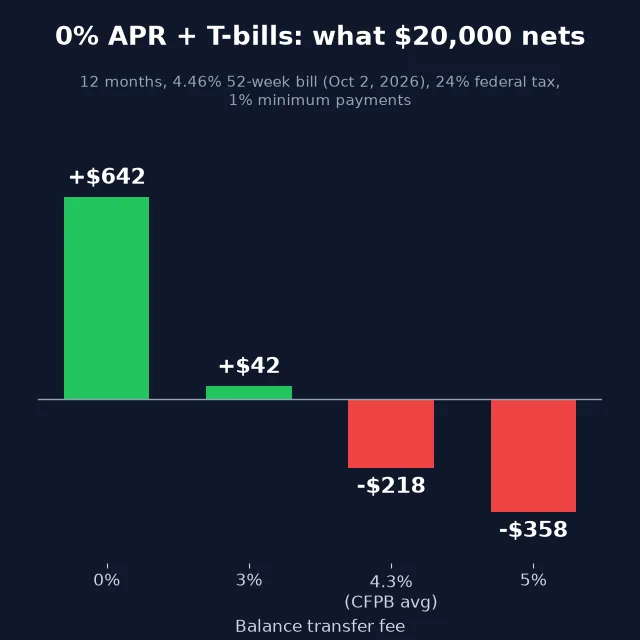
Using a 0% APR Card to Earn Interest: Credit Score and Fine-Print Risks (2026)
Parking a 0% APR balance in T-bills can pay, but the transfer fee, a lost grace period, utilization and mortgage timing decide whether it does. The fine print, checked.

Delta Gold Is a Card to Hold, Not a Card to Spend On
The $150 Delta Gold earns its fee through the checked-bag waiver and TakeOff 15, not through 2x SkyMiles. That distinction decides who should carry it and what belongs on it.
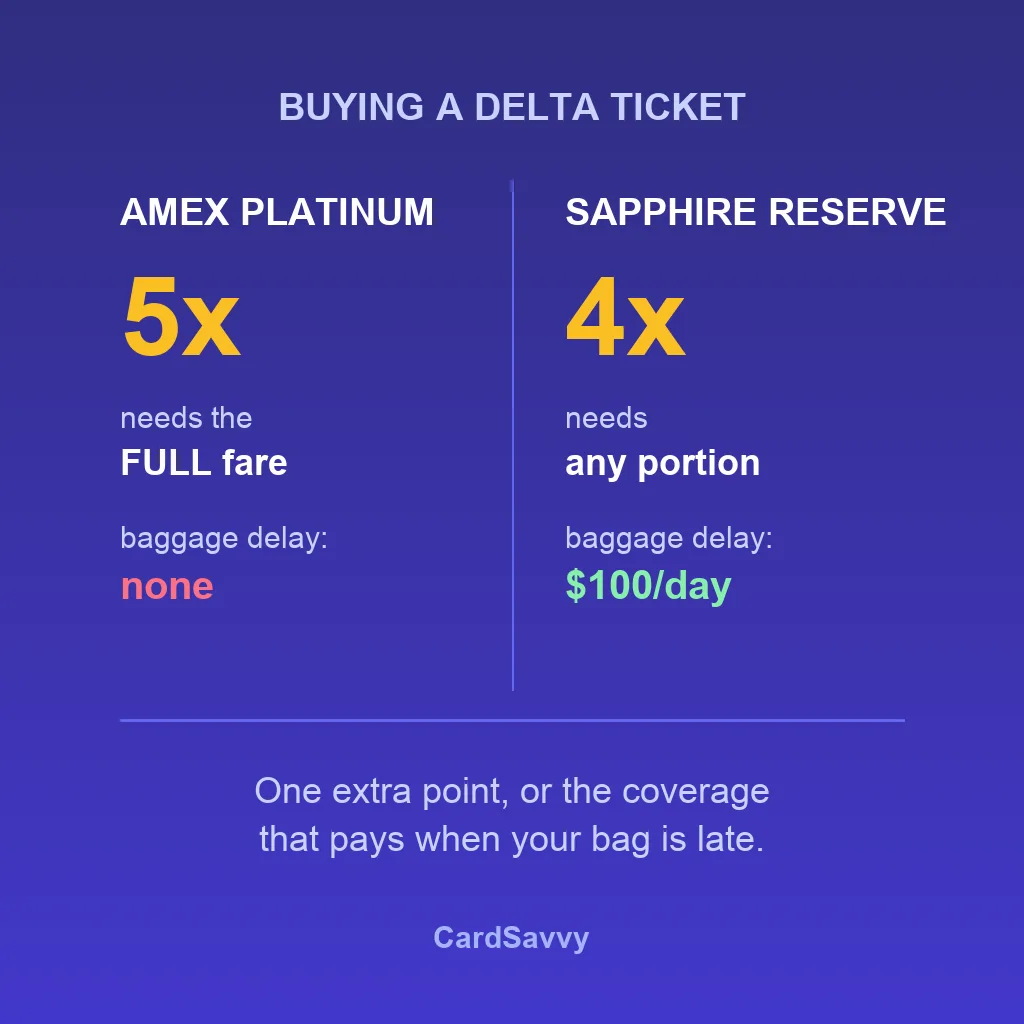
Which Card Should You Actually Buy Delta Tickets With?
Amex Platinum earns 5x on Delta airfare against the Sapphire Reserve's 4x. But Platinum requires the full fare charged to it and covers no baggage delay, which matters more than one extra point if you check bags.
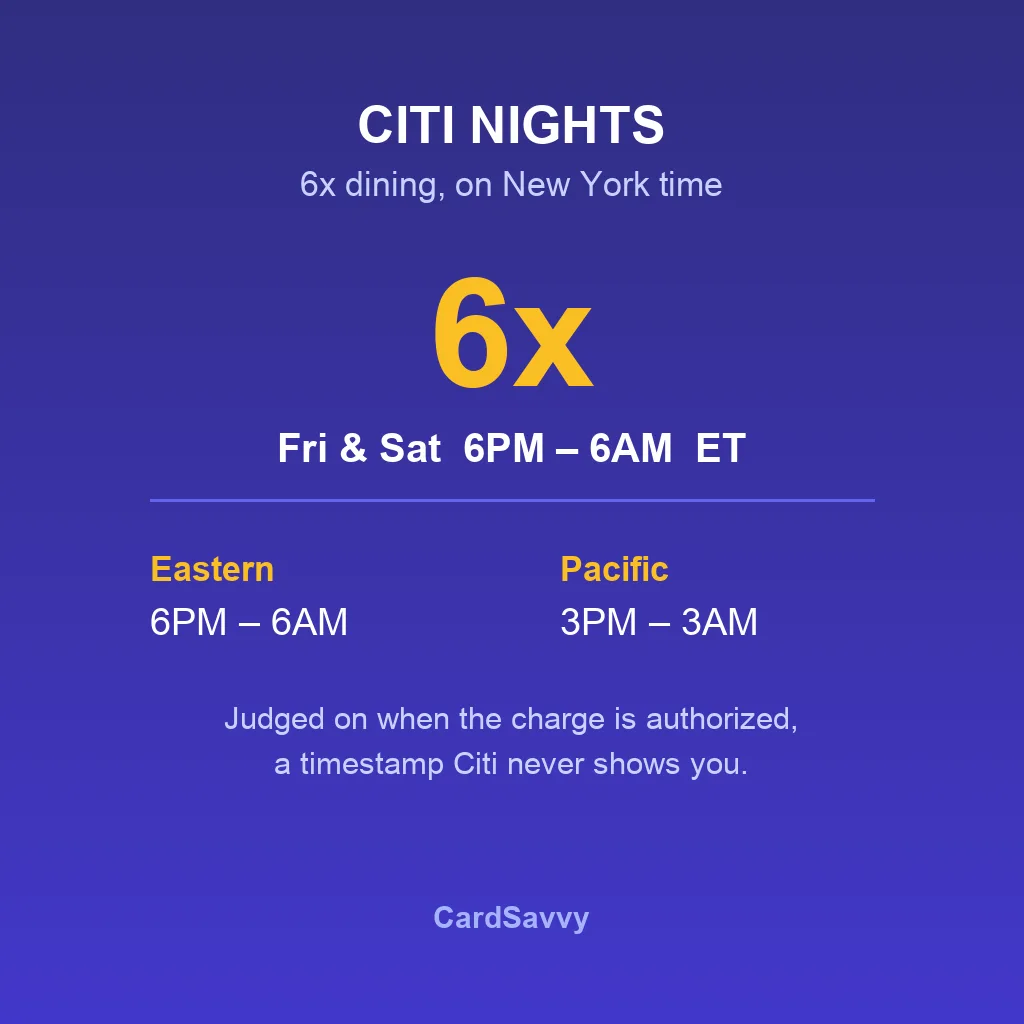
Citi Nights: The 6x Dining Bonus That Runs on New York Time
The Citi Strata Elite earns 6x at restaurants on Friday and Saturday nights, but the window runs on Eastern time and is judged by when the charge is authorized. Here is what that means if you do not live in New York.
Get smarter with your cards
Math-first card strategy posts, sent when we publish — not on a schedule. No spam. Unsubscribe anytime.
We respect your inbox.
Ready to optimize your wallet?
Get personalized card recommendations and spending strategies in under 2 minutes.
Free to use. No signup required.
Get My Strategy →Just need an answer for one purchase? Best Card →