Airline Bag Fees Just Jumped to $45: Which Credit Card Actually Pays For Itself?
In April 2026, every major U.S. airline raised checked-bag fees. Delta, Southwest, United, and Alaska all moved their first checked bag to $45 each direction. American is $45 online ($50 at the airport). JetBlue varies between $39 and $49 by peak versus off-peak. For a family of four checking one bag each, a single round trip now costs $360 in bag fees alone.
That's reframed the case for airline co-brand credit cards. The headline benefit on most of these cards is "free checked bag," and that benefit just got more valuable. But how much more valuable depends almost entirely on a variable that most "best airline card" articles skip: how many people on your reservation actually qualify for the waiver.
Skip the article and run your numbers in the calculator →
Want the strategic context instead? Read why airline bag fees are really a credit-card funnel.
What changed in April 2026
Bag fees had been creeping up for two years before this round of hikes. April 2026 was the moment most carriers landed on similar pricing. Delta moved first on April 7, citing fuel costs. Southwest followed on April 9, ending a long stretch of free bags on cheaper fares. Alaska's change took effect April 10 for newly ticketed flights. United and American announced increases the same week.
The headline first-bag fee on most carriers is now $45 each way, with second bags around $55. JetBlue is slightly cheaper off-peak (around $39) and slightly more expensive on peak dates (around $49). American is $45 online or $50 at the airport, so prepaying matters again.
These are per-direction fees. A round trip means two of them. A family of four means eight of them. The math gets ugly fast.
The variable nobody talks about: who actually qualifies
Every major airline co-brand card markets a free-checked-bag benefit. They are not equivalent. The benefit only applies to travelers on the same reservation, and each card caps the number of travelers it covers.
| Card | Travelers covered (cardmember + companions) |
|---|---|
| Delta SkyMiles Gold (Amex) | Up to 9 (you + 8) |
| Southwest Plus / Premier / Priority | Up to 9 (you + 8) |
| Atmos Rewards Ascent (Alaska) | Up to 7 (you + 6) |
| Citi AAdvantage Platinum Select | Up to 5 (you + 4) |
| JetBlue Plus (Barclays) | Up to 4 (you + 3) |
| United Explorer (Chase) | Up to 2 (you + 1) |
That United line is the kicker. United Explorer is one of the most-recommended mid-tier travel cards in the country, and its bag benefit only covers two people. For a family of four, two travelers still pay full bag fees on every trip — $180/year on a single round trip with one bag each. That doesn't make the card bad, but it completely changes who it's right for.
Delta — SkyMiles Gold (Amex)
The Delta SkyMiles Gold (Amex) currently advertises a $0 first-year fee, then $150 ongoing. The first-bag waiver covers the cardmember plus up to 8 travel companions on the same reservation, and you also get Zone 5 priority boarding for the same group. The flight has to be purchased with the card.
For a solo traveler taking one round trip per year with one checked bag, you save $90 in bag fees — short of the $150 ongoing fee. At two round trips a year, the bag math alone clears the fee. For couples it clears at one round trip. For a family of four, one trip saves $360 — already 2.4x the annual fee.
One thing to flag: Delta's card marketing copy still says "save up to $70 on a round-trip Delta flight per person." Delta's own baggage page now implies up to $90 round trip. The card page hasn't caught up to the new fee schedule. Trust the airline page.
United — Explorer (Chase)
The United Explorer (Chase) is also $0 first year, $150 ongoing. But the bag benefit only covers the primary cardmember plus one companion — far narrower than every other card on this list.
For a solo traveler or couple, the math looks like Delta Gold. For a family of four, it doesn't. Two of your four travelers still pay $45 each way per bag. On one round trip with one bag each, that's an extra $180/year your card doesn't help with.
United also adds a $5 surcharge per bag if you add it within 24 hours of departure. Most people add bags during initial booking, so this rarely bites, but it's worth knowing.
American — Citi AAdvantage Platinum Select
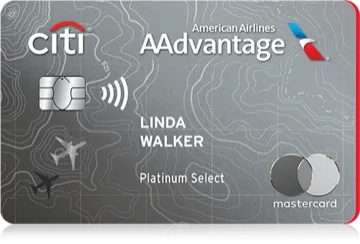
The AAdvantage Platinum Select is $0 first year, $99 ongoing — the cheapest ongoing fee in this group. Bag benefit covers the cardholder plus up to 4 companions on domestic-style itineraries (U.S., Caribbean, Mexico, Central America, Canada).
The American Airlines bag fee is $45 if you prepay online, $50 at the airport. Always prepay — it's a free $5/bag/direction.
A couple checking one bag each on one round trip saves $180, already ahead of the $99 ongoing fee. A family of four (covered fully under the cap of 5) saves $360 on the same trip. Even modest travelers get this card to net positive quickly.
Alaska — Atmos Rewards Ascent
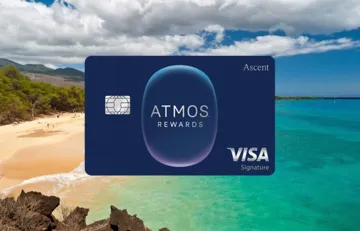
The Atmos Ascent is $95 annually with no current first-year waiver. The first-bag benefit covers the cardholder plus up to 6 guests on the same reservation, and you also get preferred boarding. The flight must be purchased with the card.
A couple on one round trip saves $180 in bag fees, well above the $95 fee. For Alaska's specific route network — heavy on West Coast and Hawaii — this card is one of the easiest yes calls in the group.
JetBlue — JetBlue Plus (Barclays)
The JetBlue Plus (Barclays) is $99 annually. The bag waiver covers the primary cardmember plus 3 travel companions on JetBlue-operated flights when the JetBlue Plus card is used to purchase.
JetBlue is the trickiest one to model because fees vary by peak and off-peak dates. First-bag fees are roughly $39 off-peak and $49 peak. The card also doesn't lean on a boarding perk the way the others do — its appeal is the bag waiver and the JetBlue-specific points economy.
A couple flying off-peak on one round trip saves about $156 in bag fees, comfortably ahead of the $99 fee.
Southwest — Plus, Premier, or Priority
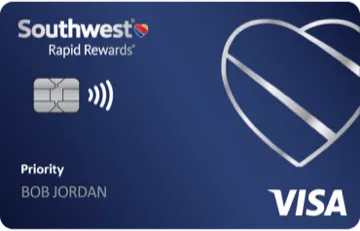
Southwest is the most interesting case because it has a three-card ladder where the seat perks differ. All three include a first checked bag free for the cardmember plus up to 8 additional passengers on the same reservation, plus Group 5 boarding.
- Plus ($99): Standard seat selection within 48 hours of departure, when available.
- Premier ($149): Preferred seat selection within 48 hours, when available.
- Priority ($229): Preferred seat selection at booking + Extra Legroom upgrade within 48 hours, when available.
For pure bag-fee math, the Plus is the cleanest pick — $99 fee, family-friendly companion coverage. Premier and Priority only make sense if you genuinely value the seat perks. Southwest is also the one card group that doesn't require purchasing the flight with the card; it's tied to your Rapid Rewards number on the reservation.
If you book Choice Extra fares regularly, those already include 2 free bags, so the card's bag benefit is moot for you. The seat perks are then the only reason to hold the card.
Already know which card you want? Run the math →
Three worked examples
These all assume one round trip per year with one checked bag per traveler, in an ongoing-fee year. Bag fees are a fraction of any card's possible value — but they're a clean break-even floor.
Solo traveler, Delta Gold. One round trip × 2 directions × 1 traveler × 1 bag × $45 = $90 in bag fees avoided. Annual fee $150. Net −$60. Verdict: not worth it on bag fees alone for one trip a year. Two trips and you're net positive.
Couple, Citi AAdvantage Platinum Select. One round trip × 2 directions × 2 travelers × 1 bag × $45 = $180 in bag fees avoided. Annual fee $99. Net +$81. Verdict: worth it from the first round trip.
Family of four, Southwest Plus. One round trip × 2 directions × 4 travelers × 1 bag × $45 = $360 in bag fees avoided. Annual fee $99. Net +$261. Verdict: easily worth it.
Now run the same family-of-four scenario on the United Explorer. Only 2 of the 4 travelers qualify, so bag fees avoided drop to $180. Annual fee $150. Net +$30. Same family, same trip — the United card just barely clears, while Southwest's clears by 8x. That's the companion-cap variable in one comparison.
Caveats and what we didn't model
We kept the model focused on U.S. domestic economy travel because that's where the published fee schedules are clean and where the card benefits are usually marketed. We did not model international itineraries (which often have different bag allowances), premium-cabin tickets (which usually include bags anyway), partner-operated flights (where benefits frequently don't apply), or elite-status overrides.
We also model only the first checked bag per eligible traveler, because that's what every card on this list actually waives. Second-bag fees are still on you with all six cards.
If your real travel pattern is heavy on any of those edges, the card decision is more nuanced than the calculator suggests, and you should read each card's benefit terms in detail.
Bottom line
Bag fees at $45 each direction make airline co-brand cards meaningfully more valuable than they were a year ago. For couples and families on Delta, Southwest, Alaska, American, and JetBlue, the bag math alone often justifies the ongoing fee on a single round trip per year.
For solo travelers, you usually need 2+ round trips per year to break even just on bags, but the first-year fee waivers (Delta Gold, United Explorer, AAdvantage Platinum Select all currently waive Year 1) make the year-one decision much easier.
For United Explorer specifically, the right question isn't "is this card worth it" — it's "are you flying as a 1- or 2-person reservation?" If you're a family of four, the bag math doesn't pencil out the same way it does for the other cards.
Run your specific numbers — household size, trips per year, which airline you actually fly — and let the math decide.
Related on Learn
Hand-picked based on topic and reader interest

Airline Bag Fees Are a Credit-Card Funnel: The Real Strategy Behind the 2026 Hikes
The April 2026 airline bag-fee hikes were blamed on fuel costs. The structure of the fees — hitting non-cardholders while sparing co-brand cardholders and elites — is part of a larger loyalty-card economics shift. Here is the evidence, the mechanism, and what CardSavvy users should do.
ORD Airport Lounges Guide 2026: Best Credit Cards for Lounge Access
Complete guide to Chicago O'Hare airport lounges in 2026. Find every lounge by terminal, learn which credit cards get you in, and discover the best picks for your travel style.
Best Travel Credit Cards for Nashville (BNA) Flyers in 2026
Flying out of Nashville? BNA's unique mix of carriers and limited lounges means the 'best' travel card depends on how you actually fly. We break down the smartest picks for 2026.

Best Credit Cards for AI, SaaS, Cloud, and Software Subscriptions (2026)
ChatGPT, Claude, AWS, Adobe, and the rest do not all earn rewards the same way. Here is the best card by spend type, with the caps, credits, and merchant-coding traps that decide your real return.
Get smarter with your cards
Math-first card strategy posts, sent when we publish — not on a schedule. No spam. Unsubscribe anytime.
We respect your inbox.
See the math for yourself
Does your airline card pay for itself on bag fees?
Free calculator. No signup required.
Try the Airline Bag Fee Calculator →