Using a 0% APR Card to Earn Interest: Credit Score and Fine-Print Risks (2026)
Open a card with a 0% intro APR, keep the cash you would have used in Treasury bills, and pocket the interest until the promotion ends. With 52-week bills at 4.46% on October 2, 2026, it looks like easy money.
The yield math is covered in depth on our sister site Summitward, which has a calculator for the whole trade. This post covers the card side: what the offer terms say, what the account does to your credit, and the fine print that turns a small profit into a loss.
See which cards maximize your everyday rewards →
The Short Answer
A no-fee 0% purchase APR, on spending you would make anyway and could pay for today, can be worth a few hundred dollars. On $20,000 for 12 months at 4.46%, with 1% minimum payments and a 24% federal tax rate, Summitward's model puts it at about $640.
Balance transfers are a different story. At the average 4.3% fee, the same $20,000 for 12 months loses about $220. And the credit-report effects land at the same time as the interest, which matters if a lender is about to look.
Quick Decision Guide
You have a planned purchase, the cash to pay for it, and a no-fee 0% purchase offer: This is the version that works. Keep the cash in T-bills that mature before the promo ends.
You're looking at a balance transfer with a 3% to 5% fee: Run the numbers first. At 12 to 15 months it usually loses money.
The offer says "no interest if paid in full": Skip it, because that wording means deferred interest.
You're applying for a mortgage, refinance or car loan in the next 6 to 12 months: Wait until after closing.
You already carry a balance on any card: Use the 0% offer to pay that down. That is the trade the product was designed for.
0% APR vs. Deferred Interest
In an ad these two offers look alike.
| Offer wording | What happens at the deadline | For this strategy |
|---|---|---|
| "0% intro APR for 15 months" | Regular rate applies to the balance left | Usable |
| "No interest if paid in full within 12 months" | All interest since purchase is charged if any balance remains | Never |
The CFPB's explanation is blunt: with deferred interest, "interest going back to the date of the purchase will be added on top of the remaining balance." It also found that about one fifth of deferred-interest promotional balances were charged that retroactive interest (CFPB).
These offers mostly come from store cards and medical financing. Our medical expenses card guide and home improvement card guide cover how they trip people up.
The Balance Transfer Fee Usually Decides It
A 0% APR does not mean 0% cost. The CFPB confirms an issuer can charge a balance transfer fee on a zero percent offer (CFPB).
The CFPB's December 2025 Consumer Credit Card Market report put the average fee at 4.3% among the 25 largest issuers in the second half of 2024, up from 3.9% in 2022 (CFPB report, PDF). Issuers collected $2.1 billion in balance transfer fees in 2024.
Typical current structures, from the issuer pages on October 3, 2026:
- Bank of America Customized Cash Rewards: 0% for 15 billing cycles on purchases and on transfers made in the first 60 days. The transfer fee is 3% for those 60 days and 5% after.
- BECU Low Rate (credit union): 0% on transfers for 12 months, transfers within 90 days, and no balance transfer fee.
Here is what the fee does to $20,000 parked in 4.46% T-bills, after a 24% federal tax rate and 1% minimum payments:
| Fee | 12 months | 15 months | 21 months |
|---|---|---|---|
| 0% | +$642 | +$791 | +$1,075 |
| 3% | +$42 | +$191 | +$475 |
| 4.3% | -$218 | -$69 | +$215 |
| 5% | -$358 | -$209 | +$75 |
The longer columns assume T-bill yields hold for the whole period. They were falling in late September 2026.
Run your own fee, term and tax rate on Summitward →
New Purchases on a Transfer Card Cost Interest
On most cards, the CFPB says, if you carry a balance from month to month, "any purchases you make will accrue interest from the date of the transaction." A 0% transferred balance counts as carrying one (CFPB).
Federal rules do help a little. Payments above the minimum must go to the highest-rate balance first (12 CFR 1026.53), so new purchases get paid down before the 0% balance. But they accrue interest until they are.
The simple fix: keep the transfer card in a drawer and spend on a different card.
Convenience Checks and Cash Advances
Some offers let you write a check or send a transfer straight to your bank account. Read the terms before using one. The same CFPB report notes that some issuers treat convenience checks as balance transfers while others treat them "similarly to cash advances."
Cash advances usually carry their own fee, a higher APR, and no grace period. The CFPB says grace periods "typically apply only to purchase transactions," and interest on cash advances generally starts the day of the transaction (CFPB). Navy Federal's Platinum card, for example, excludes convenience checks from its intro transfer rate.
Minimum Payments Still Apply
A 0% rate does not pause the minimum payment. Chase, for example, uses the greater of $40 or 1% of the statement balance, plus interest and fees (Chase).
Two consequences:
- You need autopay from day one. A late payment brings a fee and, at 30 days, a mark on your credit report.
- The minimums come out of your T-bill pot, so the invested balance shrinks every month. On $20,000 over 12 months, about $17,700 is still owed at the end.
If a payment is more than 60 days late, federal rules let the issuer apply a penalty rate to the existing balance after giving notice (12 CFR 1026.55).
The Deadline Is Where the Money Is Lost
The Fed's G.19 release put the average APR on card accounts paying interest at 22.15% in Q2 2026 (Federal Reserve). Philadelphia and Boston Fed researchers found APRs jumped 16 percentage points on average when promotions expired (Philadelphia Fed).
One month at 22.15% on the $17,700 left after a 12-month promo is about $327. That is half of the best-case profit, gone in a single billing cycle. Set a calendar reminder a month before the end date, and buy T-bills that mature a few weeks before it.
What It Does to Your Credit Score
Hard inquiry. Applying usually triggers one. FICO says one additional inquiry takes fewer than five points off for most people, and inquiries count for 12 months (myFICO). A new account also lowers your average account age.
Utilization. This is the bigger effect. FICO looks at both your overall utilization and "the highest utilization rates on specific revolving credit accounts" (myFICO). Issuers generally report the balance at the end of each statement period, so a promo balance shows up every month until it is gone (Experian).
Scoring models see the balance and the limit. They do not see the APR, and they do not see the T-bills you are holding to repay it.
Here is a worked example for someone with $30,000 in existing limits and $600 in balances:
| Scenario | Overall utilization | New card utilization |
|---|---|---|
| Before the new card | 2% | n/a |
| $20,000 limit, $10,000 promo balance | 21% | 50% |
| $20,000 limit, $19,000 promo balance | 39% | 95% |
For most traditional scoring models the hit reverses once the balance is paid and reported. Some newer models consider balance trends over time, so treat a fast recovery as likely rather than guaranteed.
The Mortgage Problem
The score dip is usually small. The underwriting effect can be larger.
Lenders check your credit when you apply and again "just before you close a loan" (CFPB). The card's monthly payment counts in your debt-to-income ratio. Under Fannie Mae's guide, if the credit report shows no minimum payment, the lender must use 5% of the balance (Fannie Mae B3-6-05).
On a $20,000 promo balance that is the difference between about $200 a month (a 1% minimum) and $1,000 a month (the 5% fallback). Either one can shrink the loan you qualify for. A balance paid off at or before closing can be left out of the ratio (Fannie Mae B3-6-07), but that means finding the cash at the worst possible moment.
Three or four hundred dollars of T-bill interest is not worth complicating a six-figure loan.
Credit Lines Can Shrink
Your limit is not guaranteed. The CFPB's December 2025 report found credit line decreases have trended up since late 2022 for prime and lower credit tiers. A lower limit on a card carrying a large promo balance pushes utilization toward 100% without you doing anything. It is one more reason to keep the full payoff amount in cash.
Who This Works For
It can make sense if all of these are true:
- You pay every card in full and use autopay.
- You could pay the promo balance in cash today.
- The offer is a true 0% APR with no fee, or a fee low enough that the math still works.
- The cash goes into T-bills or insured savings, not stocks or crypto.
- No mortgage, refinance or car loan is coming in the next 6 to 12 months.
Skip it if you already carry card debt, if your plan is to roll into another 0% card when this one ends, or if the offer is deferred interest. Investing the cash in stocks turns this into borrowing to invest, with a 22% rate waiting if the market is down at the deadline.
Applying for new cards regularly carries its own costs; our churning guide and how many cards guide cover the issuer rules and the inquiry math.
Bottom Line
A 0% APR offer can earn you a few hundred dollars if it has no fee and you were going to spend the money anyway. Most balance transfers lose money at today's fees. The real risks sit in the fine print: deferred interest, cash-advance coding, the lost grace period on new purchases, and a deadline that costs about $300 a month to miss on a $20,000 balance.
For the full yield math, including taxes, lost rewards and a fee-by-yield table, use the 0% APR arbitrage calculator on Summitward.
Cards Mentioned in This Article
Click any card above to see if it's worth adding to your wallet — personalized verdict in 30 seconds.
Related on Learn
Hand-picked based on topic and reader interest

Delta Gold Is a Card to Hold, Not a Card to Spend On
The $150 Delta Gold earns its fee through the checked-bag waiver and TakeOff 15, not through 2x SkyMiles. That distinction decides who should carry it and what belongs on it.
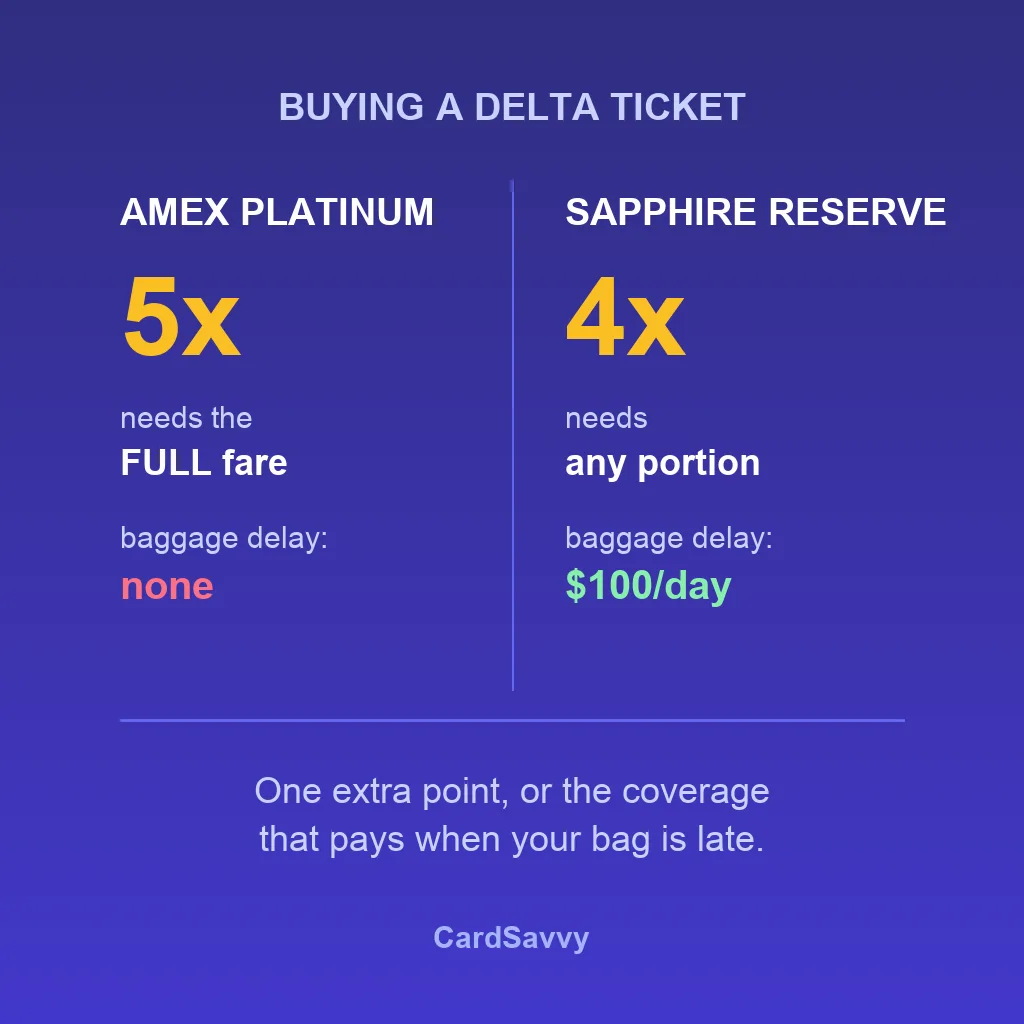
Which Card Should You Actually Buy Delta Tickets With?
Amex Platinum earns 5x on Delta airfare against the Sapphire Reserve's 4x. But Platinum requires the full fare charged to it and covers no baggage delay, which matters more than one extra point if you check bags.
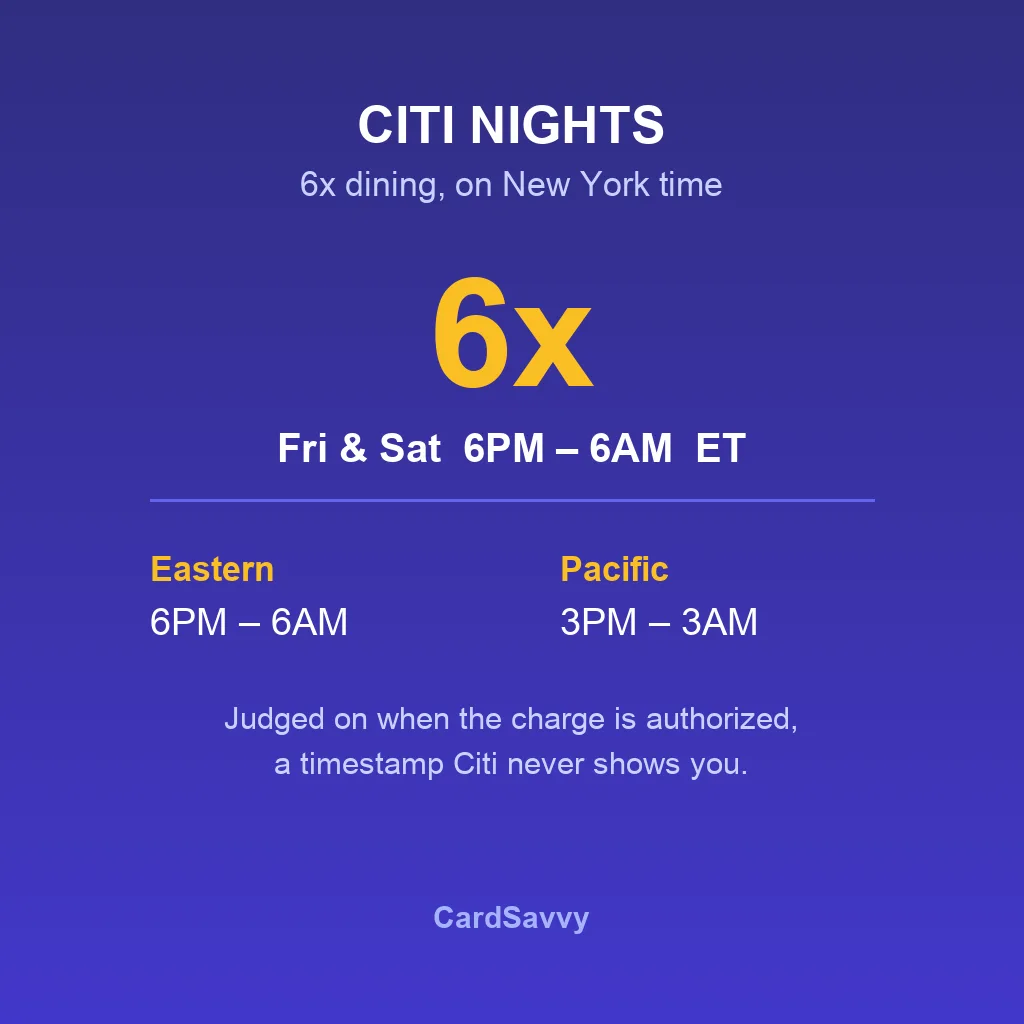
Citi Nights: The 6x Dining Bonus That Runs on New York Time
The Citi Strata Elite earns 6x at restaurants on Friday and Saturday nights, but the window runs on Eastern time and is judged by when the charge is authorized. Here is what that means if you do not live in New York.

Chase Sapphire Reserve StubHub Credit: $300 Guide (2026)
The Chase Sapphire Reserve's $300 StubHub credit is real, but resale markups and fees can quietly eat the value. Here's how to use it and what to actually count.
Get smarter with your cards
Math-first card strategy posts, sent when we publish — not on a schedule. No spam. Unsubscribe anytime.
We respect your inbox.
Ready to optimize your wallet?
Get personalized card recommendations and spending strategies in under 2 minutes.
Free to use. No signup required.
Get My Strategy →Just need an answer for one purchase? Best Card →