CardSavvy in Action: A Visual Walkthrough
CardSavvy takes two inputs, your approximate annual spending and the cards you already hold, and returns one output: which card to use for each category, and what the whole wallet is worth after annual fees.
No account, no bank connection, and no transaction-level data. Category totals are enough for the math.
Here is what that looks like.
The setup
Tell it what you spend. Rough numbers work, because the ranking depends on the ratio between your categories rather than their exact values.
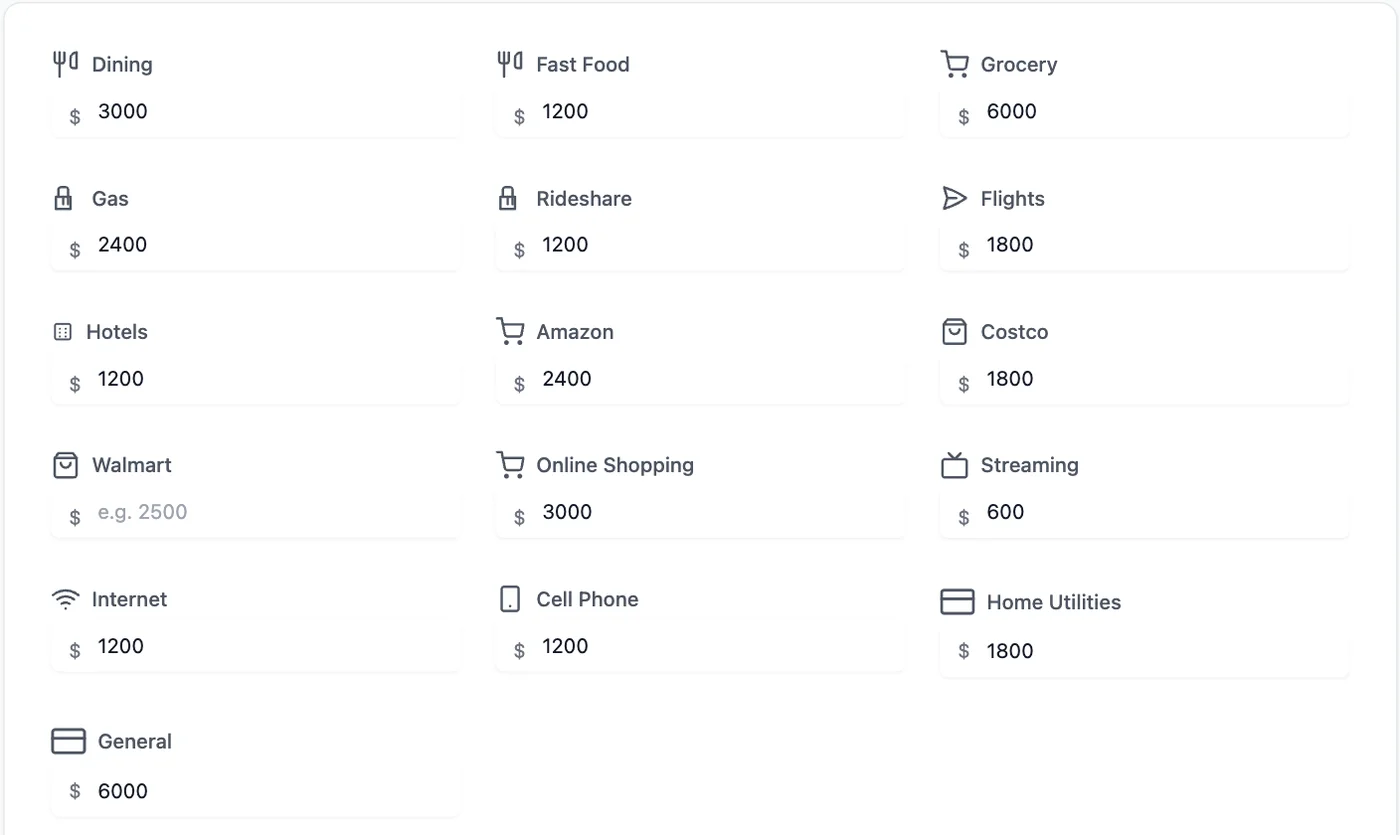
Step 1, filled with US averages by one click.
Then tell it what you carry. Cards come from a catalog of 137, so their rates, fees, and credits are filled in for you.
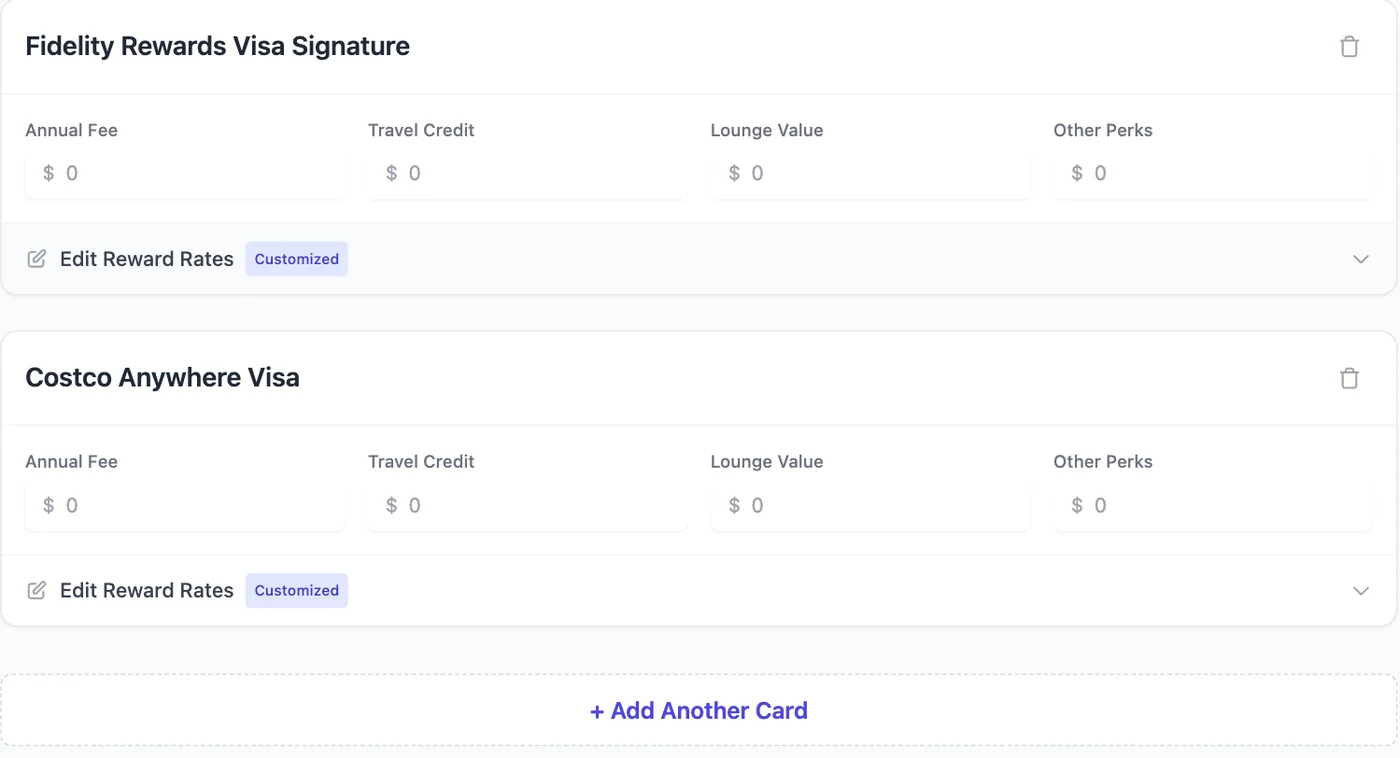
Step 2. Every field stays editable if your terms differ.
The result
A per-category assignment, a net value after annual fees, and a per-card breakdown showing what each one contributes.
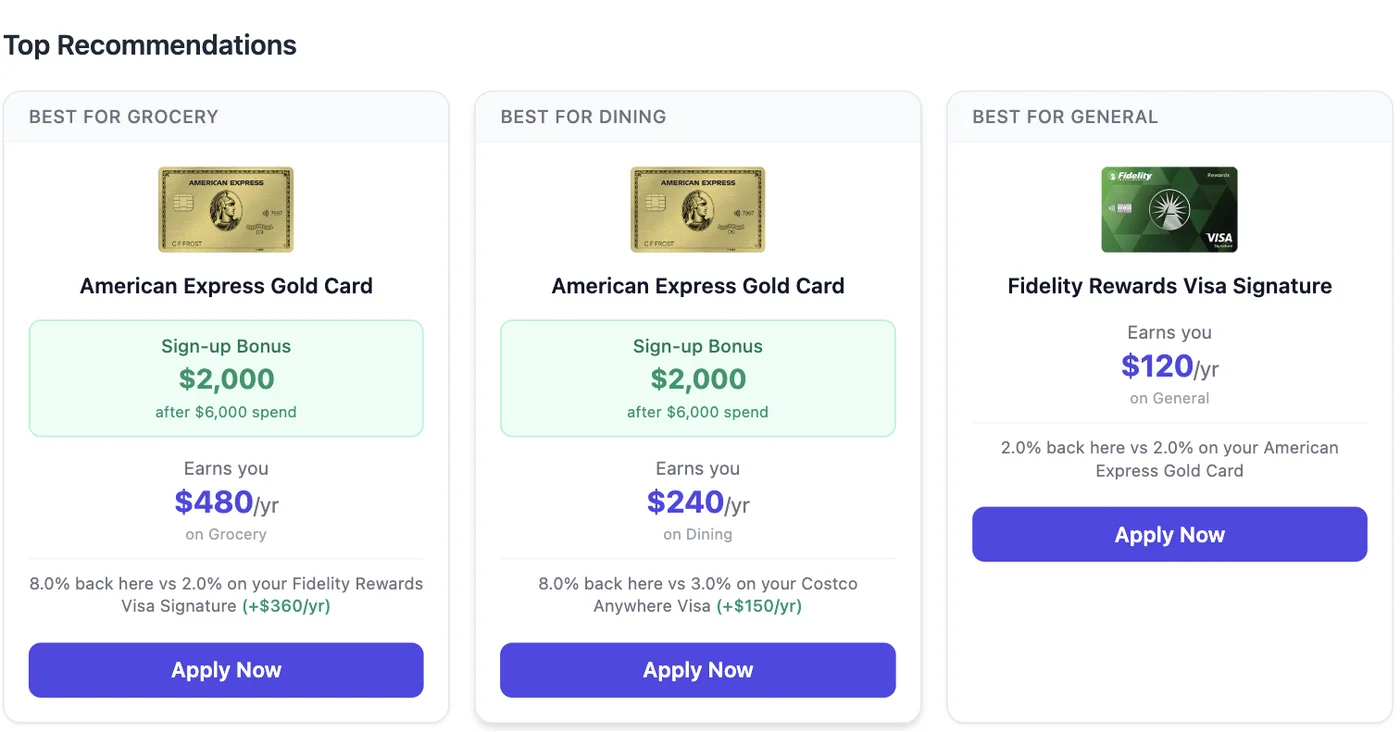
The winning card per category, with the runner-up it beat and by how much.
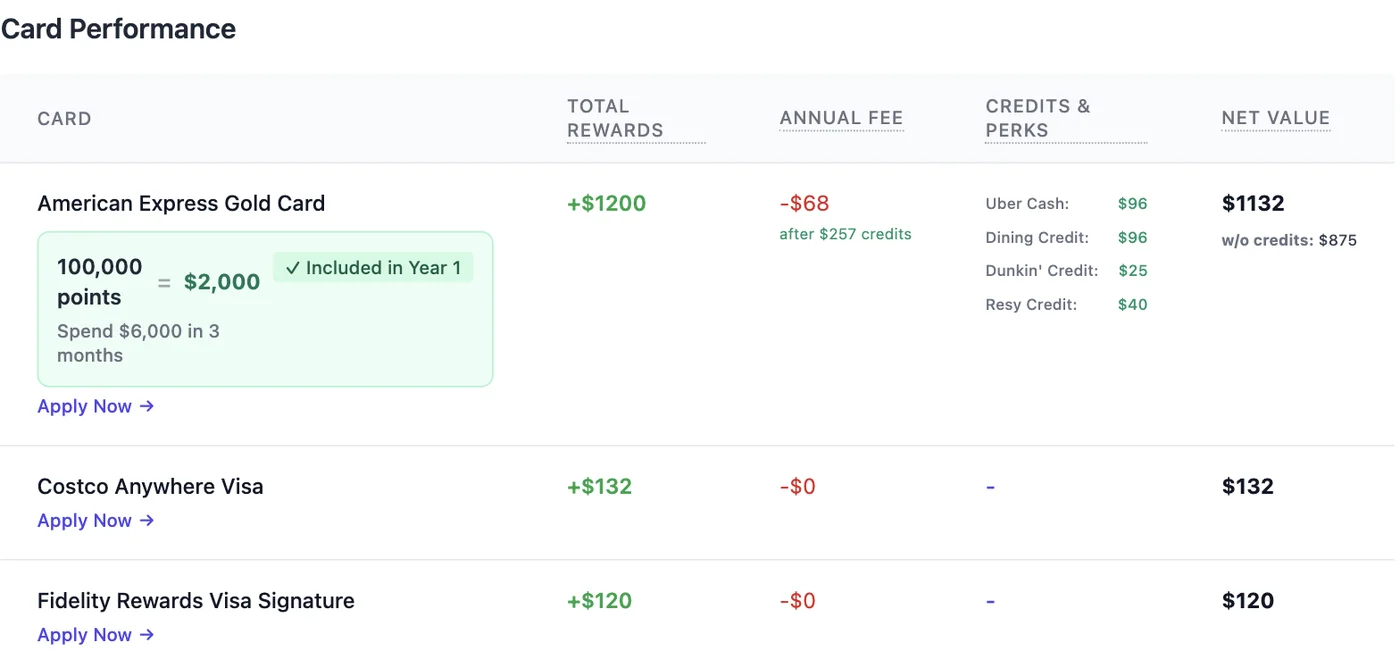
Net value per card, after fees and after the credits you said you would use.
Screenshots captured July 30, 2026 on the US-average spending profile.
Go deeper
These screenshots show the shape. The three posts below show the arithmetic, using an average US household budget of $34,800 that you can reproduce by clicking one button in the tool.
How to Optimize Your Credit Card Rewards walks through every screen with real numbers, including the redemption-strategy and statement-credit inputs that move the answer most.
Three Ways a Rewards Optimizer Gives You the Wrong Answer shows how far the result swings on its assumptions, and documents where CardSavvy's own model falls short.
How Many Rewards Cards Do You Actually Need? measures what each additional card earns, and where adding one starts costing you money.
For definitions of the terms on the results screen, see the optimizer glossary.
Related on Learn
Hand-picked based on topic and reader interest

Does Costco Take PayPal in 2026? No. Here's How to Pay for the Most Rewards
Costco does not accept PayPal in warehouses, on Costco.com, or at gas stations. Here is what Costco does take, the one PayPal workaround, and the best card to use for cash back.

What Credit Cards Does Costco Accept in 2026? (In-Store, Online, and Gas)
Costco only accepts Visa credit cards in-store. Costco.com accepts Visa and Mastercard. Here is the complete breakdown by location and payment type.

Stop Leaving Money on the Table: Welcome to Card Savvy
Why your wallet should be working harder than you do. Moving from simple payments to strategic arbitrage.

Credit Card Rewards A to Z: 26 Rules and the Math Behind Them
Twenty-six rules for credit card rewards, one per letter, each with the math attached. Annual fees, net value, merchant coding, devaluation, and the rule that comes before A.
Get smarter with your cards
Math-first card strategy posts, sent when we publish — not on a schedule. No spam. Unsubscribe anytime.
We respect your inbox.
Ready to optimize your wallet?
Get personalized card recommendations and spending strategies in under 2 minutes.
Free to use. No signup required.
Get My Strategy →Just need an answer for one purchase? Best Card →