Should You Switch to the Robinhood Gold Card? The Break-Even Math
The Robinhood Gold Card earns 3 points per dollar on eligible purchases. A no-fee 2% card earns 2 cents per dollar. That 1-point gap is the entire reason to consider switching, and it costs $50 a year to capture because the card requires a Robinhood Gold membership.
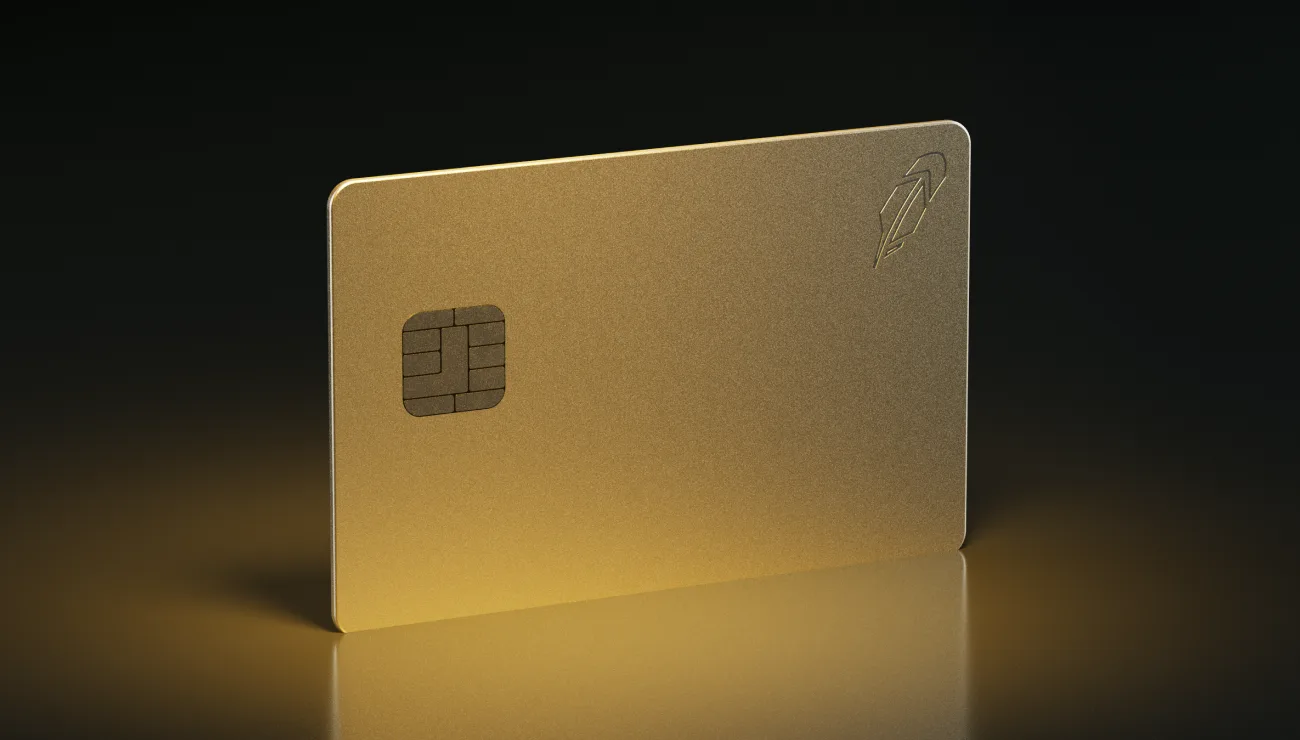
Divide the $50 fee by the 1-point gap and you get the break-even: about $5,000 of eligible annual spend against a 2% card. Spend more than that and Robinhood pulls ahead. Spend less and the free card wins. The question got more interesting on May 27, 2026, when Bank of America's new rewards program dropped many cardholders from 2.625% to 2.25%, which changes the threshold for a large group of people.
Run your own numbers through the calculator below →
What Robinhood actually pays
Gold members earn 3 points per $1 on eligible purchases. Those points are worth 1 cent each when redeemed to a Robinhood brokerage account, which is what makes the headline rate a true 3%. Redeem them as a statement credit and they are worth less than a cent each, so the effective rate drops. More on that below, because it is the detail most reviews skip.
Two things are easy to get wrong. First, without an active Gold membership the card earns 1.5 points per dollar, not 3, so the $50 fee is not optional if you want the 3% rate. Second, Robinhood's rewards rules changed on April 15, 2026, and travel booked through the Robinhood portal no longer earns extra points. Older reviews still cite a 5% travel rate. That rate is gone. Travel earns the same 3 points as everything else.
For the Costco angle (stacking the card with a Costco Executive membership), we covered that separately in our Robinhood at Costco breakdown. If you want richer perks from the same ecosystem, the Robinhood Platinum Card trades a higher fee for lounge access and travel credits. This post is about the straight switch decision.
The break-even math
The only number that decides a switch is the gap between Robinhood's 3% and your current card's rate. Here is where each common rate breaks even, assuming you redeem to a brokerage account and value no other Gold benefits.
| Your current card | Reward gap vs Robinhood | Break-even eligible spend | Net advantage at $15k | Net advantage at $30k |
|---|---|---|---|---|
| 2.00% (Citi Double Cash, Active Cash, Fidelity) | 1.00 point | $5,000 | +$100 | +$250 |
| 2.25% (BofA Preferred Honors) | 0.75 point | $6,667 | +$62.50 | +$175 |
| 2.50% | 0.50 point | $10,000 | +$25 | +$100 |
| 2.625% (BofA Premier) | 0.375 point | $13,333 | +$6.25 | +$62.50 |
The pattern is clear. Against a plain 2% card, Robinhood becomes worth it for any moderate spender. Against a 2.5% or higher card, the advantage stays thin even at $30,000 of annual spend, because the $50 fee eats most of a half-point edge.
See your exact break-even with the calculator →
The Bank of America change that reset the math
Many people earning around 2.6% cash back do it through Bank of America and Merrill. The new BofA Rewards program, effective May 27, 2026, restructured the bonus tiers that the Unlimited Cash Rewards card relies on.
| BofA Rewards tier | Qualifying balance | Card bonus | Effective flat rate |
|---|---|---|---|
| Preferred Honors | $100,000 to under $1 million | 50% | 2.25% |
| Premier | $1 million or more | 75% | 2.625% |
Under the old Preferred Rewards structure, the 75% bonus (and the 2.625% rate) was available at the $100,000 Platinum Honors tier. Now that same $100,000 to $1 million band earns 2.25%, and 2.625% requires $1 million. Existing cardholders enrolled before the cutover keep their prior benefit for at least six months, so some people are temporarily grandfathered at 2.625% (per Bank of America's announcement).
The practical effect: a reader with $100,000 to $1 million at Merrill who used to earn 2.625% now earns 2.25%. Their Robinhood break-even falls from about $13,333 to about $6,667. If your balance dropped below the threshold entirely and you fell back to the 1.5% base rate, Robinhood's 3% wins from the first dollar. This is the single most consequential reason to recheck the math right now.
The redemption detail that flips the decision
The 3% rate only holds if you redeem points to a Robinhood brokerage account. Statement credits redeem for less than a cent per point. Value them at roughly 0.8 cents and the effective earn rate falls to about 2.4%.
Run that through the same math and the picture changes. At $10,000 of eligible spend, a statement-credit redeemer earns $240 in points, pays the $50 Gold fee, and nets $190. A free 2% card earns $200 on the same spend. The 2% card wins by $10. The break-even against a 2% card jumps from $5,000 all the way to $12,500 once you give up full-value redemption.
So before switching, ask a blunt question. Will you actually move the points into a brokerage account, or will you click the statement-credit button because it is simpler? If it is the latter, a no-fee 2% card is the better tool.
The Gold benefits that can offset the fee
The $50 fee looks different if you would use Gold for something beyond the card. Two benefits matter for do-it-yourself investors. Value them incrementally, counting only what Gold adds over a free Robinhood account.
| Gold benefit | Incremental value | The catch |
|---|---|---|
| IRA contribution match | Up to $150 (under 50) or $172 (50+) per year | Five-year asset retention; keep Gold one year after the match |
| Uninvested cash yield (3.35% APY) | Only the spread over your current savings rate | Variable rate; small unless you park a lot of cash there |
| Morningstar research | Retail value if you would otherwise pay for it | Zero if you would not |
The IRA match is the strongest case. Gold matches 3% of eligible IRA contributions while free Robinhood matches 1%. The 2026 contribution limits are $7,500 under age 50 and $8,600 for age 50 and older. At the maximum, a 50-or-older contributor earns a $258 total match with Gold versus $86 without, so the incremental Gold benefit is $172. Under age 50 the incremental benefit is $150 ($225 versus $75). Either figure alone more than covers the $50 fee, before taxes and the retention requirements below.
A caution for higher earners using a backdoor Roth strategy: Robinhood treats an IRA match earned in a Traditional IRA as taxable when you convert it to Roth. Model your marginal rate rather than assuming the full match is tax-free.
The cash yield is usually overstated. Gold pays 3.35% APY on uninvested brokerage cash, but the right comparison is your existing savings rate, not zero. If your high-yield account already pays 4%, the incremental value is negative, so it should not factor into a switch.
Eligible spend is not total spend
Robinhood excludes a long list of transactions from earning rewards: balance transfers, cash advances and cash-like transactions, gift card and prepaid loads, peer-to-peer transfers, rent and housing payments, tax payments, gambling, and precious metals. The card can also remove points at its discretion.
This matters for the break-even. If a big slice of your spending is rent or taxes, your eligible spend is far below your total spend, and you may never clear the threshold. Enter eligible spend into the calculator, not your whole budget.
Who should switch
| Your situation | Verdict |
|---|---|
| Spending $10k+ a year on a 2% card, redeem to brokerage | Switch |
| BofA cardholder who just dropped from 2.625% to 2.25% or 1.5% | Recheck, likely switch |
| Already pay for Gold for investing or the IRA match | Switch; the fee is not incremental |
| Will make eligible Robinhood IRA contributions | Switch, if you accept the five-year retention |
| Spending under $5k a year on eligible purchases | Keep your free 2% card |
| Prefer statement credits over moving points to a brokerage | Keep your free 2% card |
| Carry a balance month to month | Do not switch; 29.99% APR erases any edge |
| Earn 2.625% and value no Gold benefits | Keep your card; the edge is a few dollars |
Not sure which row is you? Compare the Robinhood Gold Card against your current wallet to see the dollar difference on your real spending.
The no-fee alternatives worth comparing
Robinhood is not the only flat-rate option, and for some readers a simpler card is the better answer. We rank the field in our guides to the best unlimited cash back cards and the best no-annual-fee credit cards.
| Card | What it offers | Best for |
|---|---|---|
| Fidelity Rewards Visa | Unlimited 2%, no fee, deposits into a Fidelity account | DIY investors who already use Fidelity and want no membership |
| Wells Fargo Active Cash | Unlimited 2%, no fee, plus a welcome bonus | Anyone who values a first-year cash bonus |
| Citi Double Cash | Unlimited 2% (1% buy, 1% pay), no fee | The simplest long-term baseline |
| BofA Unlimited Cash Rewards | 2.25% or 2.625% with a qualifying BofA/Merrill balance | People who already bank at BofA |
A welcome bonus can outweigh years of Robinhood's edge for a moderate spender. A $200 bonus on a 2% card is worth more in year one than Robinhood's entire reward advantage at $10,000 of spend. The calculator above lets you add a competing bonus to see the first-year picture.
Bottom line
If you spend $10,000 or more a year on eligible purchases, pay in full, and will redeem points to a brokerage account, the Robinhood Gold Card beats a free 2% card by $50 to $250 a year after the membership fee. The case strengthens further if you would use the IRA match or already pay for Gold.
If your eligible spend is under $5,000, you prefer statement credits, or you already earn 2.625% with no plans to use other Gold features, a no-fee 2% card is the cleaner choice. Run your real numbers above before deciding.
Related on Learn
Hand-picked based on topic and reader interest

Robinhood's Agentic Credit Card: Should You Let AI Spend Your Money for 3% Back?
Robinhood's Agentic Credit Card lets an AI agent spend on your Gold Card for 3% back. We run the math on the reward edge versus the risk of one wrong purchase.

Best Credit Cards for Paying Utility Bills (2026): Why Net Value Beats Headline Rewards
Electric, gas, water, trash. Utility bills look like easy rewards, but provider fees, category caps, and lost autopay discounts mean the best card depends on net value, not headline rate. Math-first picks for 2026.

Amex Gold vs Platinum 2026: Which Card Is Actually Worth It? (Full Comparison)
Amex Gold ($325) vs Amex Platinum ($895): We compare rewards, credits, lounge access, and break-even math. See which card wins for YOUR spending in 2026.

Best Alaska Airlines Credit Card 2026: Atmos Rewards vs Premium Cards
What's the best credit card for Alaska Airlines miles in 2026? We compare Atmos Rewards Ascent & Summit vs Chase Sapphire Reserve, Amex Platinum, and Bilt.
Get smarter with your cards
Math-first card strategy posts, sent when we publish — not on a schedule. No spam. Unsubscribe anytime.
We respect your inbox.
Ready to optimize your wallet?
Get personalized card recommendations and spending strategies in under 2 minutes.
Free to use. No signup required.
Get My Strategy →Just need an answer for one purchase? Best Card →