Best Credit Cards for Paying Utility Bills (2026): Why Net Value Beats Headline Rewards
Utility bills look like easy credit card rewards. They are recurring, predictable, and often large enough to matter. The obvious question is which card earns the most on them.
The better question: which card nets the most after provider fees, category caps, and lost autopay discounts. A 5% card with a 2.95% convenience fee is really a 2.05% card. A 5% card that costs you a $10/month phone autopay discount on a $100 bill is a negative value card.
This guide ranks the best credit cards for paying utility bills in 2026 by net annual value.
See which card wins for your specific utility spend →
What "utilities" actually means (and why it matters)
The U.S. Bureau of Labor Statistics defines household utilities, fuels, and public services as a broad bucket that includes natural gas, electricity, fuel oil, water and other public services, garbage and trash collection, sewer and septic, and telephone service. The average U.S. consumer unit spent about $4,736 on this bucket in 2024, per FRED data drawn from BLS Consumer Expenditure surveys.
Credit card issuers slice that bucket much more narrowly than consumers do. This is the single most important fact in this guide:
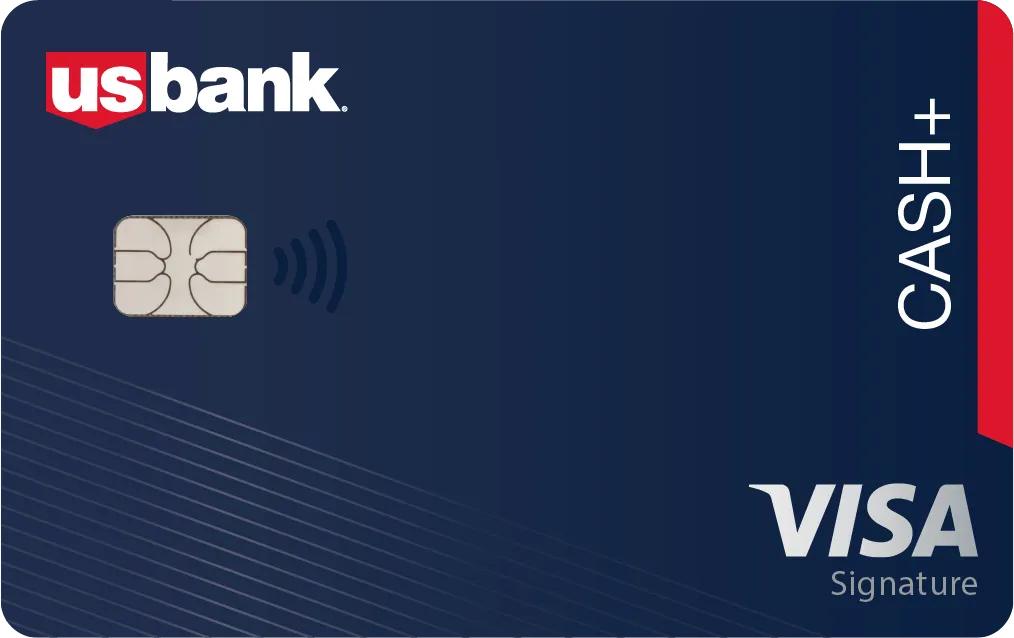
- The U.S. Bank Cash+ Visa Signature "Home Utilities" 5% category covers electric, gas, water, sewer, and waste management. It explicitly excludes internet, cable, telecom, cell phone, and security systems.
- The Venmo Credit Card's "Bills & Utilities" top-spend category is broader. It includes utilities, telecom, internet providers, TV, radio, and streaming subscriptions.
- Most other consumer cards have no utilities-specific bonus category at all. Utility payments code as "Other" and earn 1%.
If you assume every recurring bill earns 5% on Cash+, you'll be wrong about your internet, cell phone, and streaming bills. Plan accordingly.
At a glance: the top picks
| Card | Best for | Earn rate on utilities | Annual fee | Main caveat |
|---|---|---|---|---|
| U.S. Bank Cash+ Visa Signature | True home utilities (electric, gas, water, trash) | 5% on Home Utilities, first $2,000/quarter combined | $0 | Must enroll quarterly. Excludes internet, cable, cell phone, and streaming. |
| Elan Max Cash Preferred | A second household card or Cash+ alternative | 5% on two chosen categories, first $2,000/quarter combined | $0 (typical) | Issued through Elan-partnered banks and credit unions. Same enrollment + cap mechanics. |
| Venmo Credit Card | Households where utilities + telecom + streaming are top spend | 3% on top spending category (Bills & Utilities included) | $0 | Only top category earns 3%. Coding can shift across months. |
| PayPal Cashback Mastercard | Utilities you can pay through PayPal checkout | 3% on PayPal purchases, 1.5% elsewhere | $0 | Most utility providers don't accept PayPal. |
| Chase Ink Business Cash | Business owners paying internet, cable, and phone | 5% on internet, cable, and phone, first $25,000/year combined | $0 | Business card. Doesn't cover electric, gas, or water. |
| Flat-rate fallback (Citi Double Cash, Fidelity Visa, U.S. Bank Smartly, Robinhood Gold) | Anyone who doesn't want to track categories, or whose provider charges fees | 2–4% on everything | $0–$50/yr | The right answer when caps, fees, or coding erode category cards. |

The math that matters
Most "best card for utilities" articles stop at the rewards rate. We won't. Here's what $300/month in eligible home utilities ($3,600/year) looks like under realistic conditions:
| Scenario | Gross rewards | Fees / discounts lost | Net annual value |
|---|---|---|---|
| 5% rewards, no provider fee | $180 | $0 | +$180 |
| 5% rewards, 2.95% provider fee | $180 | $106.20 | +$73.80 |
| 5% rewards, $2.95/month flat fee | $180 | $35.40 | +$144.60 |
| 5% rewards, lose $10/mo phone autopay discount (on a separate $100/mo bill) | $60 (on phone bill alone) | $120 | −$60 |
Two break-even formulas worth memorizing:
- Maximum percentage fee worth paying ≈ your card's reward rate − value of any lost autopay discounts as a percentage of the bill.
- Minimum bill to break even on a flat fee = flat fee ÷ reward rate.
So a $2.95 flat fee on a 5% rewards card breaks even at about a $59 bill. A 2.95% percentage fee doesn't break even until your card earns more than 2.95%, which rules out most 2% flat-rate cards entirely.
There's also a hard ceiling on Cash+ specifically. The 5% applies to the first $2,000 of combined quarterly spend across both selected categories. That's $8,000/year of eligible 5% spend, or $400/year in maximum gross 5% rewards before fees and category leakage. Heavy spenders need a flat-rate card for the overflow.
Plug your real utility bills into the optimizer to see your actual net value →
The cards in detail
U.S. Bank Cash+ Visa Signature: best overall for true home utilities
The Cash+ Visa Signature earns 5% cash back in two categories you choose each quarter, on the first $2,000 of combined spending. Home Utilities is one of those categories, and it's currently selectable in 2026. That makes Cash+ the highest-earning consumer card for households whose utility provider charges no fee or a small flat fee.
The catches matter. The category list rotates and is not guaranteed permanent, so you have to actively enroll each quarter. The $2,000 quarterly cap means peak summer or winter months can blow past 5%. And again, internet, cable, cell phone, and security systems don't count as Home Utilities; they earn 1% on this card.
Elan Max Cash Preferred: Cash+ alternative or a second household card
The Elan Max Cash Preferred has nearly identical mechanics: 5% on two selected categories, first $2,000/quarter combined. Elan issues this card through partnered banks and credit unions, so availability depends on whether your local institution offers it. Useful as a second card in the household if both partners want their own 5% allocation, or if the Cash+ category list and the Elan category list rotate differently.
Venmo Credit Card: simple and uncapped, if utilities are your top spend
The Venmo Credit Card earns 3% on your top spending category each month, 2% on the second, and 1% on the rest, with no annual fee and no stated cap on the 3%/2% earnings. The Bills & Utilities category includes utilities, telecom, internet providers, and TV/radio/streaming subscriptions, which makes it the only mainstream consumer card that bundles all of those at a meaningful rate.
The catch: the 3% only applies if Bills & Utilities is your highest-spend category that month. If groceries or dining outpaces it, your utilities drop to 2% or 1%. Merchant coding through third-party billers can also push payments into "Other," dropping rewards to 1%.
PayPal Cashback Mastercard: only useful where PayPal is accepted
The PayPal Cashback Mastercard earns 3% on purchases made through PayPal checkout and 1.5% everywhere else, with no annual fee. If your utility provider accepts PayPal at checkout (some do; many don't), this is a clean 3% with no caps and no enrollment.
If your provider doesn't accept PayPal, this card is a 1.5% card, beaten by Citi Double Cash on every other purchase you'd make.
Chase Ink Business Cash: for business owners with telecom bills
The Ink Business Cash earns 5% on the first $25,000 in combined annual spending at office supply stores and on internet, cable, and phone services. This is the opposite set of categories from Cash+. Together with a Cash+ in the household, the two cards split the recurring-bill universe cleanly: Cash+ for electric, gas, water, and trash; Ink Business Cash for internet and phone.
This requires a legitimate business use case. For more on business card strategy, see our guide to the best business credit cards in 2026.
Flat-rate cards: the right answer surprisingly often
When provider fees erase your category bonus, when you're past the Cash+ quarterly cap, or when your utility doesn't code as "utilities" at all, a flat-rate card wins.
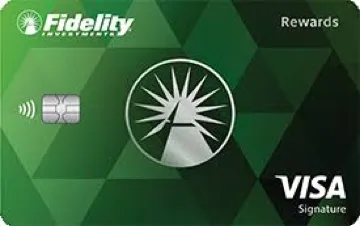
The Fidelity Rewards Visa earns an unlimited 2% on everything when redeemed into an eligible Fidelity account. The Citi Double Cash effectively earns 2% (1% when you buy, 1% when you pay) with no annual fee and no categories to track.
The two higher-rate options come with strings:
- The U.S. Bank Smartly Visa can earn up to 4% on all purchases, but only at the highest tier of the U.S. Bank Smartly Savings relationship. Large deposit balances are required. Without that relationship, it's closer to 2%.
- The Robinhood Gold Card earns 3% flat on everything, but requires a Robinhood Gold subscription (about $50/year) and is invitation-only off a waitlist.
For a deeper comparison, see our guide to the best unlimited cash back cards in 2026.
A simple decision tree
You don't need a calculator to make a decent first-pass call. Walk this tree:
- Does my provider charge no fee for credit card payments? Use Cash+ (or Elan Max Cash Preferred) for electric, gas, water, sewer, and trash, up to $2,000/quarter combined. Use a flat-rate card for the rest.
- Does my provider charge a percentage fee? Run the math. Your card's net rate is roughly reward rate − fee. If that's below your flat-rate card's rate (typically 2%), pay by ACH instead.
- Am I paying a cell phone bill? Check the autopay discount first. Most major carriers give a discount for ACH or debit that disappears with credit cards. The lost discount is often larger than the rewards.
- Is this a business expense for internet, cable, or phone? Use Chase Ink Business Cash for the 5% on the first $25,000 combined.
- Don't want to track categories at all? Use a flat-rate 2%+ card for everything. The simplicity tax is small and you'll never accidentally lose money to a fee surprise.
Who this strategy is for (and who it isn't)
This is for people who pay their credit card balance in full every month, have direct utility bills (not bundled into rent), and use providers that accept credit cards at no fee or a small enough fee that rewards still come out ahead. It's especially attractive for households whose recurring electric, gas, water, and trash bills fit comfortably under the Cash+ $2,000-per-quarter combined cap.
It is not for anyone carrying a credit card balance. The Consumer Financial Protection Bureau has repeatedly warned that consumers who revolve balances pay more in interest and fees than they earn in rewards. Pay-in-full is a precondition for any of this math to make sense.
It's also not for people whose providers charge meaningful percentage fees, or whose phone carrier removes autopay discounts for credit card payments. T-Mobile's autopay discount, for example, requires a bank account or debit card; credit cards don't qualify. AT&T's published terms similarly tier the discount: largest for bank account, smaller for debit, and most ordinary credit cards excluded. The same fee-vs-rewards math we ran for paying insurance premiums and for paying taxes by credit card applies just as cleanly here.
And it's not for anyone who reads "utilities" as a single bucket. On Cash+, internet, cable, cell phone, and security systems aren't part of Home Utilities. Treat those as separate spending categories with separate optimal cards. Streaming subscriptions also have their own optimal-card story; see our guide to the best credit cards for streaming services.
The bottom line
The best credit card for utility bills is the one that wins on net annual value after provider fees, lost autopay discounts, category caps, and merchant coding. The highest advertised rewards rate is not the same thing.
For most households with eligible home utilities and a no-fee provider, the U.S. Bank Cash+ Visa Signature is the right first check, with the Elan Max Cash Preferred as an equivalent alternative if your local institution offers it. For broader coverage that includes telecom and streaming, the Venmo Credit Card is the cleanest pick, provided utilities is genuinely your top spend category. For business internet and phone, Chase Ink Business Cash is unbeatable inside its $25,000 annual cap.
When provider fees or autopay-discount losses tip the math negative, a flat-rate 2%+ card or paying by ACH wins. Most peer blogs won't tell you that.
The right tool to verify any of this against your actual numbers is the optimizer. Plug in your real monthly bill mix and pick the strategy with the highest after-fee return across cards.
Ready to optimize? Run your wallet through CardSavvy and see which cards win for your spending, utility bills included.
Cards Mentioned in This Article
Click any card above to see if it's worth adding to your wallet — personalized verdict in 30 seconds.
Related on Learn
Hand-picked based on topic and reader interest
Should You Switch to the Robinhood Gold Card? The Break-Even Math
The Robinhood Gold Card earns 3% on eligible purchases, but requires a $50/yr Gold membership. We run the break-even math against every major no-fee 2% to 2.625% cash back card.

Best Uses of Bilt Cash in 2026: Ranked With the Math
Bilt 2.0 split rewards into Bilt Points and Bilt Cash, and Bilt Cash mostly expires at year-end. Here is the math-first ranking of what to actually do with it — with cents-per-point hurdle rates for every redemption.

Robinhood's Agentic Credit Card: Should You Let AI Spend Your Money for 3% Back?
Robinhood's Agentic Credit Card lets an AI agent spend on your Gold Card for 3% back. We run the math on the reward edge versus the risk of one wrong purchase.

Amex Gold vs Platinum 2026: Which Card Is Actually Worth It? (Full Comparison)
Amex Gold ($325) vs Amex Platinum ($895): We compare rewards, credits, lounge access, and break-even math. See which card wins for YOUR spending in 2026.
Get smarter with your cards
Math-first card strategy posts, sent when we publish — not on a schedule. No spam. Unsubscribe anytime.
We respect your inbox.
Ready to optimize your wallet?
Get personalized card recommendations and spending strategies in under 2 minutes.
Free to use. No signup required.
Get My Strategy →Just need an answer for one purchase? Best Card →