The Most Exciting Credit Card Launches of 2026 (and Which Ones Are Actually Worth It)
2026 has been a loud year for card launches. Robinhood put out a platinum-plated premium card with AI-agent spending. Bilt relaunched its whole rewards system. Coinbase, Disney, Intuit, Bank of America, and Chime all shipped something new.
Most "best new cards" lists rank these by headline earn rate. That is the wrong yardstick. A 10% rate on spending you do not do, paid in a currency you cannot easily use, behind a $695 fee, can lose to a boring 2% card. This post ranks the 2026 launches by net value over a plain 2% no-fee card, and separates three different things: exciting, valuable, and actually recommendable for you.
Run any 2026 launch against a 2% card for your own spending →
The framework: rank by net value, not headline rate
A simple model cuts through the marketing. For any card:
Net value = rewards earned + credits you will actually use + signup bonus − annual fee − platform costs, measured against what a 2% card earns on the same spend.
Three honest adjustments matter most. Credits are only worth what you would have spent anyway. A reward is only worth its face value if the currency is flexible, and Bitcoin, Disney Rewards Dollars, and cruise points are not the same as cash. And a fee is a fee whether or not you use the perks.
The no-effort benchmark is a 2% no-fee cash-back card. Any complicated card has to beat that after fees, credits, and friction. The calculator below does this math for each launch.
The 2026 launches, ranked
| Launch | What it really is | Who it is for |
|---|---|---|
| Robinhood Platinum | Most exciting / most ambitious | High-income Robinhood users who use the credits and never carry a balance |
| Bilt Card 2.0 | Most important for household math | Renters and homeowners who will learn the mechanics |
| Intuit Business | Best sleeper launch | QuickBooks-heavy small businesses and solo founders |
| Coinbase One Card | Most interesting crypto card | Coinbase One members who want Bitcoin exposure |
| Disney Inspire | Best niche family card | High-frequency Disney households |
| Royal ONE / Plus | Best cruise-loyalist card | Royal Caribbean Group regulars |
Chime Prime and the Fanatics American Express card round out the watchlist below.
Robinhood Platinum: most exciting, not automatically best
The Robinhood Platinum card is the splashiest launch of the year. It earns 5% on dining, 5% on flights booked through the Robinhood Banking app, 10% on hotels and rental cars booked through Robinhood's travel portal, and 1% on everything else, with a real platinum-plated card and a complimentary Robinhood Gold membership.
The interesting part is the strategy, not the earn table. Robinhood is trying to become a full financial operating system: investing, banking, family accounts, and now AI-agent spending. Its agentic credit card lets you hand a virtual card to an AI agent with spending limits and approvals. That reframes a credit card as a controlled payment rail, which is genuinely new.
The reasons for caution are real. The annual fee is $695. The card is invite-only as of this writing, the listed APR is 29.99% variable, and cash back redemption requires a Robinhood brokerage account. The headline value leans on the travel portal, the wellness perks (Amazon One Medical, Function Health, Oura, a wearables credit), DoorDash autonomous-ride credits, and roughly $500 in annual travel credits. Use those organically and it can work. Ignore them and the fee swamps the rewards.
This is a cash-back-and-platform card, not a transferable-points card, so serious points and miles users will find the ceiling low. For the full breakdown, see our Robinhood Platinum review.
Bilt Card 2.0: most consequential for real budgets
Housing is the biggest monthly expense for most households, which is why Bilt Card 2.0 matters more than its excitement level suggests. Bilt relaunched on three tiers: Blue (no annual fee), Obsidian ($95), and Palladium ($495). All earn Bilt Points, earn 4% in Bilt Cash on everyday spend, and let you pay rent or mortgage through Bilt with no transaction fee. For every $30 in Bilt Cash, you can unlock 1,000 Bilt Points on a housing payment.
The new system is also the catch. It is more complicated than the old five-transactions-a-month card, and the rollout drew criticism. NerdWallet's review was titled "Bilt 2.0 Promises Rewards, Delivers Confusion." The card moved to a new issuer (Column N.A., with Cardless servicing) after the Wells Fargo partnership ended, and the housing-rewards mechanics reward people who model them carefully.
For most people, Blue or Obsidian is the sensible entry, with Palladium reserved for high-spend households that will use the credits. The rent and mortgage math is where the real value lives, so run it in our Bilt 2.0 calculator and read the full Bilt review before you commit.
Intuit Business: the underrated sleeper
The Intuit Business Credit Card is boring in the best way. No annual fee, 2% unlimited cash back on everyday purchases, 5% back on Intuit products and services, a $300 bonus after $3,000 of spend in three months, employee cards, receipt capture, and QuickBooks syncing. It is issued by WebBank, and the 5% category excludes merchant and transaction fees.
This is not a travel-maximizer card. The edge is workflow. A solo founder, consultant, or small firm already paying for QuickBooks or Mailchimp may get more real value from clean expense tracking and simple 2% cash back than from a complicated points setup. It does not make sense for personal spending or for businesses that do not use Intuit.
Coinbase One Card: flashy, niche, and volatile
The Coinbase One Card earns up to 4% back in Bitcoin, with no annual fee on the card itself. The catch list is long. You need a paid Coinbase One membership ($49.99 per year). The 2.5% to 4% tiers depend on how much you hold at Coinbase and are capped at $10,000 of spend per month, then drop to 2%.
A 4% reward in Bitcoin is not 4% in cash. It can rise, which is the appeal, but it can also fall hard. There is also a behavior question worth asking honestly: are you choosing the best card, or an excuse to add crypto exposure? Recommend only for existing Coinbase One members who already want Bitcoin and understand the volatility. Our Coinbase One Card review digs into why most people will not hit the 4% tier.
Chase Disney Inspire: strong niche value, weak general value
Chase and Disney launched the Disney Inspire Visa on February 3, 2026, with a $149 annual fee. It earns 10% in Disney Rewards Dollars on Disney+, Hulu, and ESPN purchases, 3% at most U.S. Disney locations and gas stations, 2% at grocery stores and restaurants, and 1% elsewhere. Perks include up to $120 a year toward Disney streaming, a $100 credit after $200 in theme-park tickets, and 200 Disney Rewards Dollars after $2,000 in resort or cruise spend.
This is a classic closed-loop co-brand card. Disney Rewards Dollars are not Chase Ultimate Rewards points and are most valuable inside the Disney world. For a family that reliably spends on parks, cruises, streaming, and merchandise, it can pay off. For everyone else it is too narrow.
Royal ONE and Royal ONE Plus: for cruise loyalists only
Bank of America and Royal Caribbean Group launched the Royal ONE and Royal ONE Plus cards on March 31, 2026, the first tri-branded cards across Royal Caribbean, Celebrity Cruises, and Silversea. The no-fee Royal ONE earns 3X on Royal Caribbean Group purchases, 2X on grocery, gas, and EV charging, and has no foreign transaction fee. Royal ONE Plus adds a $99 fee, 4X on cruise-group spend, 2X on a broad travel-and-dining set, a $200 anniversary reward, priority boarding, and a Global Entry or TSA PreCheck credit every four years.
Tying benefits to real cruise behavior makes these better than most old cruise cards. They are still ecosystem cards. If you are not loyal to the Royal Caribbean Group, a flexible travel card will serve you better.
Watchlist
Two more launches are worth tracking but do not earn a ranking yet. Chime Prime is a banking-relationship product: it unlocks with $3,000 or more in qualifying direct deposits and offers 5% back on a chosen category (up to $1,500 of eligible purchases a month) plus a 3.75% savings APY. It matters less for travel maximizers and more for people building credit or using Chime as their main bank. And Fanatics and American Express announced a Fanatics Amex card on May 20, 2026, launching later this year with FanCash and Amex network benefits; the earn rates and fee are not public yet.
The part most posts skip: the behavioral math
Rewards are not free money, and the research is unusually clear on this. The CFPB has flagged that rewards programs create recurring consumer problems around devaluation, redemption issues, revocation, and hidden conditions, and that the stakes are large: consumers earned more than $40 billion in rewards on major cards in 2022, with rewards balances over $33 billion. (CFPB)
Who actually profits matters too. A Federal Reserve study, "Who Pays For Your Rewards?", finds that sophisticated consumers profit from rewards at the expense of less-sophisticated ones, and that rewards cards can push naive users toward more spending and higher unpaid balances. A 2026 experimental paper by Tianyu Han, "Rewards and Misperceived Spending," finds that more reward variety can increase both rewarded and unrewarded spending while people underestimate how much they spend in total.
The takeaway for a DIY maximizer: rewards cards are excellent for disciplined people who pay in full and do not let the rewards drive extra spending. For everyone else, the math can quietly run the other way.
Compare any launch against a 2% card
Five questions before you apply
- Is the spend organic? Rewards only pay if you are not spending more to earn them.
- Is the reward flexible? Cash and transferable points beat Disney Dollars, cruise points, FanCash, or Bitcoin for most people.
- Can you use the credits without changing behavior? A $300 travel credit is not worth $300 if it forces purchases you would not have made.
- Does it beat the 2% baseline? A no-fee 2% card is the number to beat after fees and friction.
- Could the program change? Devaluation and revocation are the most common rewards risks, so do not over-commit to one ecosystem.
Bottom line
The most exciting launch of 2026 is Robinhood Platinum, because it is trying to redefine what a card is. The most consequential for everyday budgets is Bilt Card 2.0, if you can make the housing mechanics work. The best sleeper is the Intuit Business Card, because simple 2% cash back plus accounting integration is what many small businesses actually need.
The rule underneath all of it: a great rewards card is not the one with the biggest headline number. It is the one that improves your after-fee, after-friction, after-behavior-change financial outcome.
Related on Learn
Hand-picked based on topic and reader interest
Best No Annual Fee Credit Cards 2026: By Use Case, Not by Affiliate Ranking
There is no single best no-fee card. Here are the 8 strongest picks for 2026 by use case — simple flat-rate, travel, dining, rotating categories, rent, and more.

What's the Best Credit Card for Airbnb? 2026 Rankings by Use Case
Chase Sapphire Preferred now earns 3x on Airbnb booked direct, but the best card depends on whether you want cash back, no annual fee, or coding certainty. Ranked by use case with the math.

Best Hotel Credit Cards 2026: Free Nights, Elite Status, and the Annual Fee Math
The best hotel card depends on whether you want a cheap keeper, premium perks, or a path to elite status. Here are the 5 strongest picks with breakeven math.
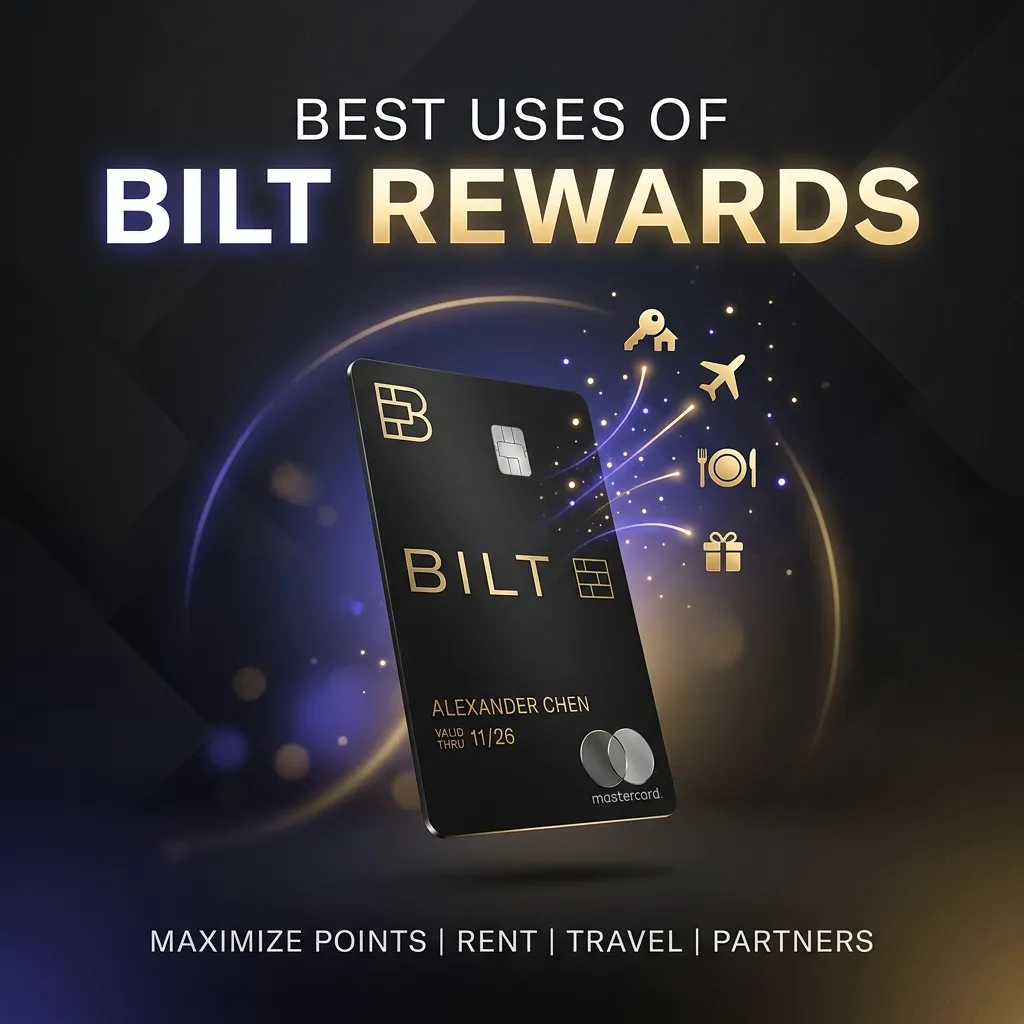
Best Uses of Bilt Cash in 2026: Ranked With the Math
Bilt 2.0 split rewards into Bilt Points and Bilt Cash, and Bilt Cash mostly expires at year-end. Here is the math-first ranking of what to actually do with it — with cents-per-point hurdle rates for every redemption.
Get smarter with your cards
Math-first card strategy posts, sent when we publish — not on a schedule. No spam. Unsubscribe anytime.
We respect your inbox.
Ready to optimize your wallet?
Get personalized card recommendations and spending strategies in under 2 minutes.
Free to use. No signup required.
Get My Strategy →Just need an answer for one purchase? Best Card →