Best Credit Cards for Dining 2026: Cash Back vs Points Compared
Americans spend an average of $3,500 per year dining out. If you're still swiping a 1% card at restaurants, you're leaving $70-175 on the table annually, which is enough to pay for a nice dinner itself.
The good news: dining is one of the most competitive credit card categories. Multiple cards offer 3-5% back, and choosing the right one depends on how much you spend and whether you prefer cash or travel points.
See which dining card wins for your spend →
Best Dining Cards 2026: Quick Picks
| Card | Dining Earn | Annual Fee | Best For |
|---|---|---|---|
| Amex Gold | 4x points | $325 | Travel hackers who dine out heavily |
| U.S. Bank Altitude Go | 4x points | $0 | Best no-fee points card |
| BofA Customized Cash | 6% first year, then 3% | $0 | Best cash-back rate on dining |
| Chase Sapphire Preferred | 3x points | $95 | Chase ecosystem loyalists |
| Wells Fargo Autograph | 3x points | $0 | No-fee with solid coverage |
| Capital One Savor | 3% cash back | $0 | Simple cash back, no caps |
| Citi Strata Elite | 6x Fri/Sat nights | $595 | Weekend-heavy dining only |
Already carry a couple of these? Enter a restaurant bill and see which card in your wallet wins, with the math shown:
How We Picked These Cards
We evaluated dining cards on three factors:
- Net value per dollar spent, factoring in point valuations and annual fees
- Spending caps, since some cards limit bonus earnings quarterly or annually
- Category coverage: does takeout and delivery count, or just sit-down restaurants?
The math-first conclusion: the "best" dining card depends on your annual restaurant spend and whether you redeem points for travel.
Best Premium Dining Card: Amex Gold

Earn rate: 4x Membership Rewards at restaurants worldwide Annual fee: $325 Cap: 4x rate applies up to $50,000/year in restaurant spend
The American Express Gold Card remains the gold standard for restaurant spending. At 4x points on dining, up to a generous $50,000 per calendar year, it's built for people who eat out regularly. Past that cap the rate drops to 1x, below what a Sapphire card pays.
The math:
If you value Membership Rewards at 2 cents per point (reasonable for travel transfers), your effective return is 8% on dining. That's hard to beat.
- $500/month dining = $24,000/year × 8% = $1,920 in value
- Minus $325 annual fee = $1,595 net
The card also earns 4x on U.S. supermarkets (up to $25,000/year) and comes with $120 in dining credits, $120 in Uber Cash, and other perks that can offset most of the annual fee.
The catch: Amex isn't accepted everywhere. About 1% of U.S. merchants don't take it. Keep a Visa backup for those situations.
Best for: Heavy diners who value travel points and can use the card's credits.
Compare Amex Gold to other cards in your wallet →
Best No-Fee Dining Card: U.S. Bank Altitude Go
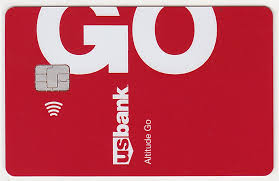
Earn rate: 4x points on dining and takeout Annual fee: $0 Cap: 4x on first $2,000/quarter, then 1x
The U.S. Bank Altitude Go matches the Amex Gold's 4x dining rate with no annual fee. U.S. Bank's terms cover dining, takeout, and restaurant delivery explicitly. The tradeoff is a tighter spending cap.
The math:
At $2,000/quarter ($8,000/year) in dining spend, you'd earn 32,000 points, worth $320 redeemed into a U.S. Bank deposit account.
That last detail matters, and most roundups skip it. U.S. Bank's own disclosure states that maximum point value applies to points redeemed as a deposit into an eligible U.S. Bank account. Statement credits, travel, gift cards, and merchandise may be worth less per point. Treat this as up to 4% equivalent for U.S. Bank customers rather than a flat 4% cash back card.
If your dining spend exceeds $667/month, you'll hit the cap and should consider the Amex Gold instead.
Bonus: The card also earns 2x on gas and EV charging, making it a solid two-category workhorse.
Best for: Moderate diners who want premium earn rates without paying an annual fee.
If You Already Have a Citi Custom Cash

Citi closed this card to new applicants on May 28, 2026. The product page now serves a discontinuation notice and points prospects to the Citi Double Cash. Existing cardmembers keep the card and its benefits, so this section is for people who already hold one.
Earn rate: 5% on your top spending category each billing cycle Annual fee: $0 Cap: 5% on up to $500/month, then 1%
The card automatically earns 5% on whichever eligible category you spend the most in that cycle, and restaurants qualify. Used only for dining, at $500/month or less:
- $500 × 5% × 12 months = $300/year
If you spend more than $500/month on dining, the excess earns 1%, and the Amex Gold's 4x (uncapped to $50k/year) wins.
One caveat now that the card is closed: because Citi removed the terms from its site, these rates can no longer be checked against a live issuer page. They are the last published terms.
If you were planning to apply: the closest live substitutes are the BofA Customized Cash (6% on dining in year one) and the Capital One Savor (3% unlimited, no annual fee).
Best for Chase Loyalists: Chase Sapphire Preferred

Earn rate: 3x points on dining Annual fee: $95 Cap: None
The Chase Sapphire Preferred earns 3x Ultimate Rewards points at restaurants worldwide, including takeout and eligible delivery services. Ultimate Rewards remains one of the best transferable points currencies available.
The math:
If you value Chase points at 1.5 cents each (conservative) to 2 cents (transfer partners):
- $500/month dining × 3x × 1.5cpp = $270/year (conservative)
- $500/month dining × 3x × 2cpp = $360/year (optimized)
Updated for the June 2026 refresh. Chase refreshed the Preferred on June 15, 2026 with no annual fee increase. The Chase Travel hotel credit doubled to $100 each account anniversary, and the card added 3x on gas and EV charging, 3x on vacation homes at brands including Airbnb and Vrbo, and a $120 Global Entry, TSA PreCheck, or NEXUS credit every four years. The 10% anniversary points bonus was discontinued for new applicants.
One tradeoff came with it: World of Hyatt transfers move from 1:1 to 4:3. That applies immediately to anyone approved on or after June 15, 2026, and reaches existing cardholders on October 1, 2026.
Why choose this over Amex Gold?
- Chase points still transfer to Hyatt, though at the reduced 4:3 rate once the change reaches you
- More merchants accept Visa than Amex
- Lower annual fee ($95 vs $325)
- No cap on the dining bonus, where Gold stops at $50,000 per calendar year
Best for: People in the Chase ecosystem who want dining points they can transfer to Hyatt, United, or Southwest.
Test CSP against your current cards →
Best No-Fee All-Rounder: Wells Fargo Autograph
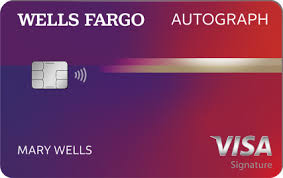
Earn rate: 3x points on restaurants (plus gas, travel, streaming, phone plans) Annual fee: $0 Cap: None
The Wells Fargo Autograph is a sleeper hit. It earns 3x on six categories including restaurants and gas stations, with no annual fee and no spending caps.
The math:
At $500/month dining × 3x × 1cpp = $180/year in cash back, plus whatever you earn on gas, travel, and other bonus categories.
Best for: People who want broad category coverage without paying a fee or tracking caps.
Best for BofA Rewards Members: Customized Cash Rewards
Earn rate: 6% on your choice category for the first year, then 3% Annual fee: $0 Cap: first $2,500/quarter combined across choice + grocery categories
New cardholders currently earn 6% in their chosen category for the first year, and dining is one of the six choices. That is the highest ongoing dining rate available on a no-fee card right now. It drops to 3% after year one, and Bank of America has not published an end date for the promotion, so treat it as an offer that can be pulled rather than a permanent term.
If you bank with Bank of America or invest with Merrill, the Bank of America Customized Cash Rewards card becomes significantly more powerful. Dining is one of the six eligible 3% categories, and BofA defines it broadly: restaurants and takeout, fast food, caterers, bars and taverns.
Note the 2026 program change. Bank of America retired Preferred Rewards on May 27, 2026 and replaced it with BofA Rewards. The Gold, Platinum, Platinum Honors, Diamond and Diamond Honors tier names no longer exist, and the balance required for the top dining rate went up substantially.
| Tier | Balance Required | Card Bonus | Dining Earn Rate |
|---|---|---|---|
| Member | No minimum | 10% | 3.30% |
| Preferred Plus | $30k+ | 25% | 3.75% |
| Preferred Honors | $100k+ | 50% | 4.50% |
| Premier | $1M+ | 75% | 5.25% |
The headline 5.25% now requires $1M in qualifying balances. At $100k it is 4.50%. The new Member tier is the genuinely useful addition, since a 10% bonus applies with no minimum balance at all.
Remember that the boosted rate still sits under the $2,500 quarterly combined cap, so the most dining spend that can earn the bonus rate is $10,000 a year.
Best for: BofA/Merrill customers, with the rate scaling to whatever tier your balances reach.
The Optimizer's Card: Citi Strata Elite
Earn rate: 6x at restaurants Friday and Saturday, 6 p.m. to 6 a.m. Eastern; 3x at restaurants any other time Annual fee: $595 Cap: None reported on either rate
The Citi Strata Elite, launched in July 2025, carries the highest dining multiplier of any card here through a benefit Citi calls Citi Nights. It is deliberately placed outside the quick picks above, because it only works for one kind of spender.
The window is fixed to Eastern time regardless of where you eat. On the West Coast that is 3 p.m. to 3 a.m. Pacific, so an ordinary Friday or Saturday dinner qualifies comfortably. In Europe you would need to eat between roughly midnight and noon local time, which nobody does.
The math, when it works: $10,000 of qualifying weekend dining earns 60,000 ThankYou Points, against 40,000 Membership Rewards on the Amex Gold or 30,000 Ultimate Rewards on a Sapphire card. That is a real edge.
The math, when it doesn't: restaurant spending Sunday through Thursday earns 3x, the same as a $95 Sapphire Preferred. If your dining is spread evenly across the week, most of your spend never touches the 6x rate and you are paying $595 for a 3x card.
The credits need the same scrutiny. The $300 hotel benefit requires a stay of two nights or more booked through Citi Travel. The $200 Splurge credit applies to two brands you choose from a fixed list (1stDibs, American Airlines, Best Buy, Future Personal Training, Live Nation), so it is only worth face value if you were already buying from two of them. The card also includes up to $200 a year in Blacklane credits, split into two $100 halves, plus lounge access and four Admirals Club passes.
Best for: People whose restaurant spending is genuinely concentrated on Friday and Saturday nights, who will use the hotel and Splurge credits, and who are willing to check a spreadsheet before applying. For everyone else, this is an expensive 3x card.
The window has edge cases that decide whether individual meals qualify, including a late Friday lunch that earns 6x on the West Coast and a 3 a.m. Saturday meal that does not. We covered the mechanics separately in Citi Nights: the 6x dining bonus that runs on New York time.
What About the Sapphire Reserve?
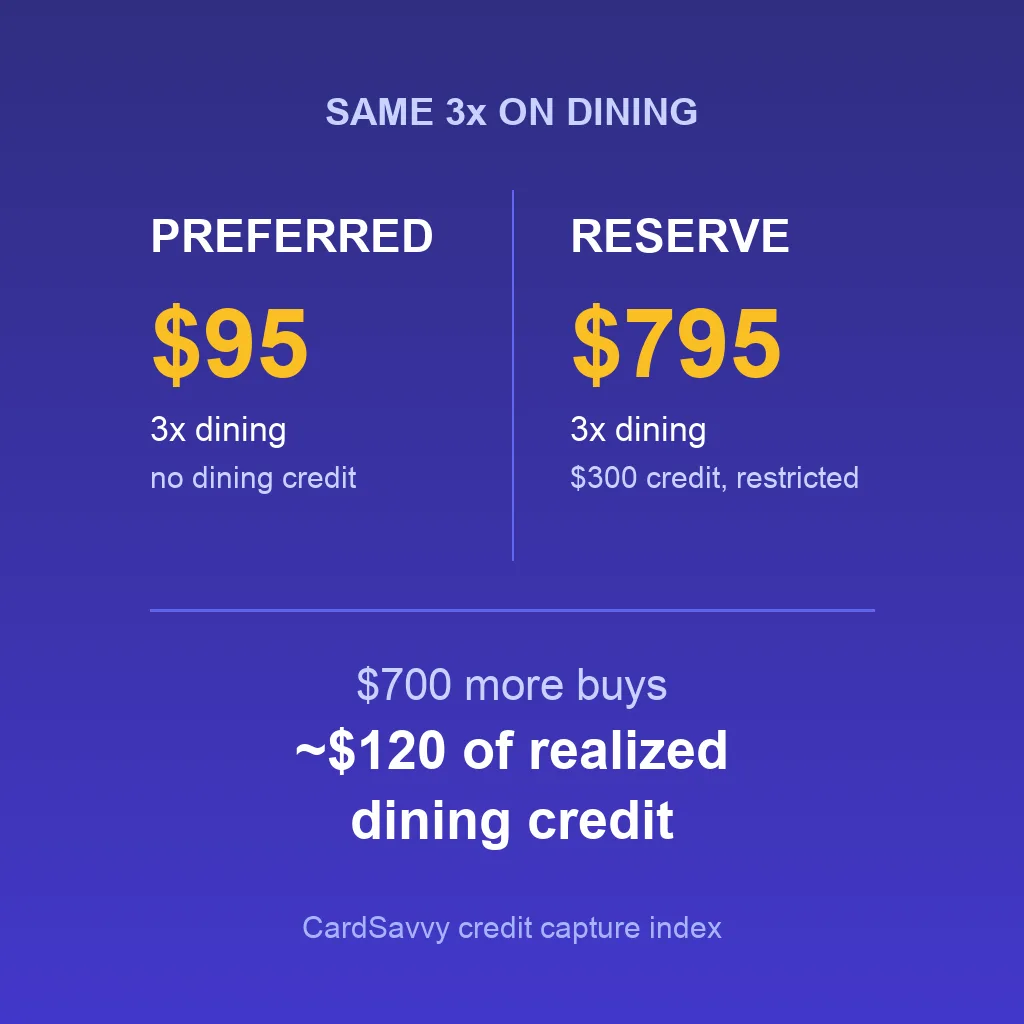
The $795 Chase Sapphire Reserve earns 3x on dining worldwide, which is exactly what the $95 Sapphire Preferred earns. The 2025 refresh raised the fee and restructured travel earning but left the dining rate untouched.
The Reserve's dining-specific premium is its up to $300 in annual Exclusive Tables credits, which our credit capture index values at about 40% of face for a typical cardholder because the restaurant list is restricted and geographically concentrated.
If dining is why you are considering the card, read Sapphire Reserve vs Preferred for Dining first. The short version: the Reserve is a travel card that happens to earn well at restaurants, not a reason to spend $700 more.
What Counts as "Dining"? (MCC Codes Explained)
Credit card rewards are based on merchant category codes (MCCs), not what you actually bought. This leads to some surprises:
Usually counts as dining:
- Sit-down restaurants
- Fast food
- Coffee shops, which Visa's merchant standards file under MCC 5814 alongside fast food
- Bars and breweries
- Takeout orders
- Some food delivery apps, but this one is genuinely inconsistent
Coffee has more exceptions than the list above suggests. Cafés registered as bakeries fall under MCC 5462, which Chase and Citi exclude from dining by name and Bank of America files under grocery. Counters inside a grocery store or hotel usually bill through the host business. Capital One is the only major issuer whose dining definition names bakeries. See our full coffee shop MCC and card comparison →
Delivery deserves its own warning. Issuers tie the bonus to the merchant's own categorization, not to the fact that food arrived. Chase's rewards FAQ puts it plainly: delivery and takeout are included "if they classify as a restaurant merchant." DoorDash and Grubhub have historically coded as restaurant merchants and earn the bonus. Uber Eats frequently codes under Uber and does not. Do not assume the category carries across platforms, and do not confuse this with a card's separate delivery credit, which is a different benefit entirely.
Usually does NOT count as dining:
- Grocery store prepared foods (deli counter, hot bar)
- Food courts inside malls or airports (sometimes coded as the mall/airport)
- Convenience store food
- Vending machines
Pro tip: If you're unsure how a merchant codes, make a small test purchase and check your statement. The category will show in your transaction details.
The Bottom Line: Which Dining Card Should You Get?
| If you... | Get this card |
|---|---|
| Spend $500+/month on dining and travel | Amex Gold |
| Want the highest cash-back rate on dining | BofA Customized Cash |
| Want no annual fee with premium rates | U.S. Bank Altitude Go |
| Are in the Chase ecosystem | Chase Sapphire Preferred |
| Have $100k+ at BofA/Merrill | BofA Customized Cash |
| Want simplicity with no caps or fees | Wells Fargo Autograph |
| Eat out mostly on Friday and Saturday nights | Citi Strata Elite |
| Are weighing the $795 Sapphire Reserve for dining | Sapphire Preferred, at $700 less |
Not sure which fits your situation? Run your numbers through the optimizer →
Frequently Asked Questions
Does Uber Eats and DoorDash count as dining?
It depends on the platform. Issuers tie the bonus to the merchant's own categorization, and the platforms do not categorize themselves the same way. DoorDash and Grubhub have historically coded as restaurant merchants and earn the dining bonus. Uber Eats frequently codes under Uber and does not. Instacart codes as grocery. Chase's rewards FAQ says delivery and takeout are included "if they classify as a restaurant merchant," which is the rule to reason from. Verify with a small test purchase rather than assuming.
Is takeout coded as dining?
Yes. Takeout and pickup orders from restaurants typically earn the same dining bonus as dine-in purchases. The merchant's MCC code determines the category, not how you receive the food.
What's the best dining card with no annual fee?
The U.S. Bank Altitude Go offers 4x on dining with no fee, though it has a $2,000/quarter cap. For uncapped earnings, the Wells Fargo Autograph earns 3x on dining with no fee.
What's the best dining card if I don't travel?
The BofA Customized Cash earns 6% on dining in the first year, then 3%, on up to $2,500 per quarter in combined choice-category and grocery spend. The Capital One Savor earns 3% unlimited with no cap to track. Citi Custom Cash used to be the standard answer, but Citi closed it to new applicants on May 28, 2026.
Is the Amex Gold worth it just for dining?
If you spend at least $4,000/year on dining and can use the card's credits, yes. The break-even point is roughly $325 in annual fee ÷ 4% extra value over a 2% card = $16,250 in dining spend. But if you also use the grocery bonus and credits, the math works at much lower spend levels.
Cards Mentioned in This Article
Click any card above to see if it's worth adding to your wallet — personalized verdict in 30 seconds.
Related on Learn
Hand-picked based on topic and reader interest
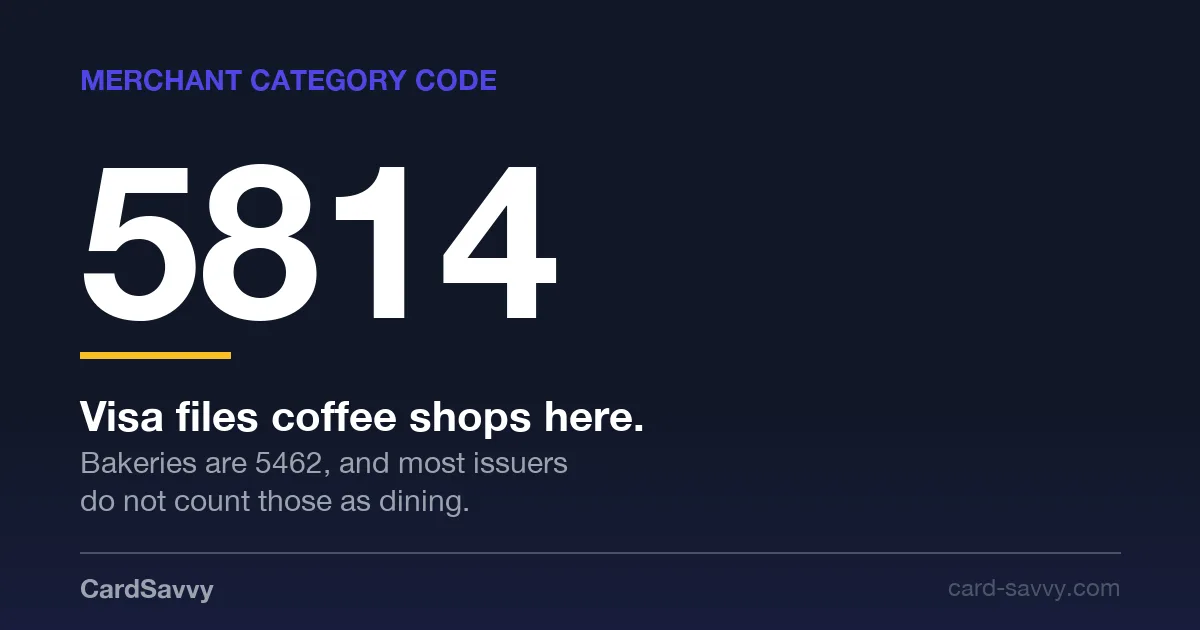
Best Credit Cards for Coffee Shops and Cafés in 2026: The MCC Decides
Which card earns the most at coffee shops in 2026, why bakery cafés and hotel lobby counters quietly lose your dining bonus, and how much optimizing a $5.54 latte is actually worth.
Best Credit Card for Groceries 2026: Cash Back vs Points Compared
Looking for the best credit card for groceries in 2026? We compare 6% cash back cards vs 4x points cards, plus which stores actually count as supermarkets.
Sapphire Reserve vs Preferred for Dining: Is $700 More Worth It?
The $795 Sapphire Reserve and the $95 Sapphire Preferred earn the same 3x on dining. The Reserve's entire dining premium is one restricted credit, and our capture index values it near $120. Here is when that still makes sense.

Best Business Credit Cards 2026: Cash Back and Rewards for Small Businesses
Complete guide to the best business credit cards in 2026. Compare cash back cards, rewards programs, intro APR offers, and find the right card for your SMB spending profile.
Get smarter with your cards
Math-first card strategy posts, sent when we publish — not on a schedule. No spam. Unsubscribe anytime.
We respect your inbox.
Ready to optimize your wallet?
Get personalized card recommendations and spending strategies in under 2 minutes.
Free to use. No signup required.
Get My Strategy →Just need an answer for one purchase? Best Card →