Best Credit Cards for Paying Insurance Premiums 2026
Paying insurance premiums with a credit card sounds like easy money. Put your $1,500 annual auto insurance on a 2% cash back card, earn $30. Simple.
But there's a catch: many insurers charge convenience fees that eat into or exceed your rewards. This guide explains when card payments make sense, which cards work best, and how to avoid losing money.
See which flat-rate card fits your spending →
The Short Answer
Can you pay insurance with a credit card? Yes, most insurers accept cards for auto, home, and renters insurance.
Should you? Only if the convenience fee is lower than your card's rewards rate. A 3% fee on a 2% card means you're losing 1%.
Best cards to use: High flat-rate cards (2%+) since insurance never qualifies for bonus categories.
Do Insurers Charge Fees?
Most major insurers accept credit cards but charge a "convenience fee" to offset their processing costs. This fee typically ranges from 1.5% to 4% of your premium.
How it works: You owe $1,200 for six months of auto insurance. The insurer adds a 2.5% convenience fee ($30), charging your card $1,230.
Why they do it: Card networks charge merchants 1.5-3% to process payments. Insurers pass this cost to you rather than absorbing it.
Insurer Fee Policies Vary
Some insurers have no fee for annual payments but charge monthly. Others charge fees regardless. A few absorb the cost entirely.
Before paying, always:
- Check your insurer's payment page for fee disclosures
- Compare to bank transfer (ACH) which usually has no fee
- Calculate whether your card rewards exceed the fee
State Restrictions
A few states prohibit credit card surcharges: Connecticut, Massachusetts, New York, Maine, and Puerto Rico. In these states, insurers may call it a "convenience fee" under specific conditions or simply not charge one.
When Paying by Card Makes Sense
Scenario 1: No Convenience Fee
If your insurer doesn't charge a fee, always pay by card. You'll earn rewards on spending you'd make anyway.
Some situations where fees may be waived:
- Paying the annual premium in full (some insurers waive fees for this)
- Certain insurers that absorb card costs
- Promotional periods
Scenario 2: Meeting a Signup Bonus
Credit card welcome bonuses often require spending $3,000-5,000 in the first 3 months. A large insurance payment can help you reach that threshold.
Example: Your auto insurance costs $1,200. A new card offers a $200 bonus after $1,500 in spending. The 3% convenience fee ($36) is worth it to get the $200 bonus.
After meeting the bonus, switch to ACH or check if fees exceed rewards.
Scenario 3: Cash Flow Management
If you need to float the payment temporarily, a card with 0% intro APR lets you pay over time interest-free. Just make sure you pay it off before the intro period ends.
When to Avoid Card Payments
Scenario 1: Fee Exceeds Rewards
If your insurer charges 3% and your best card earns 2%, you're losing 1% on every payment. Pay by ACH or check instead.
Scenario 2: Life Insurance
Most life insurers don't accept credit cards for ongoing premiums. They may allow a card for the first payment, then require bank transfers. This is industry standard due to regulations and high processing costs.
Scenario 3: Third-Party Bill Pay Services
Services like Plastiq let you pay bills by credit card even when the merchant doesn't accept cards directly. However:
- Plastiq charges ~2.99%
- Some issuers treat these as cash advances (no rewards, immediate interest)
- Chase and others may block certain insurance payments
Unless you're meeting a very valuable signup bonus, third-party services rarely make sense for insurance.
Best Credit Cards for Insurance Payments
Insurance premiums code as MCC 6300 (Insurance Sales, Underwriting, and Premiums). This is a standard purchase category with no bonus earning on most cards.
Your best strategy: use the highest flat-rate card you have.
Fidelity Rewards Visa Signature
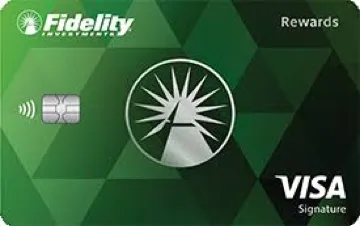
Cash back: 2% on all purchases Annual fee: $0 Net after 3% fee: -1%
The Fidelity Rewards Visa deposits your 2% directly into a Fidelity account. Simple and straightforward for any spending including insurance.
Citi Double Cash
Cash back: 2% (1% on purchase, 1% when paid) Annual fee: $0 Net after 3% fee: -1%
The Citi Double Cash effectively earns 2% on everything. No categories to track, works for insurance.
Wells Fargo Active Cash
Cash back: 2% on all purchases Annual fee: $0 Net after 3% fee: -1%
Another solid 2% option. Includes cell phone protection when you pay your bill with the card.
Bank of America Unlimited Cash Rewards (with BofA Rewards)
Cash back: Up to 2.625% (Premier tier, $1M+); 2.25% at Preferred Honors ($100k+) Annual fee: $0 Net after 3% fee: -0.375%
Bank of America replaced Preferred Rewards with BofA Rewards on May 27, 2026. At $100,000 in BofA/Merrill accounts you now earn 2.25% on all purchases; 2.625% requires $1M at the Premier tier. Only the Premier rate comes close to break-even against a 3% fee. See our breakdown of the change.
U.S. Bank Smartly Visa
Cash back: Up to 4% (highest tier) Annual fee: $0 Net after 3% fee: +1%
U.S. Bank's relationship card offers up to 4% on all purchases for customers with large deposits. At 4%, you'd actually profit from paying insurance with a 3% fee.
Robinhood Gold Card
Cash back: 3% on all purchases Annual fee: ~$50 (via Gold membership) Net after 3% fee: 0%
Robinhood Gold members earn 3% on everything. After the membership fee, you roughly break even with a 3% convenience fee. Only worthwhile if you already pay for Gold.
The Math: Rewards vs. Fees
Here's what your net return looks like with common reward rates and fee levels:
| Card Reward Rate | 0% Fee | 2% Fee | 3% Fee | 4% Fee |
|---|---|---|---|---|
| 2.0% | +2.0% | 0% | -1.0% | -2.0% |
| 2.625% | +2.625% | +0.625% | -0.375% | -1.375% |
| 3.0% | +3.0% | +1.0% | 0% | -1.0% |
| 4.0% | +4.0% | +2.0% | +1.0% | 0% |
Most people with 2% cards lose money when fees exceed 2%. You need a 3%+ card or a fee-free insurer to come out ahead.
Strategies to Maximize Value
Strategy 1: Pay Annually
Many insurers offer pay-in-full discounts (5-10% off your premium) and may waive convenience fees for annual payments. The discount alone often beats monthly card rewards.
Strategy 2: Negotiate Fee Waivers
Call your insurer and ask if they'll waive the convenience fee. Some agents have discretion, especially for long-term customers or bundled policies.
Strategy 3: Use Signup Bonuses Strategically
New cards with large signup bonuses can justify paying fees temporarily. A $500 bonus easily covers the $36 fee on a $1,200 premium.
Once the bonus is met, switch to ACH.
Strategy 4: Use High-Relationship Bank Cards
If you already bank with BofA, U.S. Bank, or similar institutions, check which relationship tier you actually qualify for before assuming the headline rate.
Strategy 5: Check for Category Bonuses
Rarely, insurance may code under a bonus category on certain cards. After your first payment, check your statement to see how it posted. If it earns bonus points, keep using that card.
What About Other Insurance Types?
Health Insurance
Employer plans deduct premiums from your paycheck (no card option). ACA marketplace plans may or may not accept cards depending on the carrier.
Medicare Part B can be paid via credit card through Pay.gov with no convenience fee. If you're paying Medicare premiums, definitely use a rewards card.
Renters Insurance
Works the same as auto/home. Most carriers accept cards, many charge convenience fees. Renters insurance is cheap enough ($100-300/year) that even a 3% fee is only $3-9, making card payments reasonable for the convenience.
Pet Insurance
Most pet insurers accept cards. Fees vary. Check before you pay.
Card Protections for Insurance Payments
When you pay insurance by card, you get standard purchase protections:
- Zero fraud liability on unauthorized charges
- Dispute rights if the insurer overcharges or doesn't deliver
- Statement records for tax/documentation purposes
You do NOT get:
- Extended warranty (insurance isn't a product)
- Purchase protection (no physical item)
- Price protection (not applicable)
Quick Decision Guide
Your insurer charges no fee: Use your highest rewards card (ideally 2%+). Free money.
Your insurer charges 1-2%: A 2% card breaks even or earns slightly. Worth using for convenience and fraud protection.
Your insurer charges 3%+: Pay by ACH or check unless you're meeting a signup bonus. You'd lose money otherwise.
You're meeting a signup bonus: Charge it even with fees. The bonus value (typically $200-500) far exceeds the fee.
You have life insurance: Check if your insurer accepts cards at all. Most don't for ongoing premiums.
The Bottom Line
Paying insurance by credit card can work, but only if the math works. Most people with standard 2% cards should skip card payments when fees exceed 2%.
The best approach:
- Check your insurer's convenience fee before paying
- Compare to your card's reward rate
- Only use a card if rewards exceed fees (or you're meeting a bonus)
- Consider paying annually to avoid monthly fees and earn pay-in-full discounts
Looking for the right flat-rate card? Run your optimization to see which cards maximize your unbonused spending.
Cards Mentioned in This Article
Click any card above to see if it's worth adding to your wallet — personalized verdict in 30 seconds.
Related on Learn
Hand-picked based on topic and reader interest
Best First Business Credit Card for Startups 2026: Ink Unlimited vs Blue Business Cash
Starting a business and need your first business credit card? We compare the two best $0 annual fee picks — Chase Ink Business Unlimited and Amex Blue Business Cash — with break-even math for upgrading later.
Best Credit Card for Groceries 2026: Cash Back vs Points Compared
Looking for the best credit card for groceries in 2026? We compare 6% cash back cards vs 4x points cards, plus which stores actually count as supermarkets.
Best Business Credit Cards 2026: Cash Back and Rewards for Small Businesses
Complete guide to the best business credit cards in 2026. Compare cash back cards, rewards programs, intro APR offers, and find the right card for your SMB spending profile.
Best Credit Cards for Coffee Shops and Cafés in 2026: The MCC Decides
Which card earns the most at coffee shops in 2026, why bakery cafés and hotel lobby counters quietly lose your dining bonus, and how much optimizing a $5.54 latte is actually worth.
Get smarter with your cards
Math-first card strategy posts, sent when we publish — not on a schedule. No spam. Unsubscribe anytime.
We respect your inbox.
Ready to optimize your wallet?
Get personalized card recommendations and spending strategies in under 2 minutes.
Free to use. No signup required.
Get My Strategy →Just need an answer for one purchase? Best Card →