You Got a Wells Fargo Autograph After Bilt 2.0. Now What? (2026 Guide)
If you were one of the Bilt cardholders who did not transition to Bilt 2.0 by the February 1, 2026 deadline, your Wells Fargo-issued Bilt card was automatically converted to a Wells Fargo Autograph. You might be wondering what you ended up with.
The short answer: you got a surprisingly practical card. The Autograph is not a premium travel card or a flashy rewards machine. It is a $0 annual fee utility card that earns 3x on six everyday categories, has no foreign transaction fee, includes cell phone protection, and can transfer points to airline partners. It is one of the better no-fee cards available, even if you did not choose it.
Here is what the card actually does, where it fits in your wallet, and the gotchas to watch for.
See which cards maximize your rewards →
What the Autograph Actually Does
| Feature | Details |
|---|---|
| Annual fee | $0 |
| Restaurants | 3x |
| Travel (airlines, hotels, car rentals, cruises, campgrounds) | 3x |
| Gas stations and EV charging | 3x |
| Transit and rideshare | 3x |
| Popular streaming services | 3x |
| Phone plans | 3x |
| Everything else | 1x |
| Foreign transaction fee | None |
| Intro APR | 0% for 12 months on purchases |
| Welcome bonus | 20,000 points after $1,000 in 3 months |
| Cell phone protection | Up to $600/claim, $25 deductible, 2 claims per 12 months |
| Auto rental CDW | Yes (secondary in U.S.) |
The 3x category list is unusually broad for a no-fee card. Restaurants, travel, gas, transit, streaming, and phone plans cover a large portion of most people's monthly spending. Outside those categories, the card earns only 1x, which is where it falls behind a flat 2% card like the Wells Fargo Active Cash.
Where This Card Wins
1. The Best No-Fee "Broad Bonus" Card
If you do not want annual fees and do not want to activate rotating categories, the Autograph is hard to beat. Six 3x categories on a $0 card with no FTF is a clean value proposition. Few competitors match this combination. See our Best No Annual Fee Credit Cards guide for the full comparison.
2. A Travel-and-Transit Card for Normal People
Many no-fee cards cover dining or travel. Fewer package restaurants, travel, gas, transit, streaming, and phone plans on one product. For commuters and regular travelers who want one card to catch most of their spending, the Autograph covers a lot of ground.
3. An International Backup Card
The Autograph has no foreign transaction fee. The Wells Fargo Active Cash charges 3% on foreign purchases. If you travel internationally, the Autograph is the better card to carry abroad, even if you only use it as a backup.
4. A Phone Bill Card (With a Big Caveat)
The Autograph earns 3x on phone plans and includes cell phone protection (up to $600 per claim, $25 deductible) when you pay your wireless bill with the card.
The caveat: Major carriers now reduce or eliminate autopay discounts for credit card payments. Verizon requires a bank account or Verizon Visa for the full autopay discount. AT&T gives $10/line with a bank account but only $5 with debit and nothing for other credit cards. T-Mobile requires a bank account, debit card, or T-Mobile Visa for the autopay discount.
Before switching your phone bill to the Autograph, check whether you would lose an autopay discount that exceeds the value of 3x points and cell phone protection. For many people, the autopay discount ($5-$10/line/month) is worth more than the 3x points ($0.45-$1.50/month depending on plan cost and point valuation).
Find your optimal card combo →
The Transfer Partner Angle
This is what makes the Autograph more interesting than a basic cash-back card. Wells Fargo Rewards points can be:
- Cashed out at 1 cent per point (the floor)
- Transferred to airline and hotel partners for potentially higher value
Current transfer partners:
| Partner | Ratio | Type |
|---|---|---|
| British Airways (Avios) | 1:1 | Airline |
| Aer Lingus (Avios) | 1:1 | Airline |
| Iberia (Avios) | 1:1 | Airline |
| Air France/KLM (Flying Blue) | 1:1 | Airline |
| Avianca LifeMiles | 1:1 | Airline |
| JetBlue TrueBlue | 1:1 | Airline |
| Virgin Atlantic/Red | 1:1 | Airline |
| Choice Privileges | 1:2 | Hotel |
The Avios family is especially strong for short-haul award flights (British Airways domestic flights, Aer Lingus transatlantic). Flying Blue and LifeMiles offer good long-haul value. Choice at 1:2 makes hotel stays accessible even with moderate point balances.
This transfer ecosystem does not rival Chase Ultimate Rewards or Amex Membership Rewards in breadth, but it gives the Autograph a real ceiling above its 1 cpp cash floor. For more on how to evaluate transfer partners, see our How to Value Credit Card Points guide.
Best Wallet Pairings
Simple Two-Card Setup: Autograph + Active Cash
Use Autograph for restaurants, travel, gas, transit, streaming, phone plans, and foreign spend. Use Active Cash (flat 2%) for everything else. This covers all spending at either 3x or 2%, with no annual fees on either card. Wells Fargo lets you combine rewards across cards in the same account.
No-Fee Three-Card Setup: Autograph + Active Cash + Attune
Add the Wells Fargo Attune for its niche 4% categories: gyms, spas, salons, sports/recreation, entertainment, public transit, EV charging, and select thrift stores. Autograph handles restaurants, generic travel, phone, and streaming. Active Cash catches everything else. All three are $0 annual fee.
Travel-Leaning Setup: Autograph Journey + Autograph + Active Cash
If you are willing to pay an annual fee for stronger travel protections, the Autograph Journey earns 5x on hotels, 4x on airlines, and 3x on other travel and restaurants. It includes trip cancellation/interruption insurance and lost baggage reimbursement that the base Autograph lacks. In this setup, base Autograph still earns its keep on gas, transit, streaming, phone plans, and no-FTF foreign spend.
4 Gotchas to Watch For
1. Phone Plan Autopay Discounts May Disappear
As noted above, Verizon, AT&T, and T-Mobile all reduce or eliminate autopay discounts when you pay with a non-partner credit card. The 3x points from the Autograph may be worth less than the autopay discount you lose. Do the math before switching.
2. Merchant Coding Can Be Unpredictable
Wells Fargo determines bonus eligibility based on merchant category codes. Some purchases that seem like they should earn 3x may not:
- Third-party food delivery apps may not code as restaurants
- Bakeries and food at grocery stores may not code as restaurants
- Warehouse clubs may not code as gas stations even if they have gas pumps
- Bundled or third-party billed streaming may not count as streaming
- Phone accessories or insurance may not count as phone plan spend
If a specific merchant earns 1x instead of 3x, check whether the merchant's category code matches Wells Fargo's bonus definitions.
3. Cell Phone Protection Is Secondary
The Autograph's cell phone protection is useful but secondary/supplemental to other insurance. It does not cover mysterious disappearance, excludes cracked-screen or cosmetic damage that does not impair function, and only applies when the wireless bill was charged to the card in the prior billing cycle. Coverage is up to $600 per claim with a $25 deductible, limited to 2 claims per 12 months.
4. Rental CDW Is Secondary in the U.S.
The auto rental collision damage waiver is secondary to your personal auto insurance in the United States (primary abroad). It applies to rentals up to 15 consecutive days in the U.S. and 31 days abroad. If you want primary rental CDW, cards like the Chase Sapphire Preferred offer it.
When to Use It vs When to Reach for Another Card
Use the Autograph for:
- Restaurants, bars, cafes (3x)
- Travel bookings — airlines, hotels, car rentals (3x)
- Gas and EV charging (3x)
- Transit and rideshare (3x)
- International purchases (no FTF)
- Phone bill (if autopay discount math works)
Use a different card for:
- Groceries (Autograph earns 1x; consider Amex Gold at 4x or Citi Strata Premier at 3x)
- General uncategorized spending (Autograph earns 1x; use Active Cash at 2% or Fidelity Visa at 2%)
- Premium travel protections (Autograph has basic CDW; consider CSR or Autograph Journey for trip cancellation/interruption)
The Bottom Line
The Wells Fargo Autograph is not the most exciting card in your wallet, but it may be one of the most practical. If you got it via the Bilt transition, you ended up with a no-fee card that earns 3x on six broad categories, has no foreign transaction fee, and can transfer points to airline partners.
Keep it — there is no annual fee, so there is no cost to holding it open. Use it for restaurants, travel, gas, transit, streaming, and international spend. Pair it with a flat 2% card (Active Cash or Fidelity) for everything else.
If you are deciding between keeping this card and going back to Bilt 2.0, the key difference is that Bilt earns points on rent (which no other card does) while the Autograph earns 3x on a broader set of everyday categories. If rent rewards matter to you, Bilt wins. If broad everyday earning matters more, the Autograph may be the better daily driver.
For the full picture of which cards maximize your total rewards, try the CardSavvy Optimizer. It compares your spending against 100+ cards. Free, no signup required.
Cards Mentioned in This Article
Click any card above to see if it's worth adding to your wallet — personalized verdict in 30 seconds.
Related on Learn
Hand-picked based on topic and reader interest

Delta Gold Is a Card to Hold, Not a Card to Spend On
The $150 Delta Gold earns its fee through the checked-bag waiver and TakeOff 15, not through 2x SkyMiles. That distinction decides who should carry it and what belongs on it.
Which Card Should You Actually Buy Delta Tickets With?
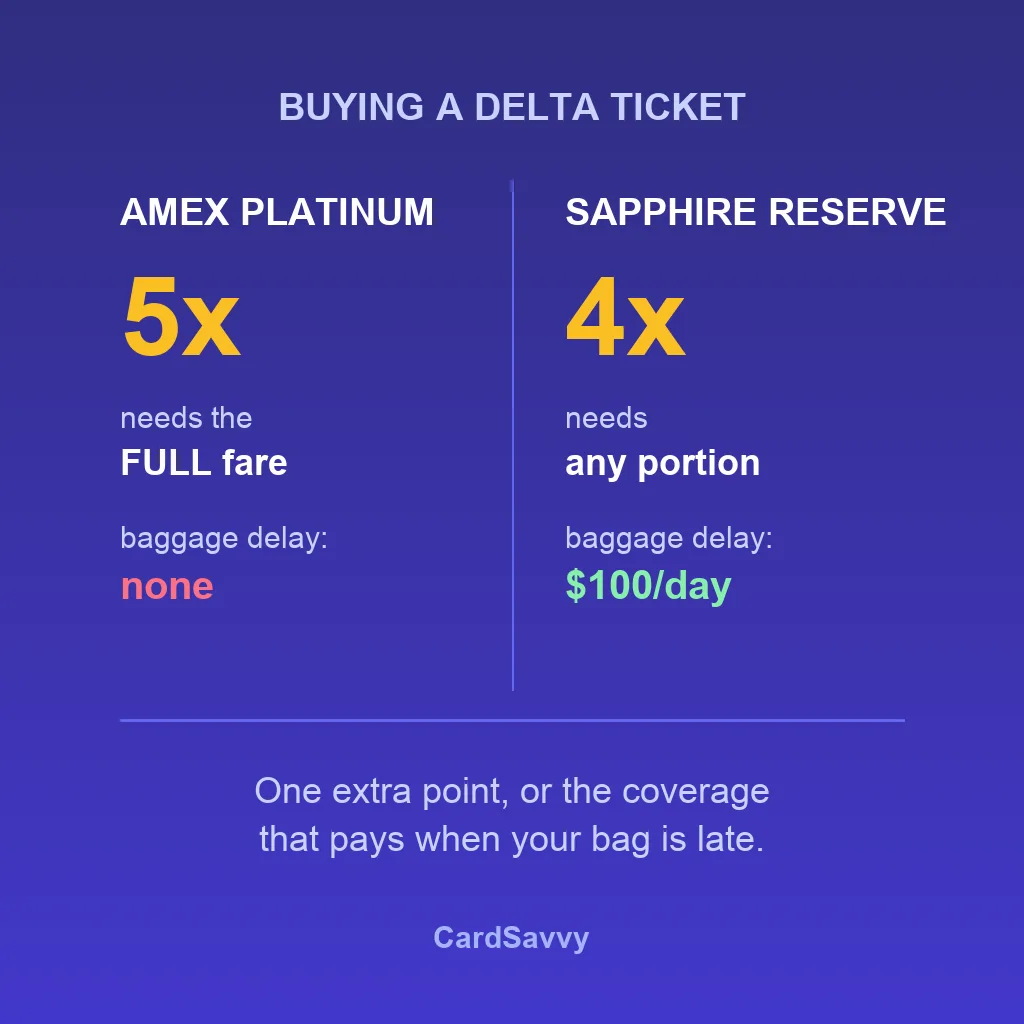
Amex Platinum earns 5x on Delta airfare against the Sapphire Reserve's 4x. But Platinum requires the full fare charged to it and covers no baggage delay, which matters more than one extra point if you check bags.
Citi Nights: The 6x Dining Bonus That Runs on New York Time
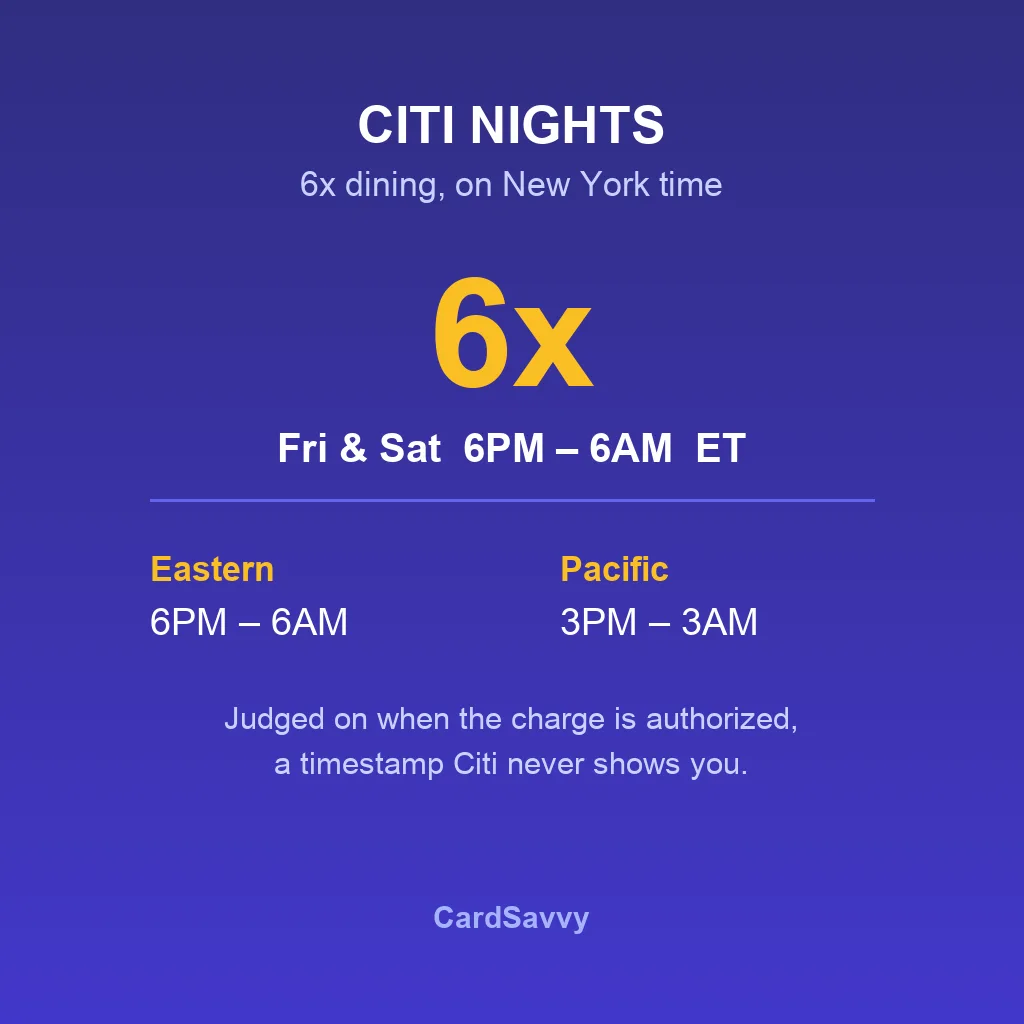
The Citi Strata Elite earns 6x at restaurants on Friday and Saturday nights, but the window runs on Eastern time and is judged by when the charge is authorized. Here is what that means if you do not live in New York.

Chase Sapphire Reserve StubHub Credit: $300 Guide (2026)
The Chase Sapphire Reserve's $300 StubHub credit is real, but resale markups and fees can quietly eat the value. Here's how to use it and what to actually count.
Get smarter with your cards
Math-first card strategy posts, sent when we publish — not on a schedule. No spam. Unsubscribe anytime.
We respect your inbox.
Ready to optimize your wallet?
Get personalized card recommendations and spending strategies in under 2 minutes.
Free to use. No signup required.
Get My Strategy →Just need an answer for one purchase? Best Card →