Even the Spokesperson Got Declined: What a K-Pop “Card Denial” Can Teach You
If you’ve ever been denied for a credit card and thought, “Wait… do they know who I am?!”, you’re in good company.
This week, IVE’s An Yujin went viral after sharing a hilarious (and relatable) banking moment: she tried to get the very card she was promoting… and was promptly told she wasn’t eligible.
It’s funny on the surface. But for those of us in the credit game, it’s a perfect case study for a lesson most people learn the hard way: a card approval runs on a rules engine with specific eligibility criteria. Marketing is broad. Eligibility is narrow. Here is the breakdown of what happened and how to make sure you don’t get caught in the same trap.
What Happened (In Plain English)
According to reports from her Bubble messages and follow-up coverage, An Yujin asked her bank contacts how to apply for the “Yujin Card” from Hana Bank. The answer? Denied.
The Punchline: The product appears to be the Hana Nara Sarang Card. This isn’t a standard credit card; it’s a special-purpose debit/ID card tied strictly to military service in Korea.
- Target Audience: Active-duty soldiers, those preparing to enlist, and reservists.
- Purpose: Receiving military pay and serving as base ID.
- Eligibility: Strict categories (military obligation) and age limits.
So, she wasn’t denied because she’s “risky” or “doesn’t make enough money.” She was denied because she didn’t fit the eligibility box. That distinction is crucial for your own credit strategy.
The Real Lesson: “Denied” Doesn’t Always Mean “Bad Credit”
In the U.S., we are conditioned to think a denied application means our credit score is trash. Sometimes it is. But just as often, denial happens for boring, procedural reasons.
Here are the three main buckets of denial, starting with the one that tripped up Yujin:
1. You’re Not Eligible (The "Yujin" Bucket)
This is the most frustrating denial because it has nothing to do with your credit score. You simply aren't the person the product was built for.
- Restricted Products: Cards for students, military personnel, or employees of specific companies.
- Geo-Fencing: Credit unions or local banks that require you to live in a specific state or county.
- Hidden Gating: "Invitation Only" offers or products that require a prior relationship (like having a checking account) with the bank.
2. You Don’t Fit the Risk Model
Even with an 800+ credit score, you can be denied if you trigger a bank’s internal risk rules. This is where "churners" often get hit.
- Velocity: Too many opened cards in the last 6/12/24 months (e.g., Chase’s 5/24 rule).
- Utilization: High balances reported on other cards, even if you pay them off monthly.
- Exposure: You already have too much total credit extended by that specific bank.
3. Verification Fail (The "Typo" Bucket)
Sometimes the computer just says "no" because it can't prove you are you.
- Typos in your SSN or address.
- Frozen credit reports you forgot to thaw.
- Mismatched information (e.g., using a nickname instead of your legal name).
What to Do If You Get Denied
Don’t just take the "L" and move on. A hard pull is an investment, make sure you get a return on it.
Step 1: Read the Adverse Action Notice In the U.S., banks are legally required to tell you why they said no. This letter is your roadmap. If it says "insufficient income," that's underwriting. If it says "unable to verify identity," that's a fixable typo.
Step 2: Call Reconsideration If the denial was for a credit card (not a strict eligibility product like Yujin’s), call the bank’s reconsideration line. A human can often overrule the computer if:
- You can prove your income.
- You offer to shift credit limits from an existing card to open the new one.
- You simply verify your identity.
Step 3: Adjust Your Strategy
- Profile Too Thin? Look for "starter" cards or become an authorized user first.
- Too Many Inquiries? You are in the "penalty box." Cool off for 3–6 months.
- Wrong Product? Make sure you actually qualify for the specific tier (e.g., Visa Infinite vs. Visa Signature) you applied for.
The CardSavvy Takeaway
A lot of people treat credit card optimization like a math problem: "Highest Multiplier Wins." But real optimization is a two-step process:
- Valuation: Pick cards that match your spend.
- Acquisition: Pick cards you can actually get approved for.
The An Yujin story is a goofy, high-profile example of ignoring step #2. Even if the value proposition is amazing (Military discounts! PX cashback!), you cannot optimize a card you cannot hold.
Next time you plan a new card application, ask yourself:
- Am I eligible for this specific product class?
- Have I opened too many cards recently for this specific issuer?
- Is my credit report thawed and ready?
Have you ever been denied for a card you were 100% sure you'd get?
Related on Learn
Hand-picked based on topic and reader interest
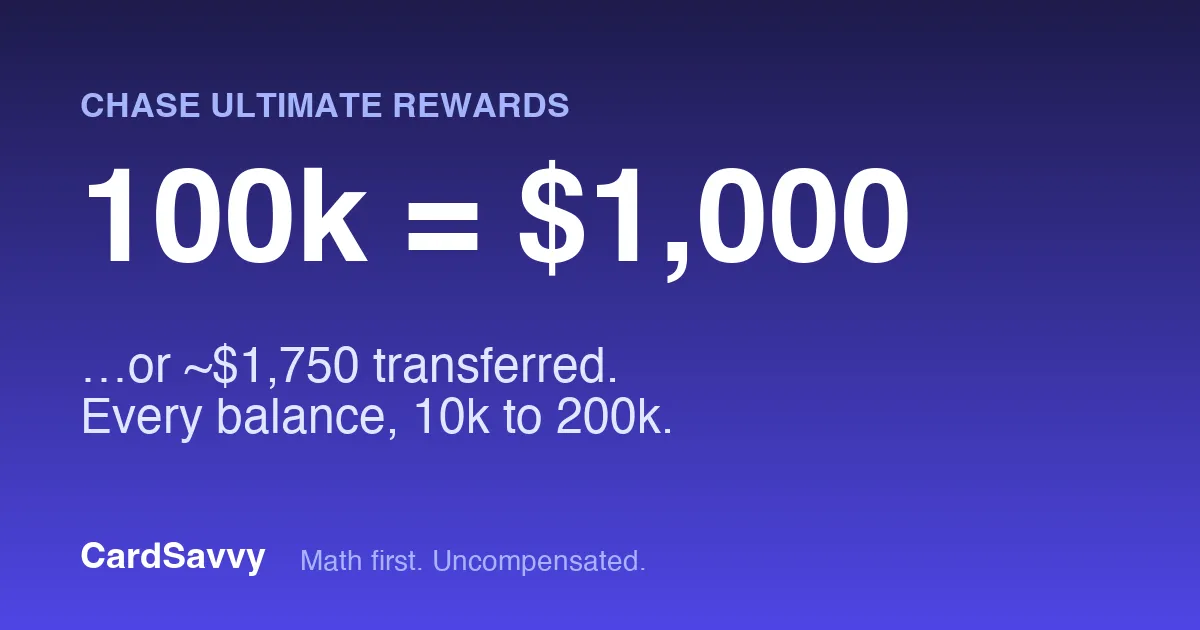
How Much Are Chase Points Worth? 10,000 to 200,000 Points in Dollars (2026)
100,000 Chase Ultimate Rewards points are worth $1,000 as cash, about $1,500 on a Points Boost booking, and about $1,750 transferred to a good airline or hotel award. Here is the dollar value of every common balance, and which card you need for each.
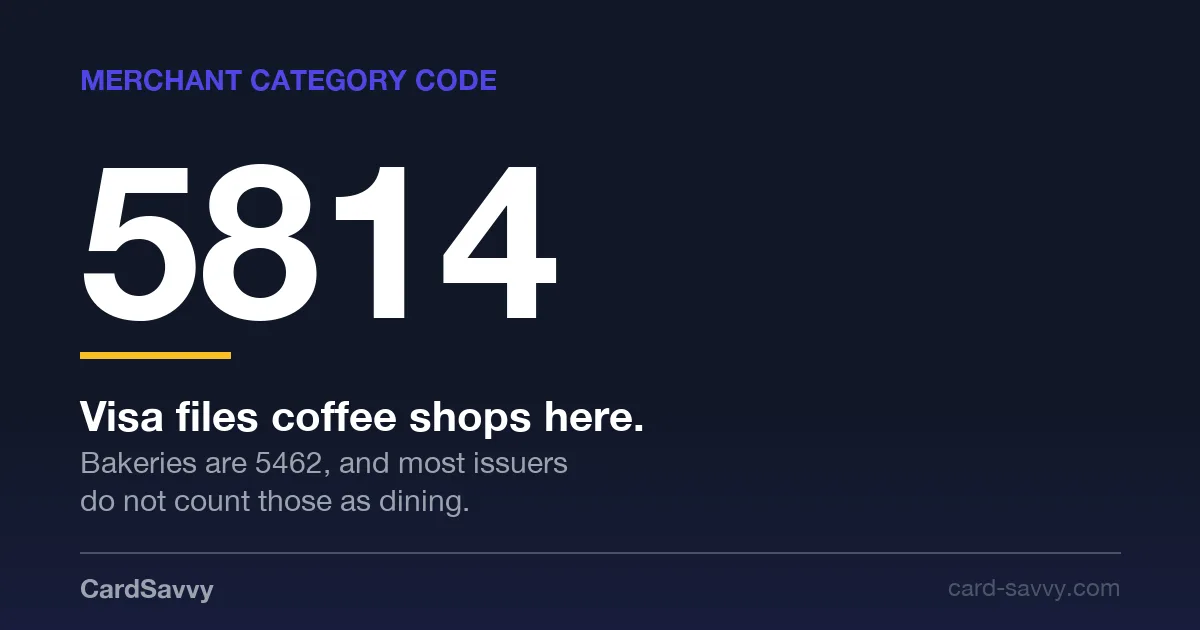
Best Credit Cards for Coffee Shops and Cafés in 2026: The MCC Decides
Which card earns the most at coffee shops in 2026, why bakery cafés and hotel lobby counters quietly lose your dining bonus, and how much optimizing a $5.54 latte is actually worth.
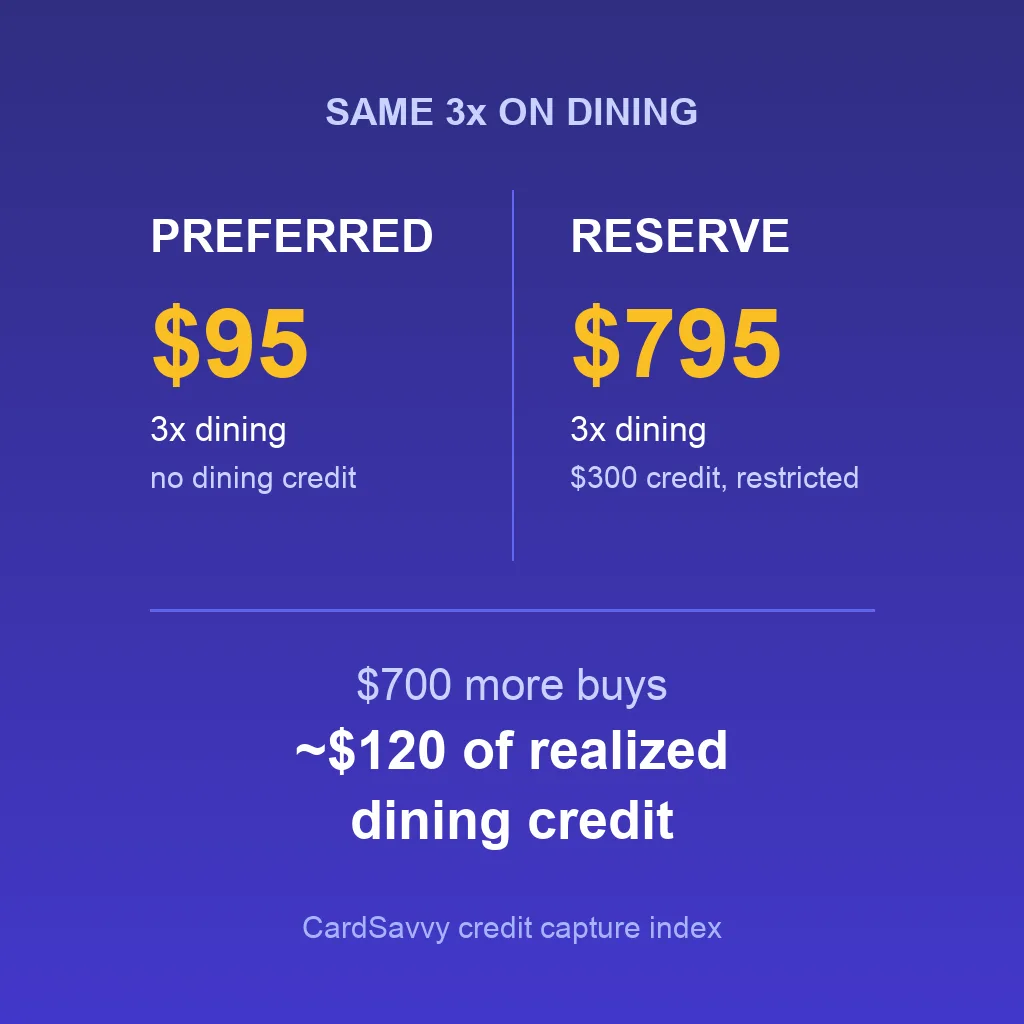
Sapphire Reserve vs Preferred for Dining: Is $700 More Worth It?
The $795 Sapphire Reserve and the $95 Sapphire Preferred earn the same 3x on dining. The Reserve's entire dining premium is one restricted credit, and our capture index values it near $120. Here is when that still makes sense.
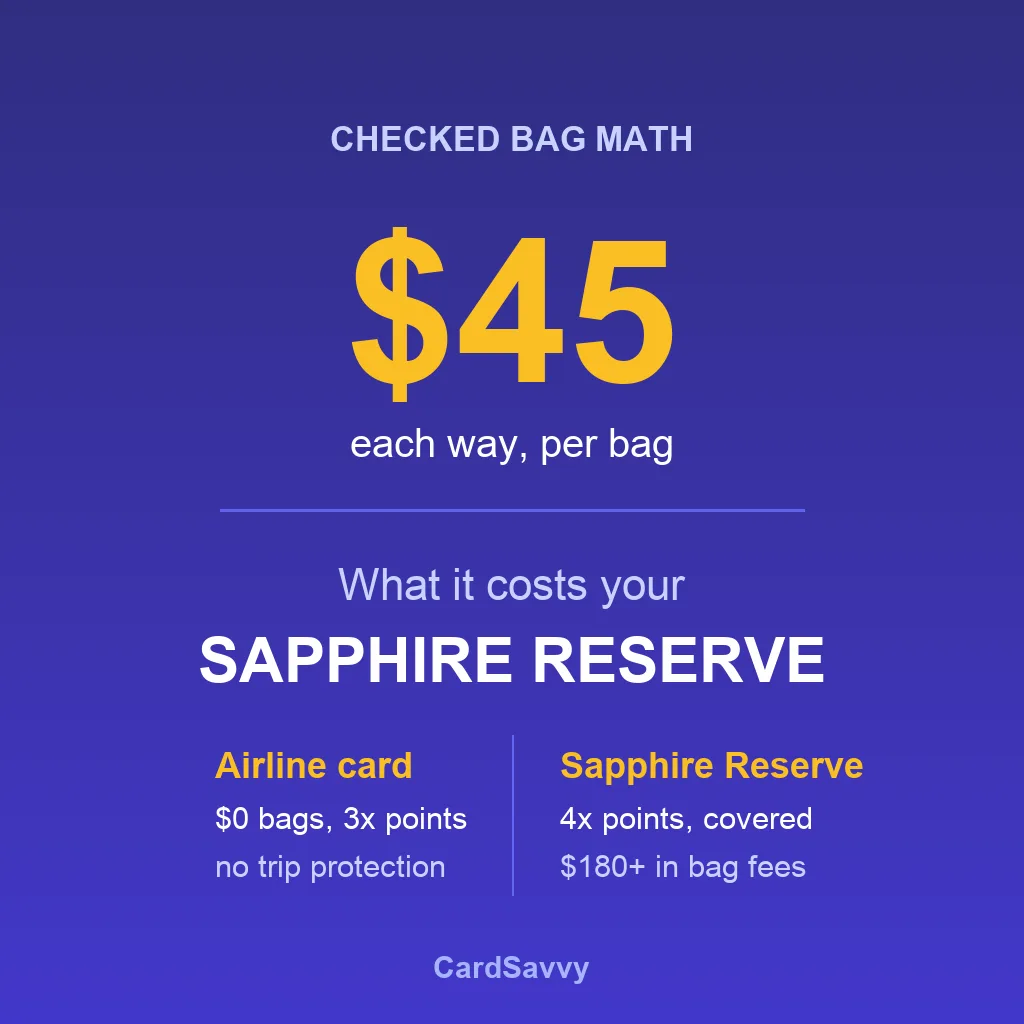
Airline Card vs Sapphire Reserve: What Checking Bags Costs You in 2026
Checked bags now cost $45 each way, and the waiver requires buying the ticket with the airline card. That decision quietly moves your airfare off the Sapphire Reserve, taking the 4x category and the trip protections with it. Here is what that is worth.
Get smarter with your cards
Math-first card strategy posts, sent when we publish — not on a schedule. No spam. Unsubscribe anytime.
We respect your inbox.
Ready to optimize your wallet?
Get personalized card recommendations and spending strategies in under 2 minutes.
Free to use. No signup required.
Get My Strategy →Just need an answer for one purchase? Best Card →