Bilt 2.0 Foreign Transaction Fee Issue: What Happened and How to Verify Your Refund
One of the biggest selling points of the Bilt Mastercard has always been simple: no foreign transaction fees. It is printed in the cardholder agreement. It is listed on Bilt's support page. It is one of the core reasons travel-focused cardholders keep the card in their wallet abroad.
But in early March 2026, some Bilt 2.0 cardholders began reporting that foreign purchases were posting to their statements at amounts roughly 0.2% higher than expected. The discrepancy is small in dollar terms, but it directly contradicts a benefit printed in the card's own terms.
Bilt has responded publicly, stating there should be "no change" compared to the original Bilt card and that any fees added in error will be refunded by their partners. As of March 13, 2026, there has been no public confirmation the issue is fully resolved.
Check how Bilt fits your wallet →
What Changed with Bilt 2.0
On January 14, 2026, Bilt announced a complete overhaul of its credit card lineup. The new Bilt Card 2.0 introduced three tiers (Blue, Obsidian, Palladium), a new "Bilt Cash" currency, and mortgage rewards. Cards went live on February 7, 2026, with Column N.A. and Cardless replacing Wells Fargo as the issuing infrastructure.
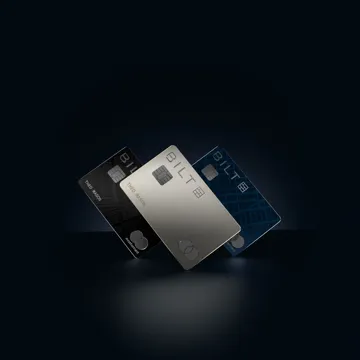
The transition brought real changes to the card's backend, including a new issuer, new BIN ranges, and new card numbers for existing holders. For a detailed breakdown of how the two reward options compare, see our Option 1 vs Option 2 analysis.
What was not supposed to change: the card's core travel benefits, including the no-foreign-transaction-fee policy.
What Users Reported
In early March 2026, several miles-and-points outlets including Doctor of Credit, Frequent Miler, and Upgraded Points reported that some Bilt 2.0 cardholders were seeing foreign purchases post higher than expected on their statements.
The pattern was specific and consistent. The Bilt app showed a converted USD amount that matched the Mastercard currency converter rate for the transaction date. But when the charge posted to the actual statement, the amount was roughly 0.2% higher than what the app displayed.
Third-party reporting suggests the discrepancy may stem from a Mastercard cross-border or currency-conversion assessment being passed through to cardholders rather than absorbed by the issuer. This is a common fee component that issuers with "no FTF" policies typically eat on behalf of the cardholder. To be clear: not all Bilt 2.0 users appear to be affected, and the exact mechanics have not been publicly confirmed by Bilt.
What Bilt Officially Says
Bilt's public response has been straightforward. The company stated that there should be "no change" in the foreign transaction fee policy compared to the original Bilt 1.0 card, and that if any fees were added, their partners will refund them.
All three cardholder agreements (Blue, Obsidian, and Palladium) continue to state that there are no foreign transaction fees. Bilt's support FAQ says the same. As of March 13, 2026, there has been no public announcement confirming the root cause or that the issue has been fully resolved.
Why This Matters (Even If the Dollar Amount Is Small)
Let's put the numbers in context. At 0.2%, the overcharges are modest in absolute terms:
| Foreign Spend | Estimated Overcharge (0.2%) |
|---|---|
| $1,000 | $2 |
| $3,000 | $6 |
| $10,000 | $20 |
For most cardholders, we are talking about single-digit dollars. Nobody is going broke over a $2 discrepancy.
But the issue is not really about $2. It is about whether a card's stated terms match its actual behavior. When a cardholder agreement says "no foreign transaction fees" and foreign transactions are posting higher than the Mastercard exchange rate, that is a disclosure gap, not just a rounding error.
CardSavvy's entire approach is built on reading the fine print and doing the math. If you have followed our analysis of the real annual value of Bilt for rent payments, you know we take the gap between marketing claims and actual outcomes seriously. The amounts are small, but the principle is large.
How to Check Whether You Were Affected
If you have used your Bilt 2.0 card for any foreign purchases since February 7, 2026, here is how to verify whether you were overcharged:
-
Pull your Bilt statement. Look for any transactions made in a foreign currency that have already posted (not pending).
-
Note the original foreign-currency amount. This should be visible in the transaction details or on your merchant receipt.
-
Check the Mastercard currency converter. Go to Mastercard's online currency converter and enter the original amount using the transaction date. This gives you the "clean" exchange rate without any markup.
-
Compare. If your posted USD statement amount is roughly 0.2% higher than the Mastercard converter result, you may have been affected.
-
Save your documentation. Screenshot the merchant receipt (or app transaction showing the foreign amount), the Mastercard converter result, and your statement line item.
-
Contact Bilt support. If you find a discrepancy, reach out to Bilt and reference their public commitment to refund any erroneously added fees.
If you want to see how the Bilt card stacks up against other no-FTF options in your wallet, use our Bilt Calculator to run the numbers on your actual spending.
The Bottom Line
If you are an existing Bilt 2.0 cardholder, do not panic. Bilt has acknowledged the issue and committed to refunds. But you should verify your recent foreign transactions rather than assuming everything is fine. The check takes five minutes and could save you from an overcharge that compounds quietly over multiple trips.
If you are considering applying for the Bilt card, this is a watch item, not a deal-breaker, unless you are a heavy international spender. In that case, it may be worth waiting until Bilt publicly confirms the issue is fully resolved before relying on it as your primary travel card abroad. If you are wondering whether to keep your Bilt points in the program while this plays out, our Bilt transfer partner guide covers your options.
One thing this episode reinforces: the most important feature of any credit card is not the headline perk. It is whether the card behaves exactly the way the terms say it should. When there is a gap between the two, cardholders deserve a clear explanation and a fast fix. We will update this post as Bilt provides more details.
Cards Mentioned in This Article
Click any card above to see if it's worth adding to your wallet — personalized verdict in 30 seconds.
Related on Learn
Hand-picked based on topic and reader interest

Is Bilt 2.0 Worth It? Option 1 vs Option 2 Compared With Calculator
We ran the math on all three Bilt 2.0 cards (Blue, Obsidian, Palladium) and both reward options. Free calculator shows which earns more for your rent and spending.
2026: The Year the 'Coupon Book' Credit Card Finally Jumped the Shark
Premium travel cards have mutated into subscription bundles with rising fees and fragmented credits. Here's why 2026 credit card complexity hit a breaking point.

Bilt 2.0 Panic: Should You Transfer Your Points Before the Switch?
Worried about Bilt 2.0 devaluing your points? Here's why panic transferring is usually the wrong move—and when it actually makes sense to move your balance.
Bilt Card 2.0 Review: Is the 4% Back & Mortgage Rewards Hype Worth It?
Bilt launched a new card lineup with 4% Bilt Cash and mortgage rewards. We cut through the marketing math to reveal the real value of Blue, Obsidian, and Palladium.
Get smarter with your cards
Math-first card strategy posts, sent when we publish — not on a schedule. No spam. Unsubscribe anytime.
We respect your inbox.
See the math for yourself
Which Bilt option is right for you?
Free calculator. No signup required.
Try the Bilt 2.0 Calculator →